Get Full Government Meeting Transcripts, Videos, & Alerts Forever!
Get email alerts on the School Insurance Captive topic
No spam. Unsubscribe anytime.
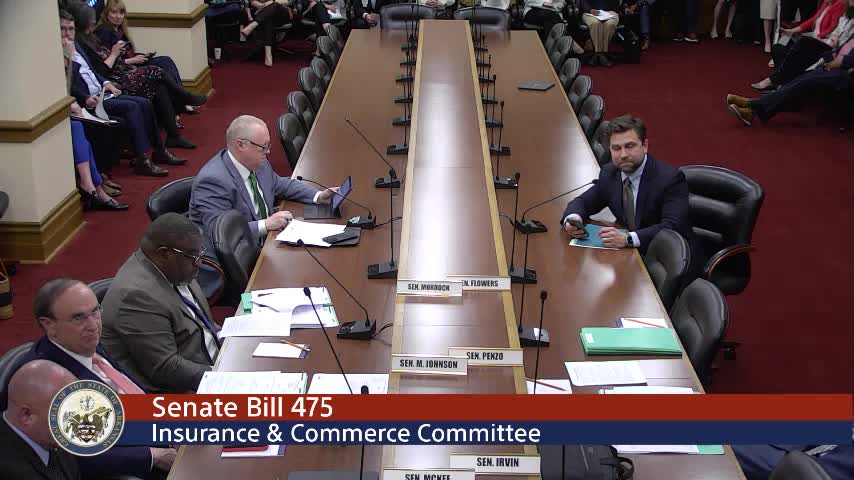
Committee reviews plan to create state captive to stabilize school and higher‑education property insurance costs
Summary
A bill would move a property insurance program out of the Insurance Department, create a captive insurance program at the Shared Services Department, and use one‑time funding to capitalize the program; sponsors said it could save millions on premiums and consolidate multiple programs.
Senators spent substantial time on a bill to create a state‑sponsored captive insurance program to cover property for K‑12 districts and public higher education institutions.
Sponsor Sen. Gilmore said the proposal would consolidate three existing programs and move program administration out of the Insurance Department to avoid a perceived conflict between regulator and program manager. The bill would create a captive under the shared services department, give broad rulemaking authority to the administering agency, and—by sponsor estimate—could generate significant first‑year savings for participating entities.
Gilmore told the committee one estimate showed as much as $15 million in first‑year savings and described a plan to use approximately $136 million in one‑time funding to capitalize the program. He said the program would be designed to be self‑sustaining and that the rules would allow K‑12 and higher education institutions to select levels of coverage and assume agreed risks in writing.
Several senators, including Sen. Murdoch, questioned language the sponsor described as an incentive tied to funding that could be read as a de facto mandate: districts would need to meet certain requirements to qualify for participation and related funding. Murdoch said he was concerned the provision could effectively force districts to participate to receive facility money. Gilmore responded that the school boards association had been involved in the study and that the intent was an incentive to consolidate risk to control costs.
Committee members discussed guardrails and promised rulemaking review through the Administrative Rules and Regulations process. The bill’s sponsor said officials had studied similar programs in other states, including Tennessee, and adjusted language to avoid known pitfalls.
Why it matters: School districts and higher‑education institutions reported rising premiums and large premium spikes; sponsors argue a captive can pool risk, manage costs and reduce future premium volatility. Opponents raised concerns that participation tied to funding could limit districts’ flexibility.
Actions: Sponsor presented the bill, adoption of an amendment was recorded, and the committee voted to advance the bill after discussion; the transcript shows a motion and an affirmative committee voice vote but does not include a detailed roll call tally.
Next steps: Committee members expected significant rulemaking and implementation work if the bill proceeds; the one‑time capitalization source was discussed as a separate appropriation.