Get Full Government Meeting Transcripts, Videos, & Alerts Forever!
Get email alerts on the Pharmacy Benefits Management topic
No spam. Unsubscribe anytime.
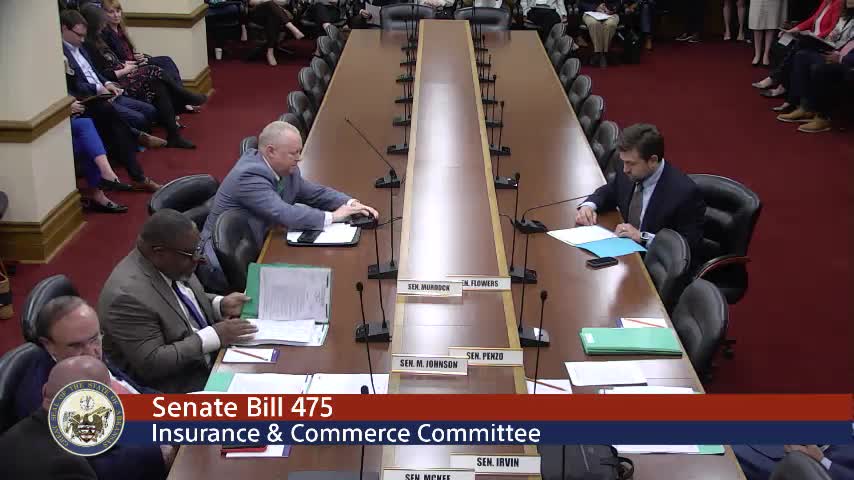
Senate committee considers competing bills to regulate PBMs and PSAOs
Summary
Lawmakers heard multiple measures to increase transparency and enforcement of pharmacy benefit managers (PBMs) and pharmacy services administrative organizations (PSAOs), including new definitions for opt‑out contracts, state‑specific contract terms, enhanced enforcement authority for the insurance commissioner and proposals to license PSAOs.
The Senate Insurance & Commerce Committee heard several bills that would expand oversight of pharmacy benefit managers and the third parties that act on behalf of independent pharmacies.
Supporters said the bills seek to give Arkansas pharmacies clearer contract terms, stronger enforcement tools and a route for pharmacies to recover underpayments. Opponents and some industry witnesses urged additional drafting and coordination between competing proposals.
The most detailed proposal, presented as Senate Bill 544, would add a definition for “opt‑out contracts,” give pharmacies a 60‑day review period when new contract terms are introduced, and require PBM national contracts to include state‑specific rates, prompt‑payment terms and provider manuals for Arkansas pharmacies. It would expand the Insurance Department’s enforcement authority under the PBM licensure act (including a clarified ability to fine violations up to $5,000) and allow the department to assess 12% interest for underpayments that result from violations of the law, according to testimony by John Vincent of the Arkansas Pharmacists Association.
John Vincent, CEO of the Arkansas Pharmacists Association, said the bill “gives the insurance commissioner the tools they need to oversee these interactions that happen between pharmacies and PBMs” and noted federal antitrust law limits PSAOs from collective bargaining on behalf of pharmacies.
Senator Mark Johnson, who presented SB 544, said the bill is aimed at improving clarity and transparency in how PBMs operate and in particular addressing situations where pharmacies receive national‑form contracts that do not explicitly state Arkansas‑specific payment rates and terms.
Other proposals focused on PSAOs, the firms that administer contract relationships between pharmacies and PBMs. Senator Dismang introduced Senate Bill 475, which would require registration and licensure of PSAOs and give the insurance commissioner auditing and registration authority. In extended committee discussion, proponents described PSAOs as the “middle man to the middle man” and said some independent pharmacists report PSAOs are not enforcing contract terms on their behalf.
Randy Casassee, a pharmacy owner from Central Arkansas, told the committee the bill would require PSAOs to seek state‑specific contract amendments from PBMs rather than relying on a generic “we will follow state law” clause. “The state needs to know who they are,” he said, arguing registration would make oversight possible.
The Arkansas Pharmacists Association urged an approach that balances regulation and accurate definitions. Vincent said language in another PSAO bill (referred to in committee as Senate Bill 593) was “cleaner” in some respects; he encouraged continued negotiations between stakeholders and the Health Care Distribution Alliance, which represents some PSAOs.
Several senators asked whether PSAOs can collectively bargain for pharmacies; witnesses and industry representatives told the committee federal antitrust law generally prevents PSAOs from acting as collective bargaining agents for independent pharmacies.
Committee members traded questions about enforcement scope, the potential fee burden of licensing, and whether the insurance commissioner should be given explicit audit authority over PSAOs. Senator Boyd and others asked for clearer drafting and indicated willingness to work on amendments. Multiple presenters described real-world examples in which pharmacies used HIPAA‑based direct payment workarounds or discovered unilateral PBM rate changes only after the fact.
Actions: The bills were presented and each sponsor moved that their bill be given a committee recommendation for passage. For SB 544 the sponsor moved “do pass.” For SB 475 and a companion PSAO bill presented later, sponsors moved “do pass.” The transcript records committee votes to advance the bills after presentation; individual roll call tallies are not specified in the record.
Why it matters: PBMs and PSAOs administer reimbursement and contract terms that affect independent pharmacies’ revenue and patients’ access and cost for drugs. Proposals in committee would increase state oversight, require clearer Arkansas‑specific contract terms, and create enforcement mechanisms to remedy underpayments.
Next steps: Sponsors and stakeholders signaled plans to continue negotiations on language and to bring amendments back to committee.