Get Full Government Meeting Transcripts, Videos, & Alerts Forever!
Get email alerts on the Hemp Regulation topic
No spam. Unsubscribe anytime.
Senate passes bill tightening state rules on intoxicating hemp products; AG, health officials and industry testify
Summary
Senators voted to pass Senate Bill 5 33 as amended on a voice vote after extended testimony from the attorney general's office, the Department of Health and industry representatives about how to regulate intoxicating hemp products while federal litigation proceeds.
Senators voted to pass Senate Bill 5 33 as amended on a voice vote after extended testimony from the attorney general's office, the Department of Health and industry representatives about how to regulate intoxicating hemp products while federal litigation proceeds.
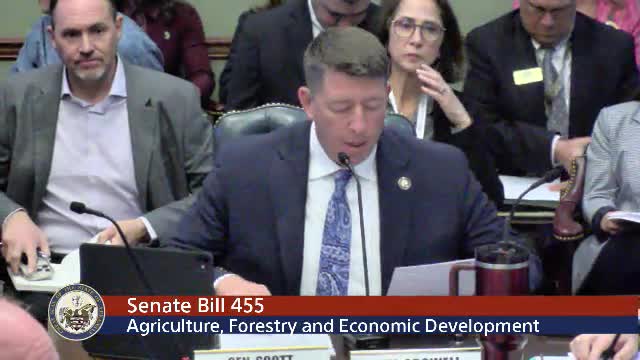
The bill, sponsor Senator Chris Deese said, updates and clarifies language the Legislature adopted in Act 6 29 of 2023 and adds "trigger" provisions so parts of the measure would take effect only if related federal litigation or federal changes allow it. "This action is in association with what we did last session," Deese told the committee. "It brings clarity to'what's intoxicating, what is not."
Nut graf: Lawmakers said the goal is to keep intoxicating hemp-derived THC products off retail shelves and out of the hands of minors while avoiding a repeat of the two-year federal court fight over the 2023 ban. Supporters described the bill as a narrower, legally tailored step to protect children and public health; opponents warned it could harm small retailers and run afoul of federal law.
Most important facts: Attorney Alex Benton of the Attorney General's office described the federal and prosecutorial facts the bill attempts to address: "It repeals about how the governor may make appointments to this board and it also more importantly deletes the dues of the board and there is no place in this bill . . . where those duties and that creation are put back in." Benton said the 2018 Farm Bill's hemp definition and the emergence of synthetically modified compounds have complicated enforcement and that states may take more restrictive action than the federal baseline.
Public health officials and enforcement agencies said they remain concerned about youth access and the products' intoxicating effects. Laura Shue, general counsel for the Arkansas Department of Health, said the department had earlier testified against the bill and remained concerned about "unintended consequences" from drafting and enforcement.
Retailers and industry speakers argued the problem is bad actors and synthetics, not responsibly produced hemp. Roger Crawford, who identified himself as owner of SunMed Modern Wellness, said his stores follow testing and child-safety practices and argued the bill could curtail legal businesses: "We already lead the way in that category," he said of childproof packaging and 21+ sales. Amy Crawford, another industry speaker, warned new permit fees and recordkeeping would burden small firms and said some draft language banning ethanol solvent use would in effect ban many broad-spectrum CBD products.
Agency perspective: David Potter, speaking for an agency that oversees youth access compliance, warned that regulating an intoxicating commodity would not eliminate minors' ability to obtain it. "My fear is that all the calls that I received from school resource officers, from police departments, from parents . . . I'm afraid that's going to continue," Potter said.
Vote and next steps: The committee adopted the amendment and ultimately passed SB 5 33 as amended on a voice vote. Committee record shows a motion to pass was made and seconded; the bill passed by voice vote.
Ending: Supporters said the bill preserves the 2023 policy goal of keeping intoxicating THC products off general retail shelves while adding statutory clarity; critics urged care to avoid unintended impacts on small businesses and to ensure the measure is legally defensible while federal litigation proceeds.