Get Full Government Meeting Transcripts, Videos, & Alerts Forever!
Get email alerts on the Charitable Tax Credit topic
No spam. Unsubscribe anytime.
Bill to convert payment‑processing fees into charitable credits draws mixed response
Summary
House Bill 900 would let businesses claim a state income tax credit equal to charitable donations made from payment‑processing fees for 12 months, proponents said the approach funnels new funding to nonprofits with no state outlay; opponents warned against adding tax credits and questioned how processors would participate.
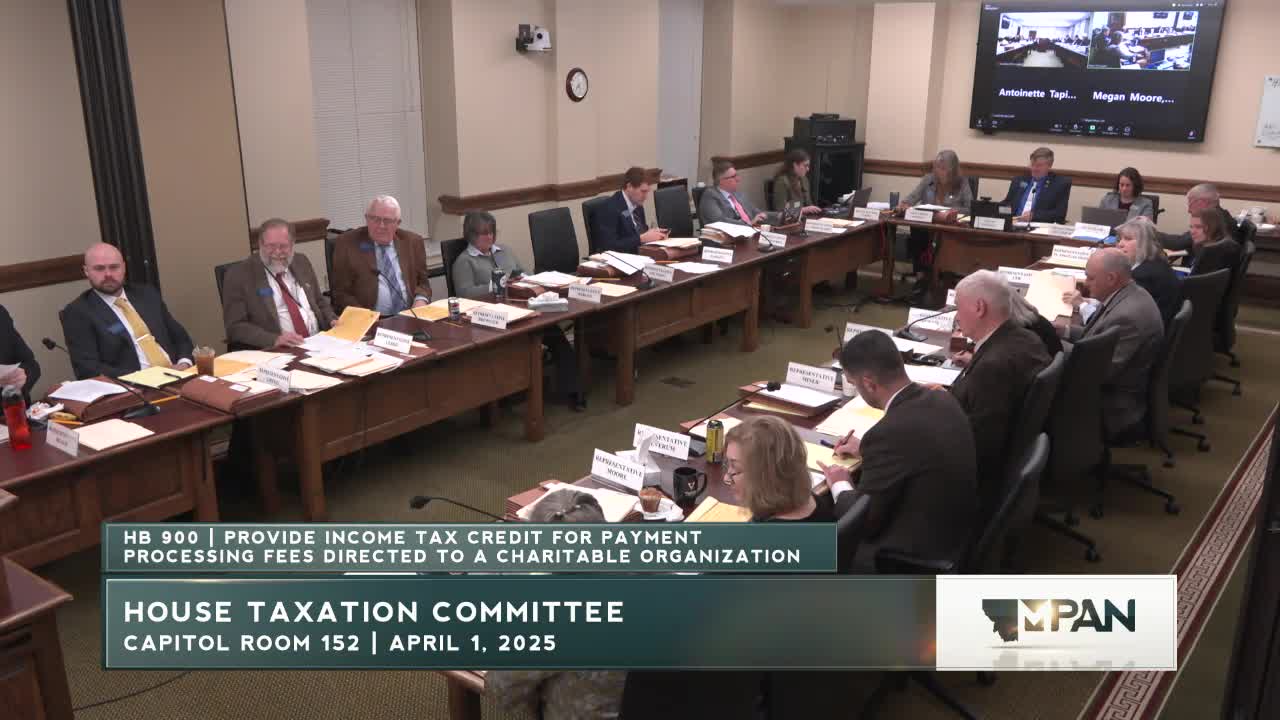
Representative (Nave), sponsor of House Bill 900, described the measure to the House Tax Committee as an incentive enabling small businesses to direct a portion of payment‑processing fees to charitable organizations and receive a matching state income tax credit for 12 months.
The sponsor provided a handout illustrating the flow: the payment processor subtracts its fee, a portion of that fee is directed to a charity chosen by the business, and for the first 12 months a matching amount from the processor would be sent to the state so the state can issue a corresponding tax credit to the business. The sponsor described the credit as an incentive to spur regularly scheduled charitable giving and said the credit would expire after 12 months while the private donations could continue.
Proponents said the model already exists in practice. Melanie Kassan, a small business owner, told the committee, "This bill is good for business because it provides financial incentive to, direct those fees to a charitable organization of their choice." Will Black, founder of Sharing the Credit, said his organization has "legally redirected, millions of dollars from businesses to the charities that they love" and described the program as producing sustainable funding for nonprofits.
Opponents raised concerns about adding tax credits and implementation details. Alan Lloyd of the Montana Society of CPAs said the group "reluctantly oppose[s] House Bill 900" because it adds tax credits and thus complexity to the tax system. Another opponent warned the bill may allow a convenience fee to be charged and then used to claim a benefit, suggesting the bill's language should be revised if advanced.
Mark Schoenfeld of the Department of Revenue appeared as an informational witness to answer questions about application of the credit. Committee members asked technical questions: Representative Durham asked how the proposal differs from existing processing and convenience fee arrangements; the sponsor and proponents clarified that the intermediary payment processor (not necessarily Visa or Mastercard directly) would remit the matched charitable portion to the state for the credit window. Representative Estlund asked whether major payment processors had been consulted; proponents did not present such evidence during the hearing.
The committee did not take formal action at the close of testimony; members signaled they would want clearer implementation details and fiscal analysis before moving forward.