Get Full Government Meeting Transcripts, Videos, & Alerts Forever!
Get email alerts on the Federal Funding Cuts topic
No spam. Unsubscribe anytime.
Montana lawmakers hear broad support for interim study of federal cuts, appropriation of $215,000 proposed
Summary
Representatives and more than a dozen public witnesses urged the House State Administration Committee to create an interim Legislative Finance Committee study of recent federal executive actions and funding cuts, with a $215,000 appropriation proposed to fund meetings and outside economic analysis.
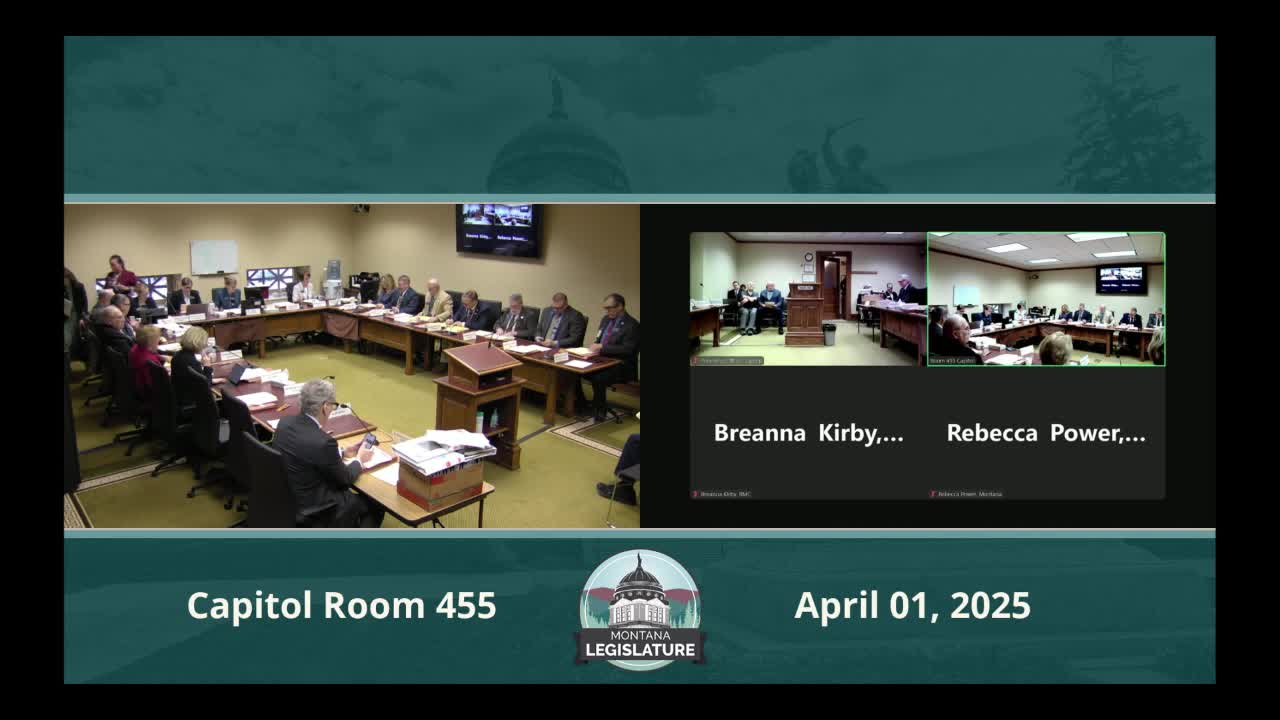
Representative Ed Staffman, sponsor of House Bill 879, told the House State Administration Committee on March 4 that the resolution would create an interim study through the Legislative Finance Committee to assess how recent federal budget and policy changes are affecting Montana.
Staffman said the study would produce a preliminary written report by the end of the calendar year and a final report before the next legislative session, noting "we can either act on it or we could choose to ignore it at our peril." He said the bill includes a $215,000 appropriation intended to cover committee meetings and to contract for outside economic analysis if needed.
The bill drew wide support from tribal, agricultural, environmental and local-business witnesses who described immediate and potential impacts from federal workforce reductions, grant freezes and tariffs. Patrick Kawaki, testifying for the Blackfeet Scribe, Fort Belknap Indian Community and the Chippewa Cree Tribe, said cuts to Indian Health Service positions and Bureau of Indian Affairs offices were already harming tribal communities and cybersecurity protections. "Tribal colleges are being stripped of key funding that helps keep their doors open and their lights on," Kawaki said.
Representatives of the Montana Farmers Union and other agricultural witnesses cited trade shifts and tariffs as a threat to Montana crops; the union noted Montana planted about 720,000 acres of lentils in 2024 with approximately $226 million in sales and that 15% of lentil sales went through USAID contracts that may be affected. Testimony also described potential construction-cost increases tied to tariffs on imported wood and gypsum and warned of downstream effects on affordable housing.
Public-land and conservation witnesses including retired Forest Service staff, Glacier 2 Medicine Alliance and the Montana Environmental Information Center said staffing and grant cuts would reduce trail maintenance, visitor services, wildfire response capacity and scientific monitoring. The Glacier 2 Medicine Alliance urged the committee to add the U.S. Geological Survey to the list of agencies reviewed to capture impacts on research and monitoring.
Legislative Fiscal Division Director Amy Carlson told the committee the division could perform much of the proposed budget-impact work with existing tools but that the appropriation would be needed to pay for contracted, detailed economic and social-impact analyses and for additional committee meetings. "We rely on other people's economics. We don't do economics, but we kind of do applied economics," Carlson said, describing how the division would use outside econometric work and its baseline forecast products to assess impacts.
Committee members questioned cost estimates and overlap with other committees. Representative Cochran asked whether the Legislative Finance Division (LFD) could cover the work within its current budget; Staffman and Carlson said parts could be absorbed but that the $215,000 appropriation was a guesstimate to allow contracting and extra meetings. Representative Byrne and others clarified the study's role as information gathering and contingency planning rather than creating new state policy; Staffman said the study would give the Legislature the data to call a special session if a severe problem required legislative action.
Supporters urged a broad, nonpartisan approach. Several witnesses said the study was not about endorsing or opposing federal policy but about documenting and planning for direct impacts on state services, universities, health care, tribal programs, and local governments. Staffman closed by urging committee members to review the notebook of briefs he provided and to preserve the bill's flexibility so the Legislative Finance Committee could assign or farm out particular topics as needed.
With no opponents offering testimony in person or online, the hearing concluded and the committee moved toward executive action later in the agenda.