Get Full Government Meeting Transcripts, Videos, & Alerts Forever!
Get email alerts on the Tobacco 21 Vape Tax topic
No spam. Unsubscribe anytime.
Committee hears bill to raise tobacco/e-cigarette age to 21, add vape tax; public health groups back measure while retailers warn of illicit-market risk
Summary
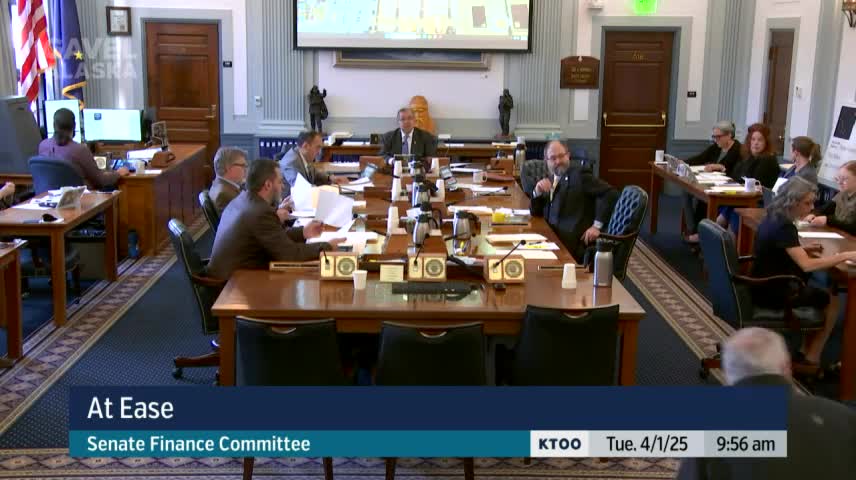
Sen. Gary Stevens introduced Senate Bill 24 on April 1, a package to raise the legal age for nicotine products to 21 and to tax e-cigarette products to fund prevention programs.
Sen. Gary Stevens introduced Senate Bill 24 on April 1, saying the measure seeks to ‘‘protect our children from becoming addicted to nicotine’’ by raising the minimum age to buy, sell, possess and use tobacco and electronic smoking products to 21 and by establishing a retail tax on e-cigarette products.
Tim Lampkin, staff to Sen. Stevens, summarized key policy provisions for the committee: raise the age from 19 to 21 to align with federal law; impose a 25% retail tax on electronic smoking products with revenues to the Tobacco Use Education and Cessation Fund; allow certain internet sales if age verification and tax compliance occur; define nicotine to capture synthetic nicotine; permit an educational-program option instead of court appearance for 18–20-year-olds; set a possession penalty up to $300; set a nicotine concentration cap (the bill cites up to 70 mg/mL); and include child-resistant packaging and ingredient labeling requirements. Lampkin said the age provisions would take effect Jan. 1, 2026 and taxation would begin Jan. 1, 2027.
Public-health witnesses strongly supported the bill. Retired Brig. Gen. Mike Bridges told the committee he supports raising the age to 21 and said the products’ chemical additives and addictive potential pose risks for youth and military readiness. Dr. Rob Crane, board chair of the Preventing Tobacco Addiction Foundation and a retired family-medicine professor, emphasized addiction science and cited a national decline in youth vaping after the federal Tobacco 21 change in 2019.
Trevor Storrs, president and CEO of Alaska Children's Trust, supported aligning state law with federal age limits and taxing vaping products to reduce youth access and fund prevention.
Multiple community witnesses described youth vaping in schools and urged the committee to pass the bill. Several speakers representing retail and vaping businesses opposed the tax component, arguing it would raise the cost of vape products used by adults to quit smoking and could enlarge a black market for illicit, untaxed products; one retailer urged lawmakers to separate an age-21 measure from the tax. Alec McDonald, a Fairbanks caller and former smoker, told the committee that vaping helped him quit cigarettes and warned that taxation could discourage harm-reducing product use by adults.
Senator Stedman reviewed fiscal notes: the Department of Revenue indicated operating costs to implement a point-of-sale retail tax (including system changes and new positions) of roughly $235,000 in the initial implementation year, with revenue impacts and compliance costs discussed in the fiscal notes. The committee took no final action and set the bill aside for further work; the committee set an amendment deadline of noon April 11.