Get Full Government Meeting Transcripts, Videos, & Alerts Forever!
Get email alerts on the Constitutional Process topic
No spam. Unsubscribe anytime.
House narrows rules for Article V commissioners, adds residency and conduct limits; members split on whether state can bind a convention
Summary
The House approved a bill to revise Indiana's Article V procedures by renaming delegates "commissioners," increasing appointee counts from two to three, clarifying residency and conduct rules and barring commissioners from voting on certain constitutional amendments. The measure passed after extended debate, 69-27.
The Indiana House approved a measure to revise the state's Article V procedures for a potential constitutional convention, changing terminology from "delegate" to "commissioner," increasing the number of appointees, and imposing limits on what commissioners may vote on. The resolution passed on a roll call of 69 to 27.
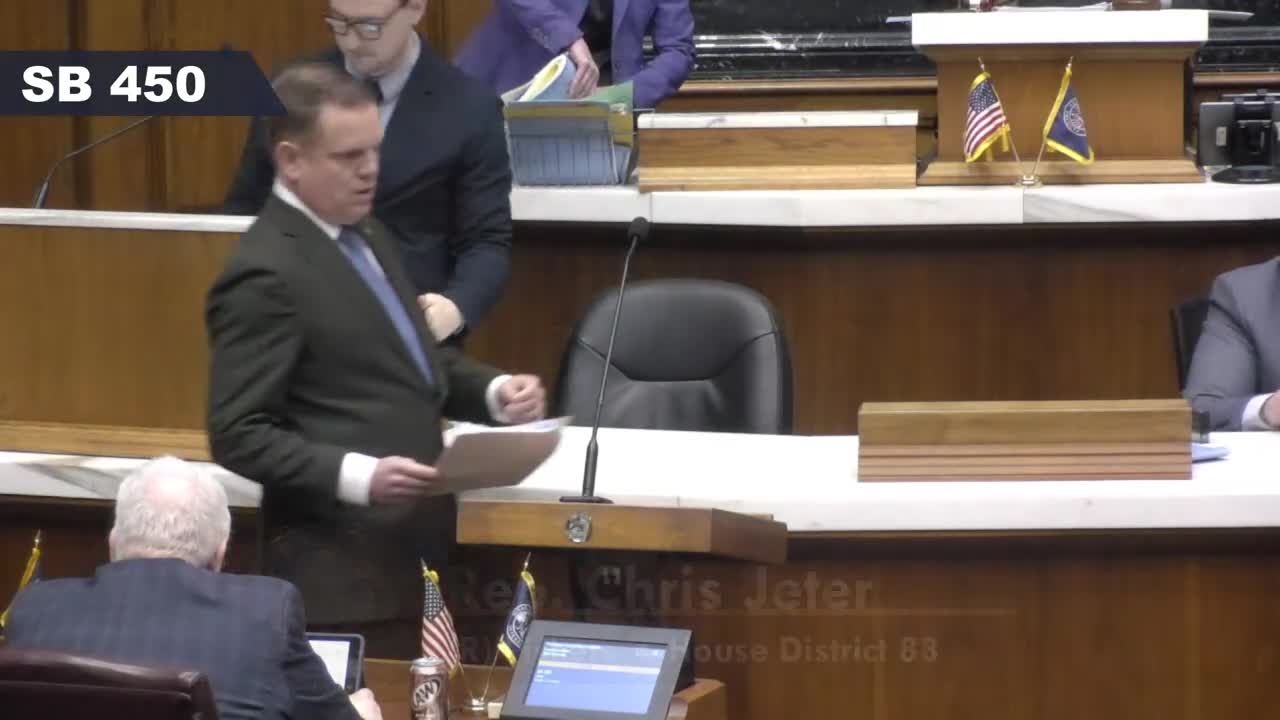
Representative Geter, the bill's sponsor, said the measure "changes the term delegate to commissioner, has residency requirements for who can be a commissioner, can't have been lobbyists, no crimp, no criminal convictions" and increases the number of appointees from two to three. Geter said the changes "clean it up, keeps it tight," and asked members for their support.
The measure drew extended questioning and floor debate about whether a state can meaningfully constrain a national constitutional convention. Representative Prior and others repeatedly asked how state instructions would bind commissioners at a convention and whether federal supremacy or future conventions could render state limits ineffective. Representative Delaney warned that the bill could either do nothing or make commissioners felons if they vote outside state instructions, saying the legislation "makes our delegates, now called commissioners, makes them felons" and arguing the proposal was "not ready for prime time." Representative Smaltz and Representative Julien argued the proposal provides necessary guardrails against a "runaway" convention and said the state should instruct its commissioners about subjects they may not alter.
Representative Smith (Dr. Smith in the transcript) urged additional research and protection of the Tenth Amendment, saying the scope of enumerated and reserved powers required study before further changes.
Sponsor Geter said the bill is intended to provide guidance to commissioners and to narrow subjects they may vote on; Geter said further changes could be considered as more states adopt similar resolutions.
The roll call on final passage was 69 yes, 27 no. The House recorded the passage and the resolution will proceed according to constitutional amendment and resolution procedures.
Why it matters: if a two-thirds threshold of states later passes matching calls for a convention, Indiana's commissioners would be those appointed under this statute; the bill attempts to limit the topics commissioners may consider and to add behavioral and residency requirements for appointees.
Votes at a glance: Senate Bill 450 (Article V statute revisions) — final passage (yes: 69; no: 27).