Get Full Government Meeting Transcripts, Videos, & Alerts Forever!
Get email alerts on the Energy Policy topic
No spam. Unsubscribe anytime.
House approves bill to classify natural gas and propane as ‘clean or green’ energy; lawmakers debate long-term costs and climate implications
Summary
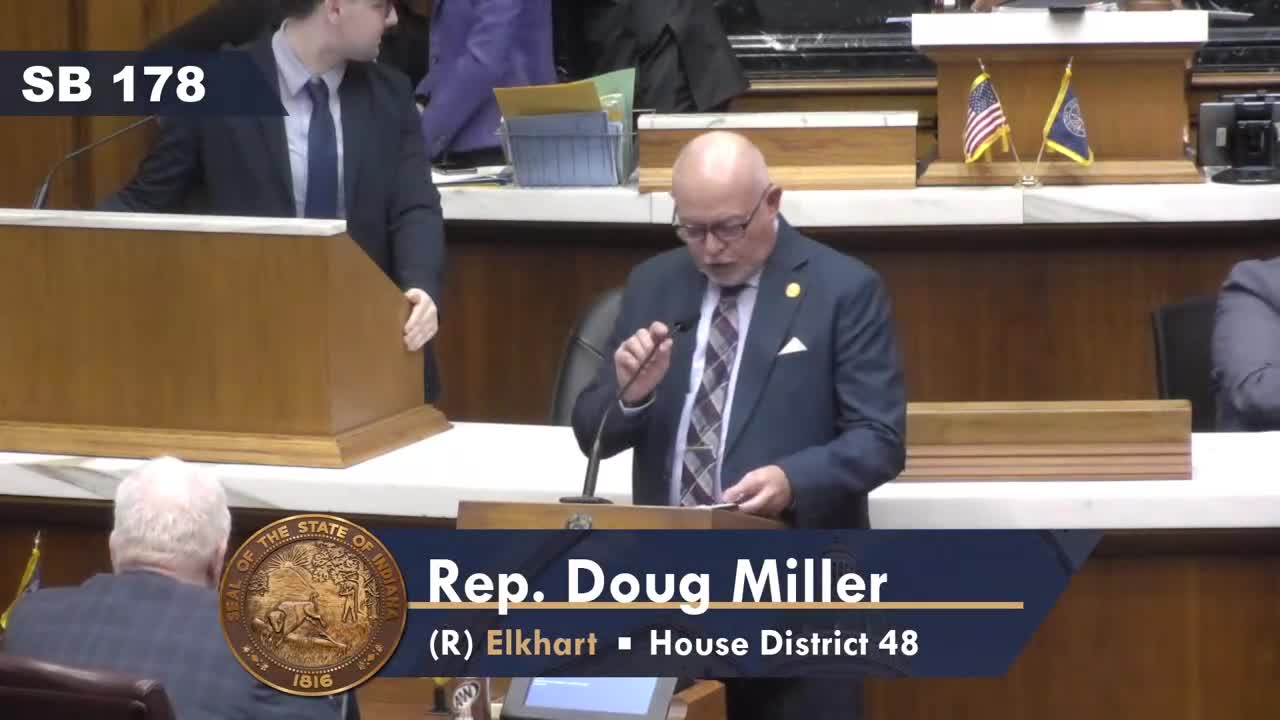
The Indiana House passed Senate Bill 178 to add natural gas and propane to the state's definition of clean or green energy, a move supporters said could open eligibility for federal programs and opponents said risks prolonging fossil-fuel reliance. The bill passed on a roll call of 73-20.
The Indiana House on third reading voted to approve Senate Bill 178, a bill that would add natural gas and propane to the state's definition of "clean or green" energy and make those fuels potentially eligible for federal clean-energy programs. The measure passed on a roll call of 73 to 20.
Representative Miller, speaking on behalf of the bill, said the measure "provides that natural gas and propane become cataloged with others currently listed as clean or green energy as included in the state's definition of clean energy." He said the change "does not impact any energy source currently listed there such as solar, wind, nuclear, battery, and hydro" and described the proposal as supporting an "all of the above approach" to energy and reliability.
The bill prompted extended floor debate about whether labeling fossil fuels as clean would undercut longer-term renewable goals. Representative Pierce criticized the terminology and intent of the bill, saying, "Cleaner is not clean. Cleaner is not green." He argued that while natural gas can emit less carbon than coal at the point of generation, methane leakage and continued dependence on fuel purchases make it different from zero-fuel renewables such as wind and solar.
Representative Burton said he supported the bill because constituents repeatedly cite high utility bills: "My entire district has been 1 of the ... areas that has paid the highest utility bills in the state," he said, and he described the bill as creating a pathway that could affect costs over time.
Supporters argued the classification would allow natural gas and propane to qualify for federal programs that currently exclude some fuels, and that the change would help maintain dispatchable capacity on the grid. Opponents warned the classification risks encouraging new, long-lived gas infrastructure that could become stranded assets as clean technologies and storage scale up.
The roll call on final passage was 73 yes, 20 no. The bill now proceeds in the legislative process under whatever next steps are required by House rules.
Why it matters: backers say the change could unlock federal funds and recognize the current role of gas in grid reliability; critics say the label may delay investment in renewables and storage and raise long-term costs for ratepayers.
Votes at a glance: Senate Bill 178 — final passage (yes: 73; no: 20).