Get Full Government Meeting Transcripts, Videos, & Alerts Forever!
Get email alerts on the Obscenity Government Funding topic
No spam. Unsubscribe anytime.
House adopts enforcement amendment to bar government funding of "obscene" performances; opponents warn of prior restraint
Summary
The House approved an amendment to a criminal law bill that adds a mechanism to bar government entities from funding obscene performances. Supporters said it protects taxpayers; opponents warned it creates a prior restraint and chilling effect on local government programming.
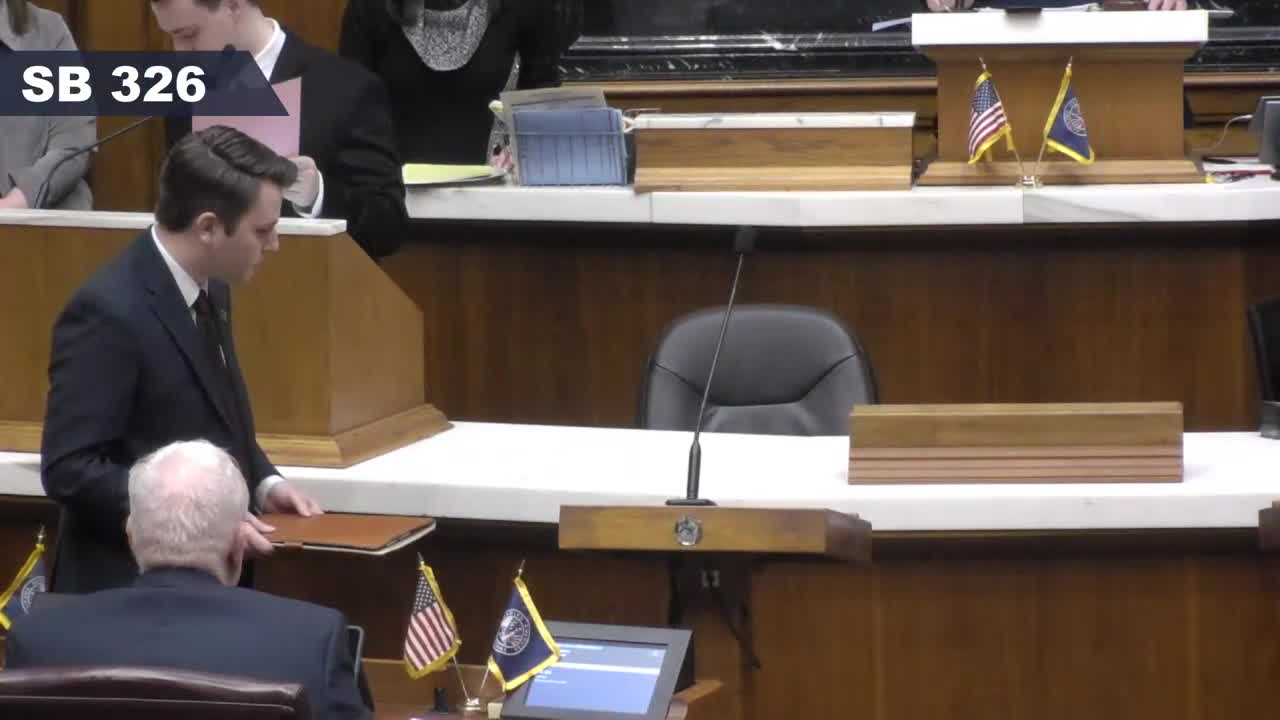
The Indiana House adopted an amendment to Senate Bill 326 that adds an enforcement mechanism to bar government entities from funding what the amendment describes as "obscene" performances.
"Obscenity is a criminal statute in Indiana," Representative Ireland said while explaining the amendment and arguing the state needs a remedy to prevent taxpayer dollars from supporting illegal performances. Ireland said the measure was intended to ensure government entities could not use public funds to support such activity.
Several members objected, arguing the amendment could function as a prior restraint on speech and expose local governments to lawsuits. "This is a prior restraint bill, isn't it? This is a direct violation of the US Constitution," Representative Delaney said during debate. Representative Pierce warned the change "is what's gonna create what they call the chilling effect," saying the amendment could prompt costly litigation against local governments and cause public entities to censor programming to avoid suits.
The transcript records extended debate about the amendment's scope, including exchanges over whether the language applies only to direct funding, or could also bar a municipal facility from hosting an event. The amendment's author characterized the change as limited to government funding and not an effort to restrict private individuals.
The amendment was adopted on the floor (transcript note: the floor later reported the amendment "passes"). The record in the provided transcript excerpt does not include a numerical roll-call tally for the amendment's final passage.
The underlying bill addresses criminal law procedures; the amendment adds an enforcement mechanism targeting government expenditures. Supporters said the amendment provides a statutory check on taxpayer-funded conduct the legislature deems criminal; opponents said the enforcement mechanism risks unintended legal costs and constitutional challenge.