Get Full Government Meeting Transcripts, Videos, & Alerts Forever!
Get email alerts on the Expungement Official Misconduct topic
No spam. Unsubscribe anytime.
House passes bill altering expungement eligibility for official misconduct; sponsor says it does not change current law for elected officials
Summary
Lawmakers debated whether Senate Bill 281 would allow expungement for official-misconduct convictions; the sponsor and opponents disagreed on drafting and whether elected officials remain ineligible; the House passed the bill.
The Indiana House passed a measure, Senate Bill 281, that prompted extended floor discussion about whether the statute changes expungement eligibility for those convicted of official misconduct.
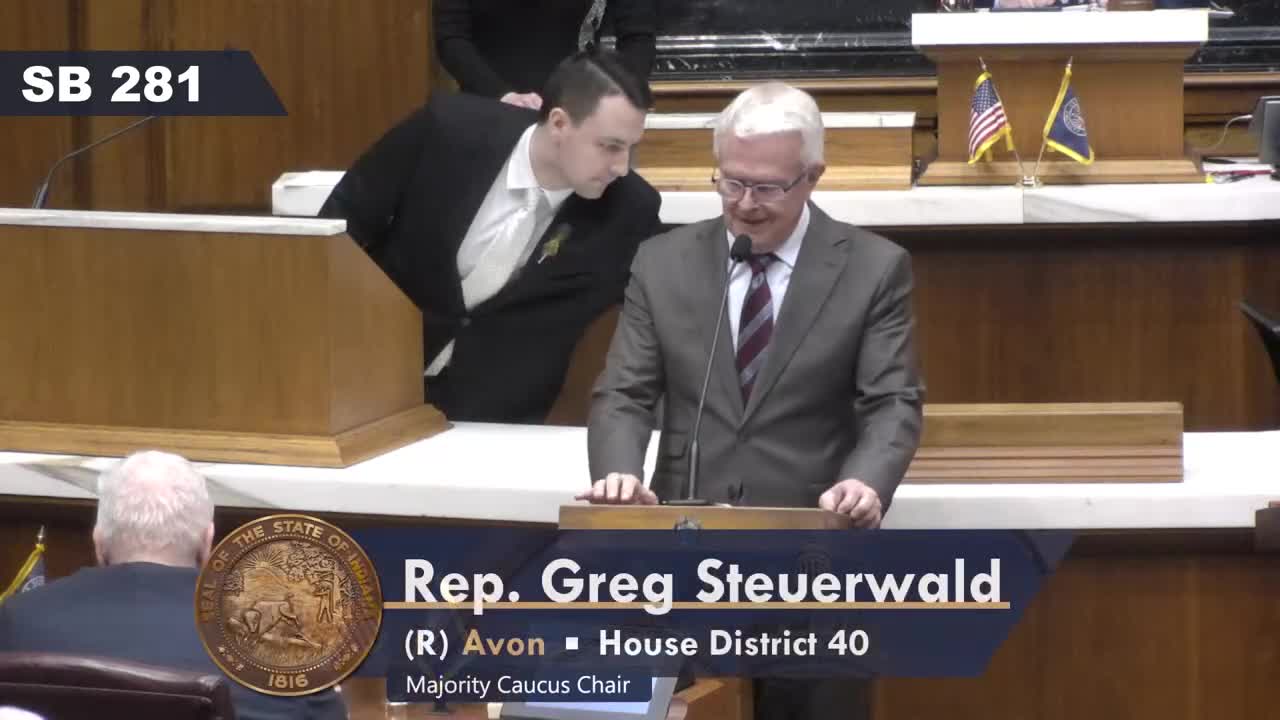
"I can tell you I'm comfortable saying that 2 81 does not change current law. That being that an elected official who's convicted of official misconduct is not eligible for expungement," Representative Storwold said after meeting with staff and colleagues. The sponsor said he had conferred with Legislative Services and other members and believed the bill would not alter the longstanding ineligibility of elected officials convicted of official misconduct.
Other members pressed concerns that the drafting could allow expungement in some official-misconduct cases for non-elected officials. Representative Pierce described official misconduct as a breach of public trust and said some crimes should remain forever part of the public record. He noted the committee testimony included an individual who had pleaded guilty to official misconduct after selling drugs while on duty as a police officer and said the public has an interest in knowing the truth about such misconduct.
Representative Storwold emphasized that any expungement in the relevant category would still require both prosecutors' consent and judicial approval; that process remains in place, he said. The transcript records that the bill passed the House on the day of the session.
The debate centered on drafting clarity, the role of prosecutors in consenting to expungement, and the balance between rehabilitation and public access to records when the offense involves abuse of public office.