Get Full Government Meeting Transcripts, Videos, & Alerts Forever!
Get email alerts on the Education Teacher Compensation topic
No spam. Unsubscribe anytime.
House approves law letting school boards fund supplemental pay for high‑need teachers
Summary
The Indiana House on March 26 approved a bill allowing school boards to set aside a portion of certain revenue to pay supplemental compensation to teachers in shortage or high‑need positions; the measure passed on a 65‑29 roll call after extended floor debate about morale and equity.
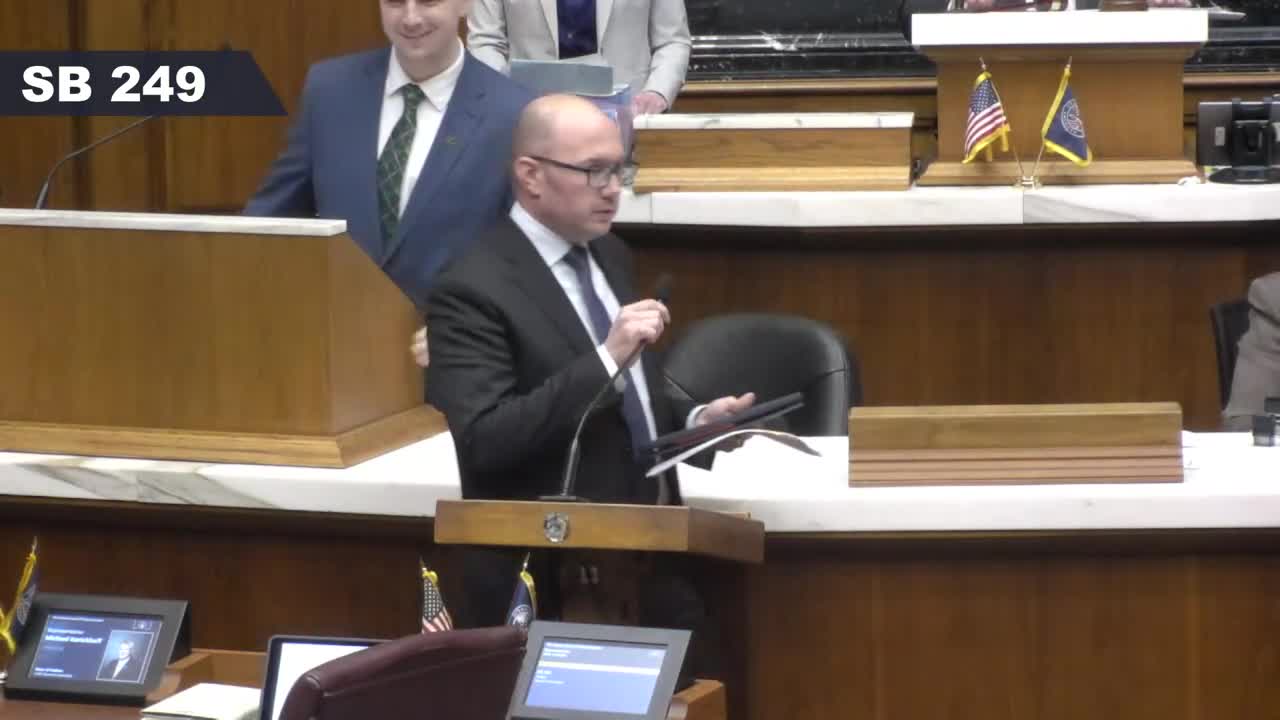
The Indiana House passed Senate Bill 249 on March 26, 2025, allowing local school boards to adopt resolutions that exclude a portion of certain education revenue to fund supplemental pay for teachers in high‑need subjects or shortage areas, the bill’s sponsor said.
Supporters and critics said the change could help recruit and retain teachers in hard‑to‑staff positions, but multiple lawmakers warned it risks harming teacher morale and collaboration.
Representative Teska, who presented the bill, said the measure responds to recommendations in the governor’s teacher compensation commission and aims to give school corporations “tools to finance those supplemental payments.” The bill allows school boards to exclude a percentage of revenue from the bargaining education fund to create a pool for supplemental pay and sets a 10% floor for a calculation that determines a teacher’s increment, Teska said.
Republican Representative Paff urged members to consider the effect on collaboration among teachers. “Why under this bill is a chemistry teacher worth more than a second grade teacher? All teachers are high need teachers because they educate children,” Paff said. Representative Smith also cautioned about morale effects, saying “teachers need to always be happy because unhappy people make other people unhappy.” Representative Klinker argued the policy could undermine camaraderie among school staff and urged a no vote.
After extended debate, the House approved the bill on a roll call of 65 ayes and 29 noes. The clerk was instructed to inform the Senate of the House’s action.
What the bill does: it permits school boards to pass resolutions to reserve a portion of certain local education revenue to pay supplemental compensation targeted at high‑need teachers; it includes a floor calculation of 10% for determining the increment used for the payment. The bill’s text, as presented on the House floor, cites the 2020 teacher compensation commission report as background for the proposal.
Next steps: The clerk will notify the Senate of the House passage; further implementation depends on local school board resolutions and any administrative guidance that follows.