Get Full Government Meeting Transcripts, Videos, & Alerts Forever!
Get email alerts on the Free Speech Obscenity topic
No spam. Unsubscribe anytime.
House debate over amendment barring government funding of 'obscene' performances raises First Amendment concerns
Summary
Lawmakers sparred over an amendment that would prohibit government entities from funding or hosting performances deemed "obscene," with opponents calling it a prior restraint and supporters saying it protects taxpayer dollars; the transcript does not record the floor vote outcome.
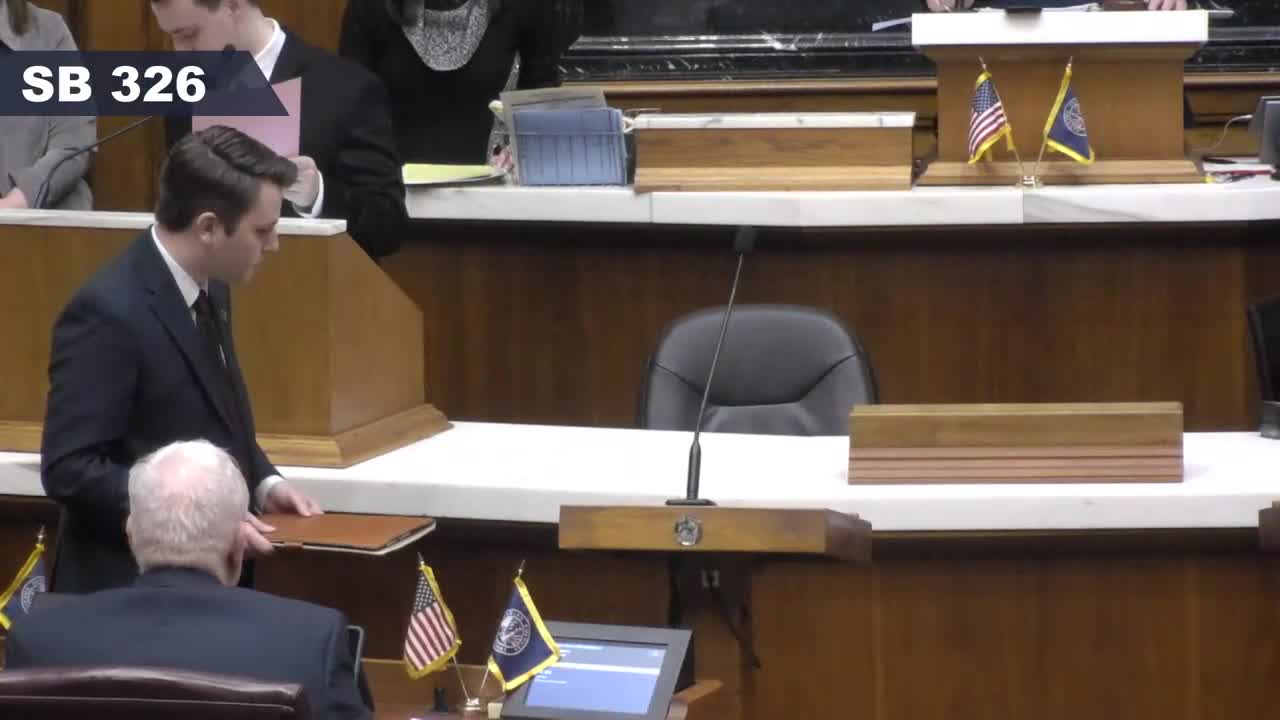
An amendment to bar government entities from funding or hosting performances the bill labels "obscene" drew a protracted floor debate in the Indiana House over whether the language would create a prior restraint on speech and could invite costly litigation against local governments.
The amendment, discussed during consideration of a criminal-procedure bill on second reading, was presented as a means to prevent taxpayer dollars from being spent on obscene performances. "If they're going to spend tax dollars on an obscene performance ... that would be barring the government entity from doing it," the amendment's sponsor told the chamber. Supporters framed the change as a preventive measure to ensure taxpayer money did not underwrite content the state already classifies as obscene.
Opponents, including Representative Delaney, described the measure as a prior restraint and said it risks violating the U.S. Constitution. "This is a prior restraint bill, isn't it? This is a direct violation of the U.S. Constitution," Delaney said on the floor. Representative Pierce and others warned the amendment would create a chilling effect on local governments, opening them to injunctive lawsuits and attorney-fee claims even where material would not meet the high legal threshold for obscenity.
Speakers reviewed the Supreme Court's Miller v. California standard for obscenity, noting it requires evaluation of contemporary community standards, whether material is patently offensive, and whether it lacks serious literary, artistic, political or scientific value. Representative Pierce said the high legal bar means the factual scenario described by supporters was unlikely to occur in practice but expressed concern the amendment would nonetheless "create problems for local units of government" by enabling harassment litigation and pre-enforcement injunctions.
The transcript records extended exchanges between the amendment's sponsor and several representatives about what constitutes "funding" or "hosting," whether use of a public auditorium constitutes funding, and whether the bill targeted government speech or private speech taking place in a government facility. The floor record does not include a final roll-call outcome for this amendment in the provided transcript excerpt; the result is therefore not specified in this account.