Get Full Government Meeting Transcripts, Videos, & Alerts Forever!
Get email alerts on the Healthcare Services topic
No spam. Unsubscribe anytime.
Putnam County launches community paramedicine team funded by opioid-abatement dollars
Summary
County emergency services launched a three-person community paramedicine team, trained through Seminole State College and funded by opioid-abatement money, to provide nonemergency home visits, care coordination and alternatives to repeated 911 transports.
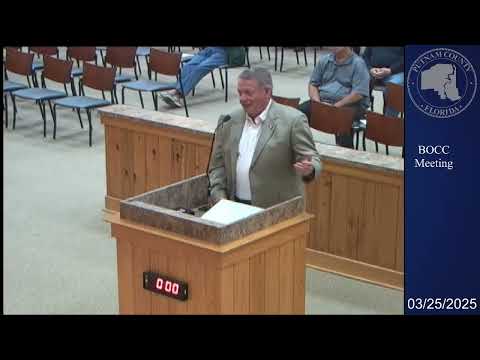
Putnam County emergency services presented a newly launched community paramedicine program to the Board of County Commissioners, describing expanded field-based services aimed at reducing repeat 911 transports and connecting residents with primary care, behavioral health and social supports.
An emergency services presenter described the team as three full-time community paramedics who began a certification course at Seminole State College this week, an eight‑month program the presenter said will provide the framework for their work. “This program was launched on January sixth of this year. And as of Saturday, March 22, this team has answered a 43 calls for service,” the presenter told the board.
Chair Leota Wilkinson emphasized the source of funding and the program’s long-term intent: “This project isn't funded out of your local dollars. This came from the opioid abatement money that was given through the state. But the good part is it's meant to be long term.” Commissioners and staff described the program as intended to bridge gaps in care — for example, helping people find outpatient treatment, access shelters, obtain walkers or durable medical equipment, and avoid repeated ambulance trips.
Officials said the community paramedics work closely with HCA Putnam hospital emergency room staff and case management, and that the county arranged an operational relationship so paramedics can follow up on patients after ED visits. Emergency services staff said the program has already helped place people into rehab and nursing facilities and reduced repeated long ambulance responses from remote parts of the county. Staff also reported the community paramedic vehicle is stocked for advanced life support and that the county intends to pursue Medicare/Medicaid billing once the workers complete certification.
Commissioners and staff praised the program’s community hiring and oversight structure; county representatives said community members participated on the hiring panel. Officials asked for periodic updates and for the program to track call and placement metrics as it grows.
No county general-fund dollars were identified as the source for day‑to‑day operations in the presentation; county leaders said the initial equipment and program costs were supported with opioid-abatement funds allocated to the county.