Get Full Government Meeting Transcripts, Videos, & Alerts Forever!
Get email alerts on the Class Size Splitting K3 topic
No spam. Unsubscribe anytime.
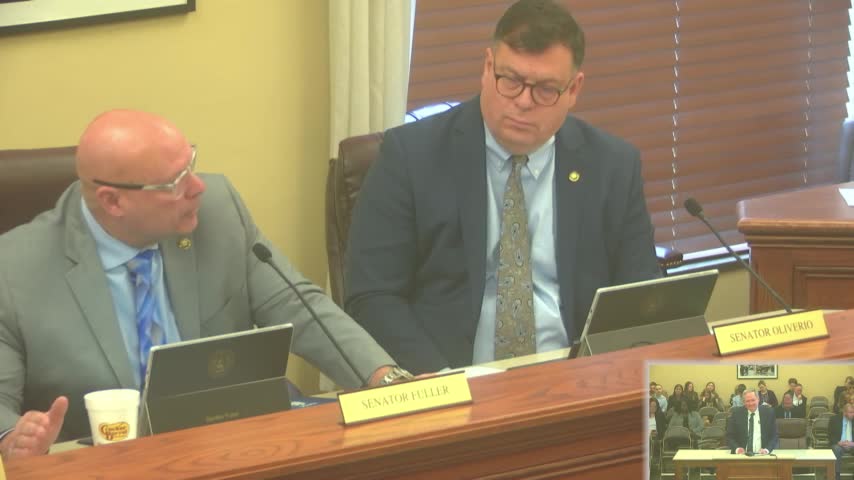
Committee lays over bill that would require splitting oversized K–3 classrooms after debate over costs and practical effects
Summary
The Senate Education Committee laid over House Bill 2635 after senators and education officials questioned how a requirement to split oversized K–3 classrooms would be implemented and funded.
The Senate Education Committee laid over House Bill 2635 to a future meeting after extensive questions about how the split-classroom requirement would work and who would pay for additional aides or teachers.
Committee counsel Hank explained the proposal: "This bill provides that where classrooms become so large that they affect the time teachers can spend with students in a 1 on 1 setting, the students in the classroom are required to split into 2 separate classrooms." Counsel added the requirement would be implemented next school year and that a proposed committee amendment would resolve a conflict with Senate Bill 650 by incorporating its provisions into the same code section.
Senators pressed for specifics. One senator asked whether the statutory phrase "as equally as possible" meant a precise split (for example, 20 and 20 in a 40-student classroom). Counsel explained the intent was to prevent a superintendent from overloading one classroom and keeping another below the threshold to avoid hiring an aide. Deputy Superintendent Sonia White, who addressed the committee, warned of operational consequences: she said class sizes are already capped at 25 for K–3 and described factors superintendents consider when dividing students, including special-education needs, behavior dynamics and transient enrollment. "You also have to look at the number of special education students," White said, and she cautioned the change could have unintended consequences and require many more aides in some counties; she said one county estimated needing to hire 24 additional aides.
Committee advisors and education officials explained the schooled funding formula (described in the hearing as the school-aid formula) may not automatically absorb those added costs, and that mandating splits without additional state funding could force local boards to reallocate existing resources or carryover balances. Mr. Jim Brown explained how transient enrollment and midyear movement could create practical difficulties if an equality requirement were enforced throughout the year.
After discussion, the committee agreed to lay the bill over for further work. The vice chair moved to lay House Bill 2635 over to a future meeting; the motion passed on a voice vote.