Get Full Government Meeting Transcripts, Videos, & Alerts Forever!
Get email alerts on the School Insurance Captive topic
No spam. Unsubscribe anytime.
House approves plan to create state captive insurer for school property; emergency clause attached
Summary
Legislation to form a state captive insurance program for K–12 and higher-education property coverage advanced, aiming to stabilize premiums and require participation for recipients of facility funding; the bill passed with an emergency clause.
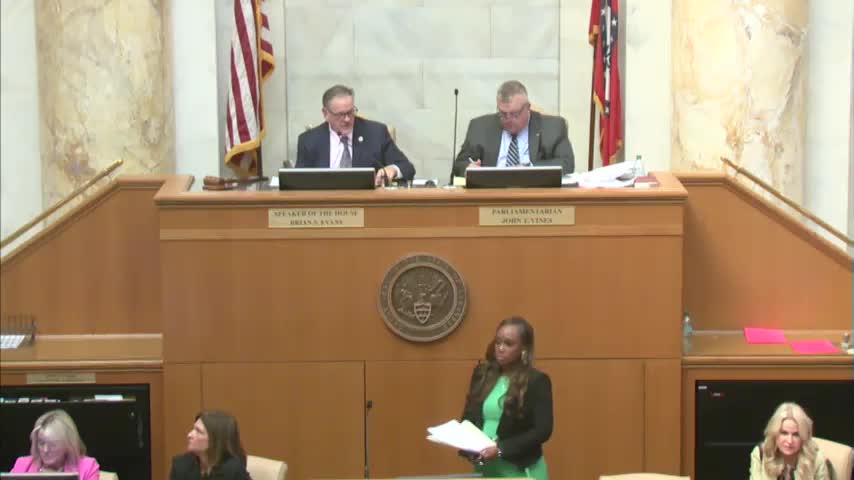
Representative Wardlaw presented House Bill 1821, a proposal to create a state captive insurance program intended to provide property insurance for public K–12 schools, charter schools and state higher-education institutions. Wardlaw said the measure grew out of a multi-year study and consultant work and is intended to stabilize premiums and make coverage more efficient by pooling risk.
Wardlaw told members the proposal would move approximately $135 million into the captive rather than a larger sum previously recommended by consultants. He said the bill includes rule-making authority for the Department of Transformation and Shared Services (DTSS) to establish coverage options and that institutions would be able to choose higher deductibles — described as a mirror of private-market deductibles — and that foundations could agree in writing to accept additional uninsured risk for high-value facilities.
The bill would require entities that receive state facility funding to participate in the captive; districts that do not seek state facility funds would not be required to join. Wardlaw also said the bill would adjust claim timetables, proposing a one-year window for schools to file property claims rather than the current open-ended practice.
Members pressed for details on timing, deductibles and feasibility studies. Wardlaw said a feasibility study and more detailed policy forms are expected later in the summer and that the captive’s coverage would be available beginning Dec. 1, 2025. Several members asked about vendor selection; Wardlaw said consultants have been engaged for planning, but final contracting for long-term services is not guaranteed.
The House voted on the bill and its emergency clause; the clerk announced a result of 89 yays, 5 nays and 4 present, and the bill with the emergency clause passed on the floor.