Get Full Government Meeting Transcripts, Videos, & Alerts Forever!
Get email alerts on the Juvenile Justice Transfers topic
No spam. Unsubscribe anytime.
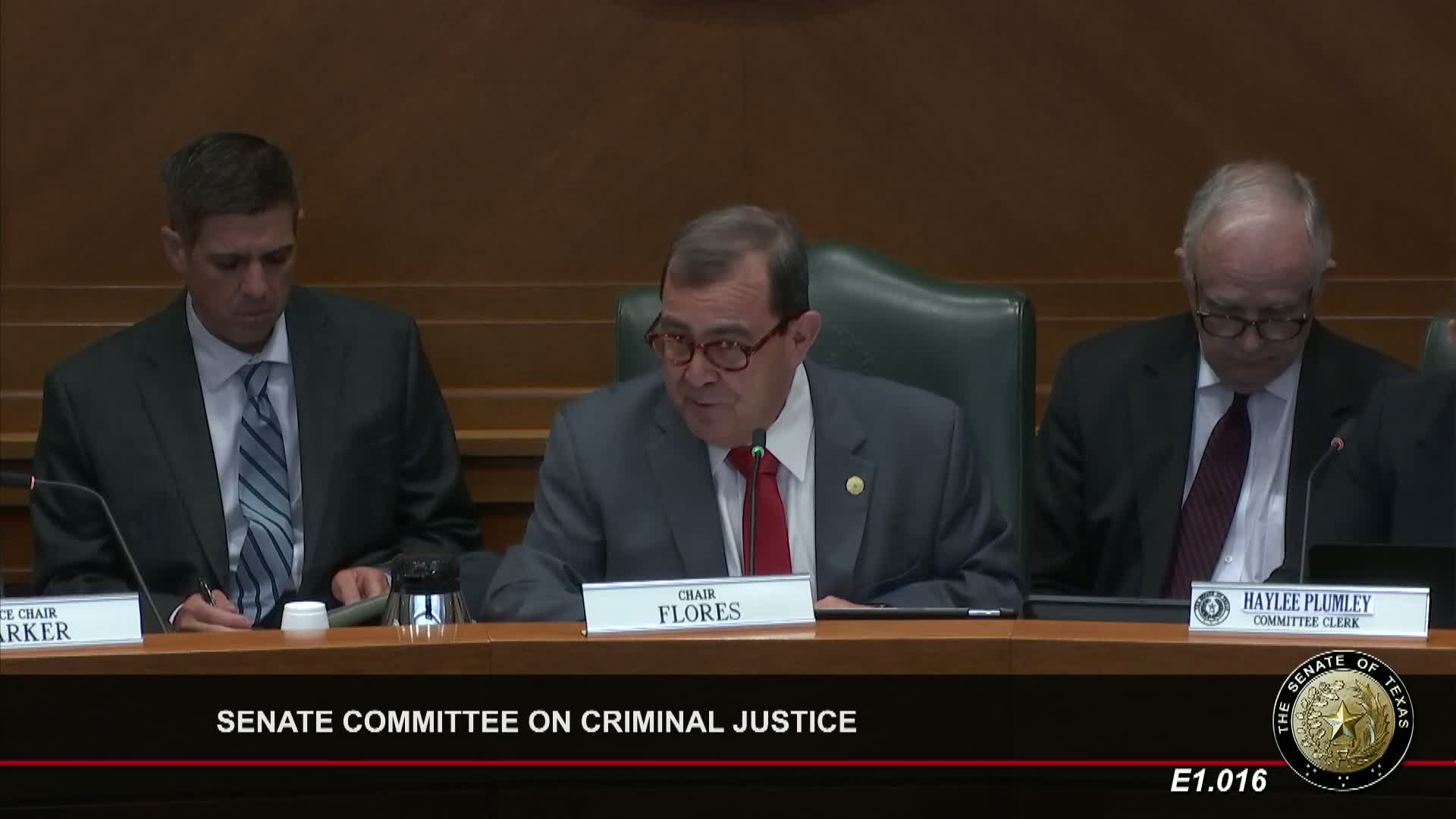
Senate hearing spotlights escalating assaults at juvenile facilities; bill to allow transfers to adult system left pending
Summary
Lawmakers heard competing testimony on Senate Bill 1727, which would designate certain youth as engaging in habitual felony conduct and allow earlier transfer of some juveniles to the adult prison system; the committee left the bill pending after extensive debate and mixed testimony.
Senate Bill 1727, explained by Senator Charles Perry, would allow the juvenile justice department and courts to seek determinate (adult) sentences for certain youths who commit new felonies while already committed to the Texas Juvenile Justice Department (TJJD). Perry told the committee the measure aims to give the state tools to address repeated assaults on staff at juvenile facilities: "This bill seeks to provide the department and law enforcement with necessary tools to address the violent assault on staff."
Why it matters: TJJD staff and probation officers described a rise in assaults on employees at juvenile facilities and probation departments; advocates and civil-rights groups warned that transferring youth to adult prison risks harm and may conflict with constitutional protections for juveniles.
What supporters said: Tina Lincoln of Hill County juvenile probation and William Carter, a Lubbock County chief juvenile probation officer, said the bill would allow continued supervision and accountability for older juveniles who commit violent crimes while committed. Philip Perry and supporters noted that most serious facility assaults are by repeat offenders and that the bill would permit transfer requests to adult custody when certain standards are met.
What opponents said: Alicia Castillo of the Texas Civil Rights Project urged opposition. She cited rising use-of-force rates in youth facilities and referenced U.S. Supreme Court precedents that recognize reduced culpability and greater capacity for change in juveniles. "The only worse place than TJJD for kids is TDCJ," Castillo told the committee, arguing adult prison is an inappropriate response for many youth.
Resource witnesses: Chandra Carter, the TJJD executive director, and Shawn Grove, TJJD deputy executive director, answered questions about available adult programs such as TDCJ’s youthful-offender (Champion) programs and facility placements. Carter and Grove said the youthful-offender program typically houses fewer than 30 youth and that transfers have most commonly involved 18-year-olds.
Committee action: After public testimony from probation officers, TJJD staff, and advocates on both sides, the committee left SB 1727 pending for further work. The hearing record shows substantial debate about age thresholds, where transferred youth would be housed, and whether the bill should lower the transfer age from 16 to 15 in some circumstances. Senator Perry noted the bill had been filed in prior sessions and characterized it as bipartisan in origin.
Ending: The committee left the measure pending to allow members and stakeholders more time to reconcile public-safety concerns, the availability of adult placements such as the Champion program, and constitutional and rehabilitative issues raised by opponents.