Get AI Briefings, Transcripts & Alerts on Local & National Government Meetings — Forever.
Bill would extend generator reliability standard to existing plants; supporters say it levels the playing field, opponents warn of retroactive costs
Loading...
Summary
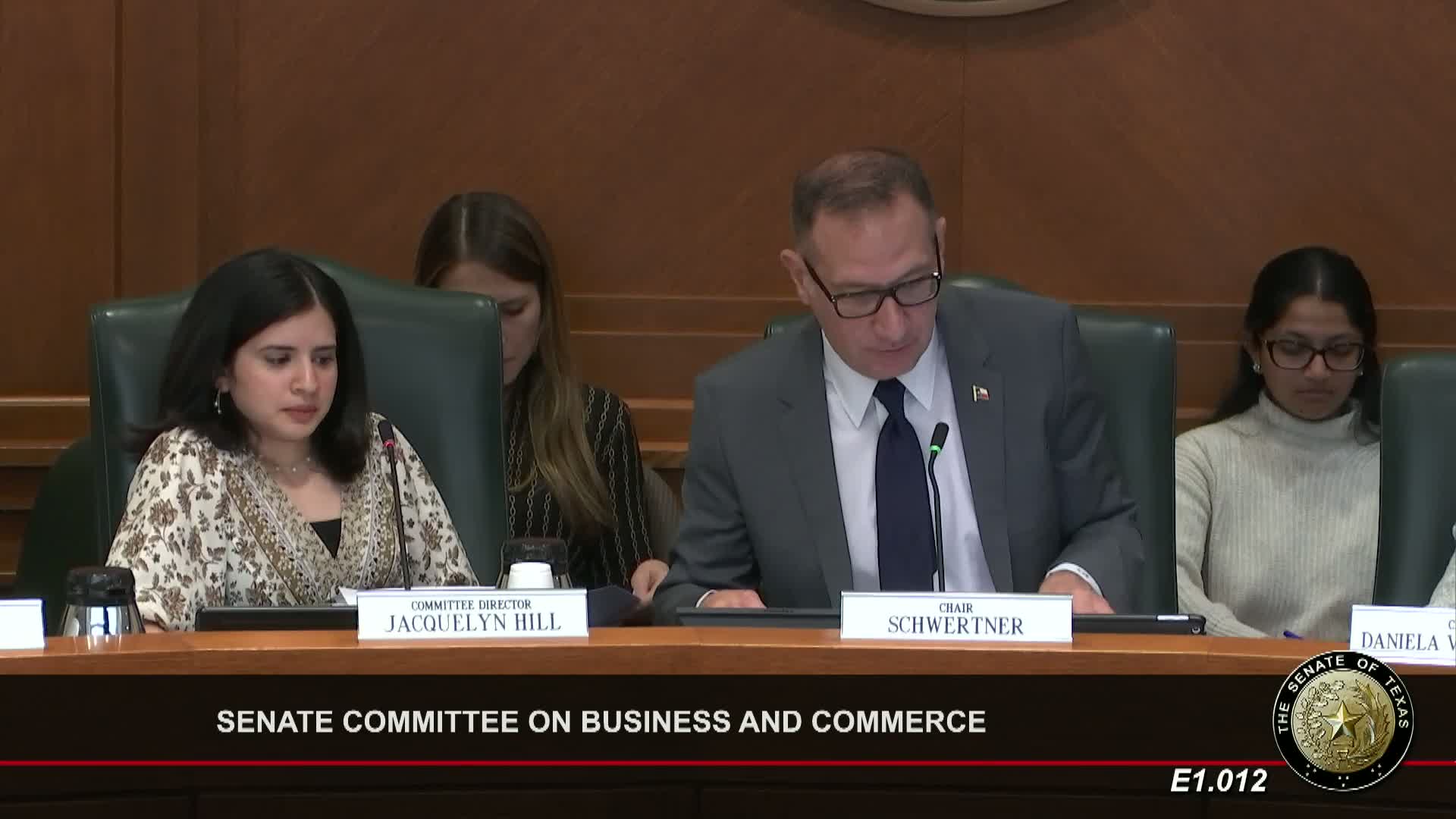
Senate Bill 715 would remove a 2027 cutoff in statute and require all generation—new and existing—to meet the same reliability (firming) standard. Proponents said the move would better price reliability; developers and renewables groups warned of retroactive penalties and higher customer costs.
Senate Bill 715, sponsored by Senator Sparks, would remove the statutory 2027 phase-in and require the Public Utility Commission’s (PUC) reliability standard for generators to apply to both new and existing generating resources.
Sparks said the measure would “shift the responsibility for reliability from the ratepayer to the power generators themselves” and argued that better pricing of reliability would lower risk of large outages. He said the state has added large amounts of wind, solar and storage but relatively little new dispatchable generation, and that applying a uniform reliability standard to the whole fleet would incentivize investment in firming capacity.
Supporters included trade groups and policy organizations that urged action to value reliability. Bill Peacock of the Texas Public Policy Foundation said SB 715 would “make renewable generators pay the costs they are imposing on the grid” and argued the measure would help correct price signals.
Opponents included the Texas Solar and Storage Association, the Advanced Power Alliance and developers who warned that retroactive firming requirements would undermine investor confidence, raise costs for customers and could push older thermal units out of the market. Siva Joshua, a consultant speaking for solar and storage interests, told the committee that applying firming obligations retroactively could raise customer costs by “as much as $1,600,000,000 annually” for solar resources alone and create operational distortions. Sol Systems, a developer with a project in Uvalde County, warned that late-stage projects could become uneconomic.
ERCOT and other resource witnesses participated as nonvoting resources; public testimony concluded and the committee left SB 715 pending. Witnesses and the author discussed phasing and implementation mechanics; opponents asked for further economic analysis of retroactive application and for protections for existing dispatchable assets.
The committee did not vote; the bill was left pending for further drafting and stakeholder work.