Get Full Government Meeting Transcripts, Videos, & Alerts Forever!
Get email alerts on the Public Construction topic
No spam. Unsubscribe anytime.
Bill would ban contract clauses making contractors pay for owner-caused delays; contractors and water authorities split on impact
Summary
Senate Bill 776 would prohibit government contract clauses that require contractors to bear costs when delays are caused solely by the government entity. Contractor groups and trade associations testified in favor; several public authorities urged exemptions for critical infrastructure.
Senate Bill 776, authored by Senator Hughes, would bar governmental entities from including contractual terms that shift the cost of owner-caused construction delays onto contractors.
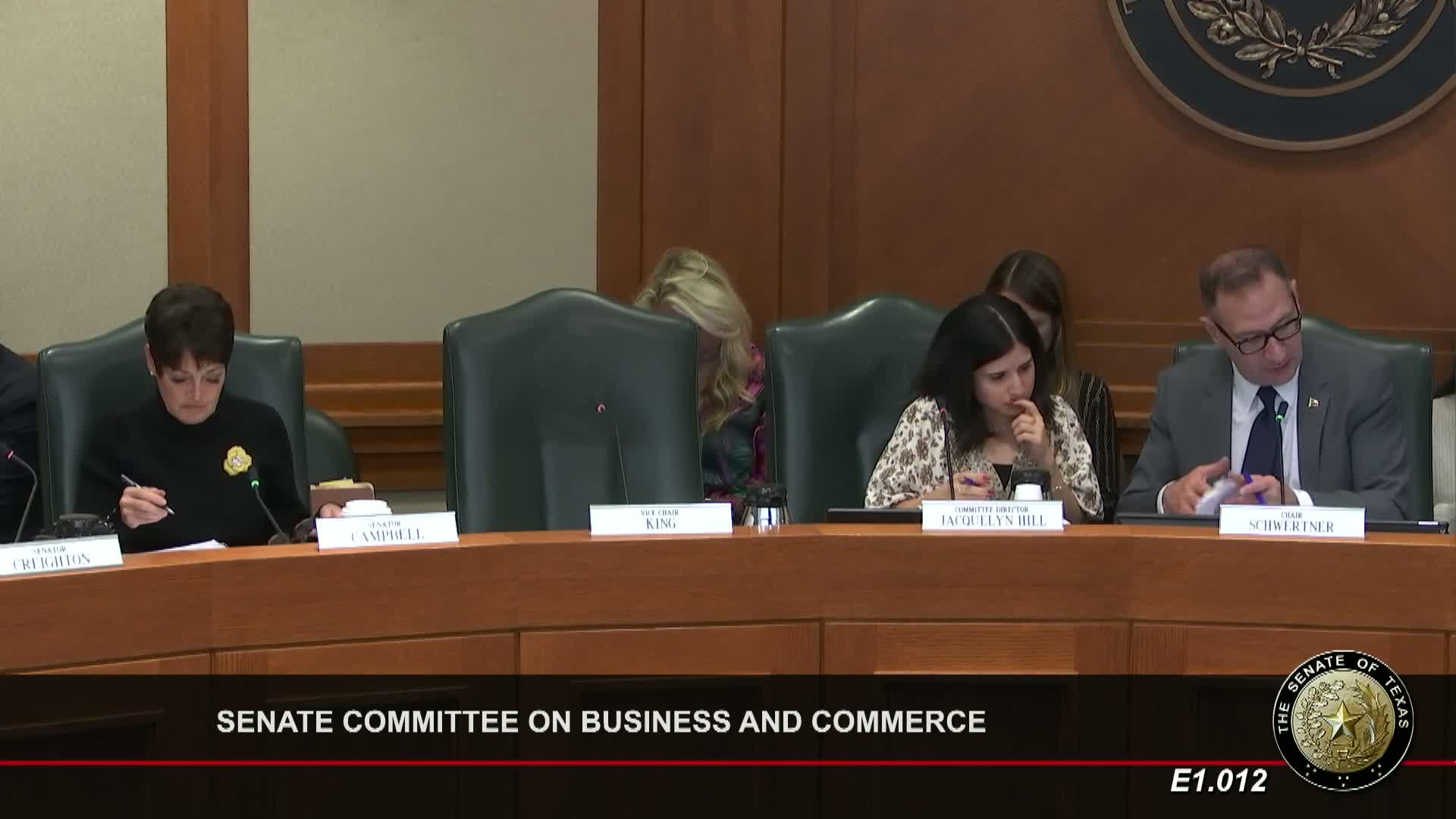
Senator Hughes told the committee that the bill addresses “one-sided” contract clauses that require contractors to pay liquidated damages even when the governmental owner caused the delay. Proponents argue those clauses force bidders to pad prices, decrease competition and raise costs for taxpayers. Jason Martin with the AGC Texas Building Branch, Perry Fowler of the Texas Water Infrastructure Network (TEXSWIM), and representatives of surety firms and general contractors testified in support, saying the clauses discourage competition and can add hundreds of millions to project costs.
Opponents included LCRA and major water suppliers such as the Brazos River Authority and San Antonio Water System, which urged a critical-infrastructure exception. Tom Money of LCRA testified that the bill could create a surge of delay claims, slow project completion and increase costs for critical projects, particularly large water and energy infrastructure that rely on negotiated dispute-resolution processes.
Contractors told the committee that, in practice, key public solicitations include nonnegotiable terms that make bidders assume owner-caused delay risk; one contractor estimated a $15,000-a-day carrying cost on a nearby capital complex project. Industry witnesses said a recent negotiation over a multimillion-dollar water project increased the project estimate substantially after sureties and bidders flagged the risk.
The committee heard conflicting testimony about likely litigation outcomes and the effect on project timing. Some water authorities urged an exemption for “critical infrastructure” projects; trade groups said an exemption would undercut the bill’s purpose and opposed it. The committee took testimony from a broad panel, including contractors, sureties and water authorities, and left SB 776 pending for further work.