Get Full Government Meeting Transcripts, Videos, & Alerts Forever!
Get email alerts on the Gender Affirming Care Funding Ban topic
No spam. Unsubscribe anytime.
Committee advances substitute to SB 39 to bar state funding for transition-related interventions after extended debate and public testimony
Summary
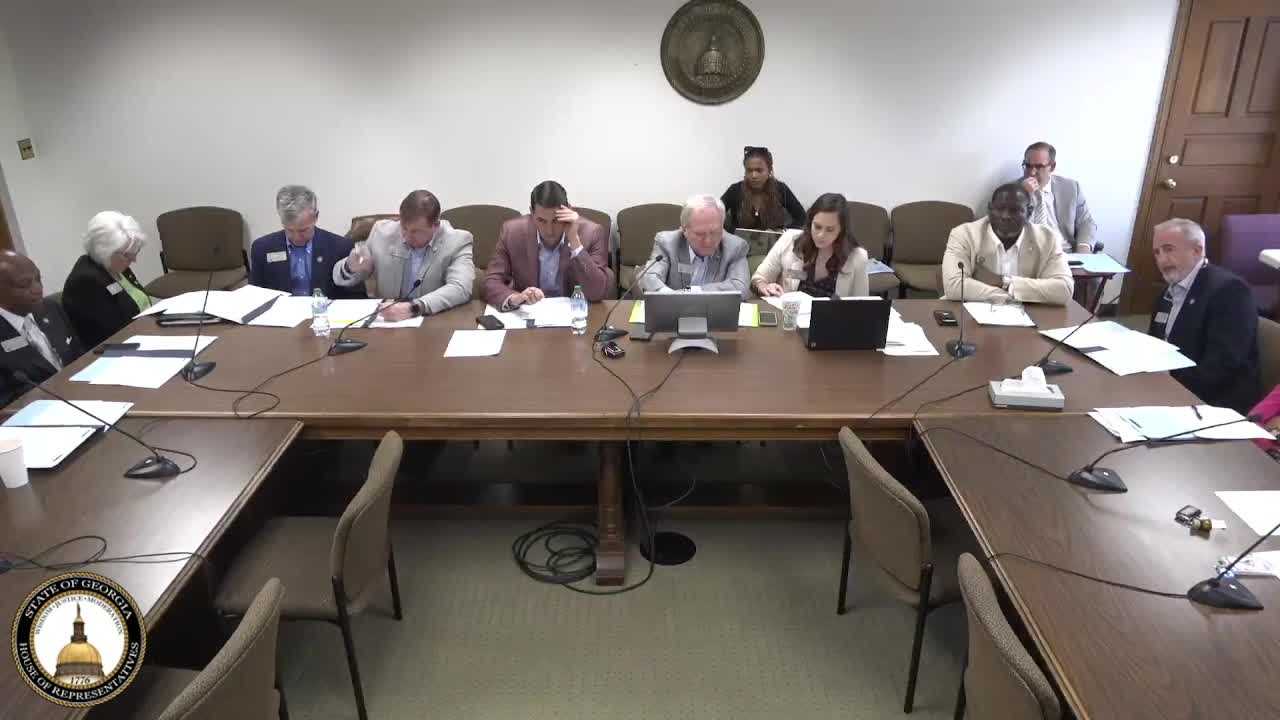
The committee voted to give a due pass to the committee substitute for Senate Bill 39 (LC461248S), which the sponsor said would bar state funds — including state employee health plans, Medicaid, and state-owned facilities — from covering transition-related interventions.
The committee voted to give a due pass to the committee substitute for Senate Bill 39 (LC461248S), a measure the sponsor described as prohibiting public dollars from covering transition-related medical interventions.
"The bill prevents public dollars from covering transgender surgeries," Representative Cox, the bill sponsor, told the committee. "It prohibits state employee health care plans from covering intervention. It also prohibits medical assistance programs including Medicaid from covering any medical interventions. And then as I just said, it prohibits the same sort of medical interventions from state owned or operated health care facilities, which include all correctional institutions."
Committee debate focused on several issues the sponsor acknowledged were unresolved or required clarification: the bill's defined terms (committee members asked about the meaning of "supraphysiological" hormone dosages), whether the bill's prohibitions extend beyond surgery to mental health services and other treatments, whether federal funds would be affected, and the state's exposure to litigation. Members repeatedly cited prior litigation and settlements; one committee member said the state had spent about $4,100,000 defending related cases.
Medical and civil-rights witnesses opposed the measure in testimony. Dr. Ashley Urrutia, a primary care physician from Atlanta, told the committee that "gender affirming care is backed by science and multiple medical organizations" and warned that abruptly stopping hormone therapy "increases depression, worse health outcomes, and suicidality." Cassie Grimsley Ackerley, an internal medicine and pediatrics physician, urged the committee not to remove care from people who are incarcerated and said denying long-standing hormone therapy to an incarcerated person would be "cruel and... egregious."
Advocacy witnesses cited litigation history. Jeff Graham, executive director of Georgia Equality, noted a series of lawsuits challenging related denials of care and said, "The state of Georgia has never won 1 of them," and urged caution while the U.S. Supreme Court considers related questions. Bentley Hudgins, Georgia state director for the Human Rights Campaign, framed the issue in medical-ethical terms, saying the bill conflicts with medical-professional obligations and existing professional guidance.
Committee members debated an amendment that would have preserved coverage for individuals already receiving transition-related care under the State Health Benefit Plan; a motion to insert a provision guaranteeing continuation of care for current plan enrollees (inserting a new section between lines 98–99) was moved and seconded but failed on a voice/show-of-hands vote in the transcript (the amendment did not pass). The committee then voted to give the committee substitute LC461248S a due pass; the transcript records the motion and that "the motion passes," but does not provide a full roll-call tally.
Sponsors said the purpose of the bill is to stop use of taxpayer funds for transition-related interventions and leave individuals able to obtain care privately if they choose; opponents said the measure would deny medically recommended treatment, risk harm to vulnerable people (including those who are incarcerated), and would likely prompt additional litigation.
The committee set the measure as having received a due pass recommendation and adjourned.