Get Full Government Meeting Transcripts, Videos, & Alerts Forever!
Get email alerts on the Small Business Entrepreneurship topic
No spam. Unsubscribe anytime.
Women’s Entrepreneurial Opportunity Project urges inclusion of small-business concerns in SB28 debate
Summary
Representatives of a women-focused nonprofit and small-business advocates briefed the committee on workforce, federal procurement transitions and concerns about SB28 (the "red tape rollback" bill); they urged clearer public-comment processes and certification equivalencies for small businesses.
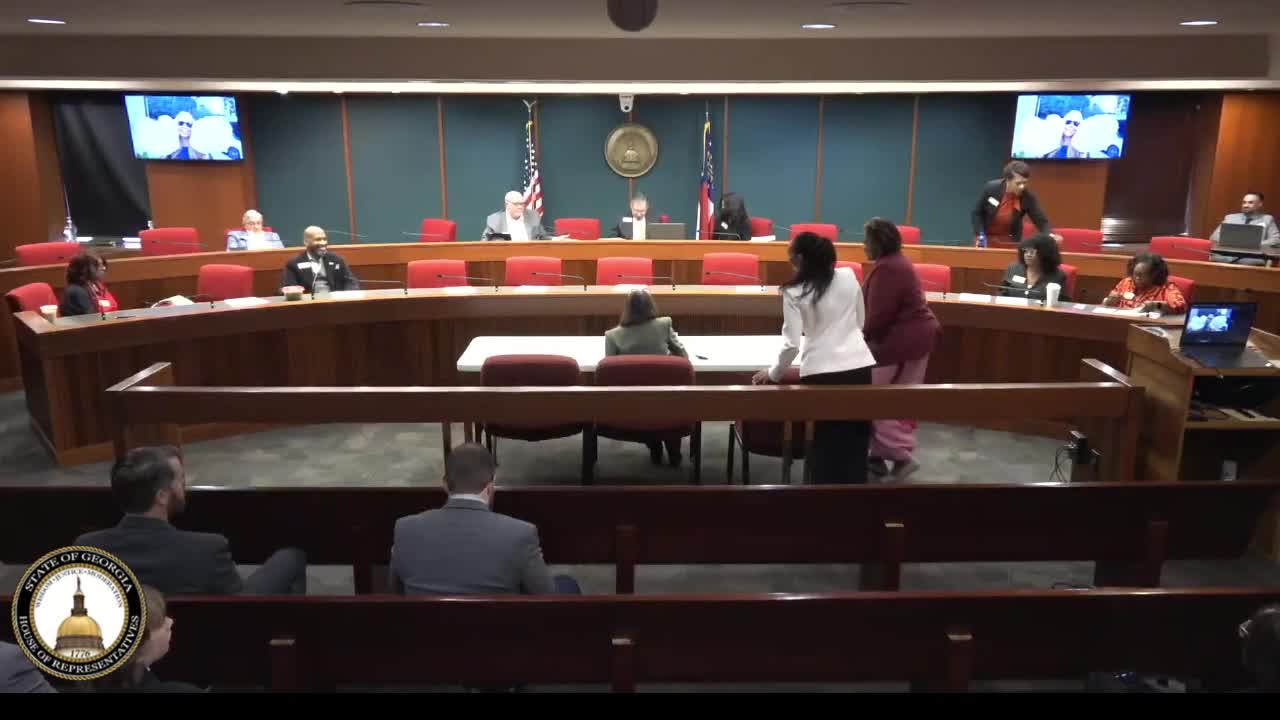
Antoinette Ball, a founder of the Women's Entrepreneurial Opportunity Project (WEAP), told the Small Business Development Committee that her nonprofit supports underserved women entrepreneurs through training, networking and procurement help. "We are a nonprofit 5 0 one(three) organization located right down the street in Grant Park," Ball said, introducing WEAP's mission to equip women for business ownership and leadership.
Speakers from WEAP emphasized federal contracting, workforce transitions and state regulatory changes. Shanae Commodore (federal procurement trainer) said Georgia has "over 9,000 federal defense contractors, totaling over a billion dollars in revenue," and urged programs to help firms pivot as contracts shift. Montez Diamond, founder of the Endow Group, urged that SB28 — described by presenters as the "Red Tape Rollback Act of 2025" — include clear processes for small-business participation, economic-impact analyses and mechanisms that let small businesses join task forces or advisory bodies during rulemaking.
Presenters raised certification portability as a practical barrier. WEAP representatives suggested that federal credentials such as GSA schedules and federal small-business certifications lack automatic equivalency with state Disadvantaged Business Enterprise or Minority Business Enterprise certifications, increasing time and cost for firms seeking state contracts. They recommended exploring statutory or administrative mechanisms to recognize equivalent federal approvals or streamline state certification processes.
Committee members asked how the state could reduce regulatory burdens and improve outreach. Presenters recommended more accessible public-comment opportunities, clearer explanatory materials on rule impacts, and targeted training in procurement and AI tools to help small firms remain competitive. Several members invited WEAP to collaborate on local outreach; WEAP said it runs community programs, has an online membership of more than 900 and will provide resources for training and regulatory navigation.
No formal votes or changes to SB28 were made during the presentation; the speakers asked the committee to consider ways to ensure small-business voices are included as the bill proceeds. Members thanked the presenters and discussed follow-up briefings and connections between state procurement agencies and local entrepreneurs.