Get Full Government Meeting Transcripts, Videos, & Alerts Forever!
Get email alerts on the Education Promise Scholarship topic
No spam. Unsubscribe anytime.
Committee advances bill to expand Promise Scholarship eligibility for adopted and foster-family children amid questions over attendance-zone change
Summary
A House committee voted to advance Senate Bill 152, which would prioritize adopted foster children and biological children of foster parents for the Georgia Promise Scholarship. Lawmakers and parents debated whether an attendance-zone change in the bill would reduce eligibility for applicants already in the system.
The House Education Committee voted to give a due-pass recommendation to Senate Bill 152, a substitute that would expand eligibility in the Georgia Promise Scholarship to adopted children who previously were in foster care and to biological children of foster parents.
Sponsor and committee testimony said the substitute would “move them to the front of the line,” giving adoptive children and biological children of foster parents priority in the Promise Scholarship enrollment process, while also changing how attendance-zone eligibility is applied.
The bill’s sponsor said the measure as passed by the Senate expands the Promise Scholarship in section 3 to include adopted foster children and biological children of foster parents who have taken foster placements in the past 10 years. The sponsor told the committee he and the Senate had discussed adding children who are still in the process of adoption but that language did not survive into the substitute and would require further negotiation.
Committee members pressed for details about two provisions they said family applicants were already relying on: a tie to attendance zones for schools ranked in the bottom 25% and a priority position for families at or below 400% of the federal poverty level. The sponsor said the substitute removes the attendance-zone requirement and the priority income band and instead gives the newly eligible children a preferred enrollment position, which would allow them to effectively bypass the current attendance-zone rule and move ahead of some applicants who are qualifying under the existing attendance-zone criterion.
Lawmakers and witnesses raised concerns about the timing and practical consequences of that change. One committee member pointed out the current enrollment window was open through April 15 and said roughly 10,000 students had already applied under existing rules; the sponsor said the governor’s budget appropriation funds roughly 22,000 scholarships and that the program remains capped at 1% of the state’s QBE allotment, a limit the sponsor said still constrains total enrollment.
Public commenters and advocacy groups urged the committee to preserve continuity for families who applied under the earlier interpretation of the program. Parents and home-school advocates said changing eligibility late in the application year could disrupt family plans. Civil-rights and education advocacy witnesses asked the committee to consider additional consumer protections and transparency requirements for private schools that would accept scholarship funds.
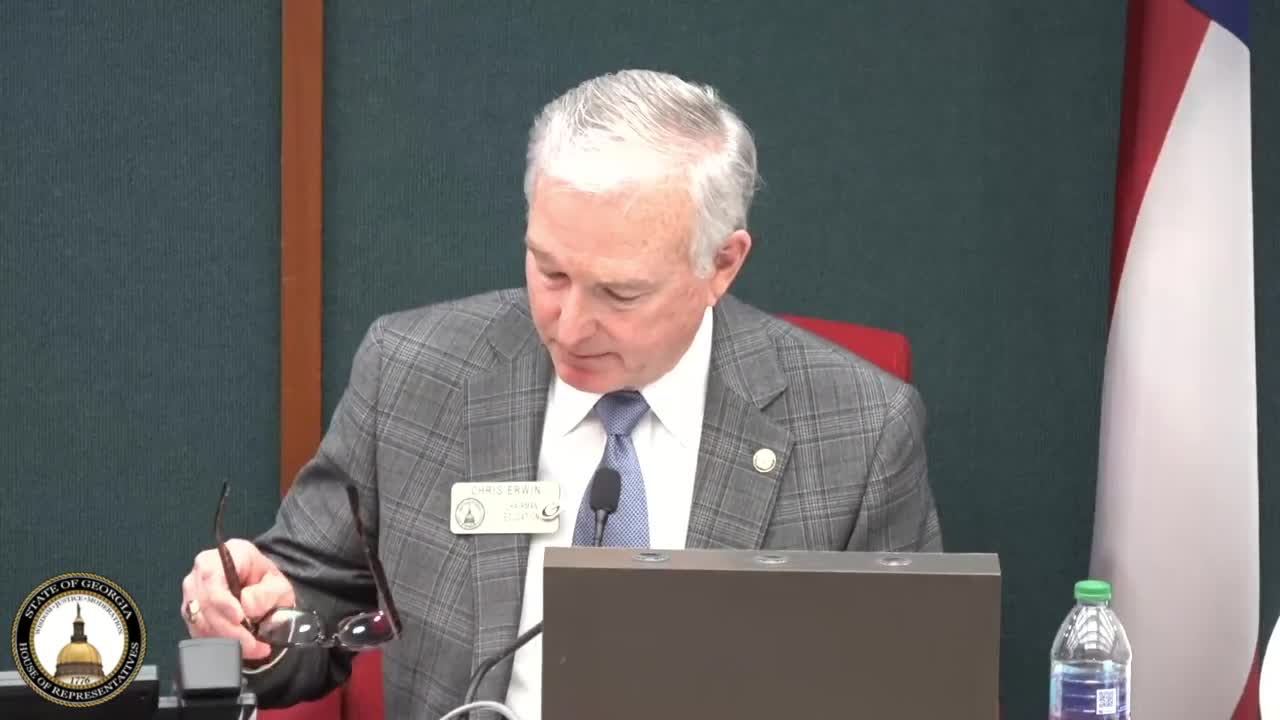
The committee approved a motion to advance SB 152 as amended by the substitute. Members voted in a recorded show-of-hands that the chair summarized as passing by a narrow margin; the committee announced the bill carried and signaled members would coordinate on who would carry the measure in further House action.
The sponsor emphasized he was open to negotiation on language about children in the process of adoption and acknowledged the attendance-zone change could be a point of contention as the bill moves between chambers.
What’s next: The bill was advanced out of committee for further House consideration; lawmakers said they expected additional negotiation between chambers on the attendance-zone language and on whether to explicitly include children in the process of adoption.