Get Full Government Meeting Transcripts, Videos, & Alerts Forever!
Get email alerts on the Workplace Violence Healthcare topic
No spam. Unsubscribe anytime.
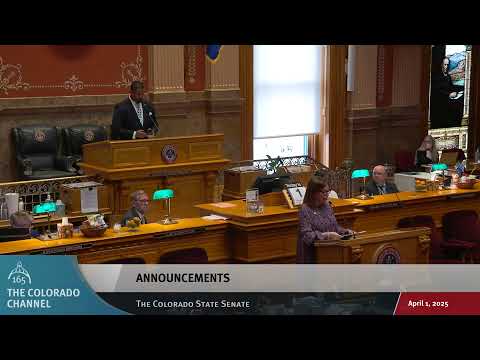
Senate passes bill to tie hospital incentive payments to workplace‑violence prevention policies
Summary
Senate Bill 166 passed on third reading 34–1; the bill creates quality‑incentive payments linked to hospitals' policies and procedures that reduce workplace violence in clinical settings, sponsors said during debate.
The Senate passed Senate Bill 166 on third reading by a vote of 34 ayes and 1 no. The measure — sponsored in the Senate by Senator Mullica and in the House by Representative Ferre — creates a quality‑incentive framework that ties certain payments to hospital policies and procedures designed to reduce incidents of workplace violence.
Senator Mullica moved the bill on third reading and described it as an effort to protect health‑care workers. Supporters, including a nurse who spoke on the floor, emphasized the prevalence of nonlethal workplace injuries in health care and described SB166 as a first step toward preventing assaults on staff.
"As healthcare workers, we account for 10 percent of the workforce throughout the country. When it comes to non lethal workplace injuries, we account for almost half of those injuries at 48 percent," Senator Mulligan (floor speaker identifying experience as a nurse) said in support. Mulligan described headlines and local examples of assaults on health‑care workers, and urged the Senate to adopt policies that incentivize hospitals to implement effective prevention measures.
Sponsor remarks acknowledged coordination among the Colorado Nurses Association and the Colorado Hospital Association and characterized the bill as a collaborative, initial step that creates incentives for hospitals to adopt policies and metrics to reduce workplace violence. The clerk announced the final tally as 34 ayes, 1 no; Senator Baisley (recorded as Bazeley in earlier roll context) was recorded as the sole no vote.
The bill passed with a large group of listed cosponsors from both parties. The measure now moves on per the Legislature's normal processes for transmittal to the other chamber.