Villa Rica council adopts 60-day moratorium on ethics complaints, appoints Connie Flowers to ethics board
Loading...
Summary
The Villa Rica City Council approved a 60-day moratorium on accepting or considering new ethics complaints while it reviews the city ethics ordinance, and confirmed Connie Flowers as the third member of the city’s Board of Ethics.
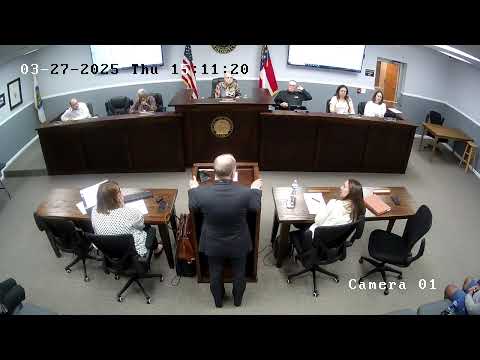
Villa Rica — The Villa Rica City Council on Oct. 12 adopted a 60-day moratorium that temporarily bars the city from accepting or considering new ethics complaints while the council reviews and considers changes to the city’s ethics ordinance. The council also appointed Connie Flowers as the third member of the city’s Board of Ethics, enabling the board to convene on an existing complaint.
City Attorney Kevin Drummond told the council that discussions about the ethics ordinance have been ongoing for months and that most public feedback and council members he has spoken with favor changes. "I think everyone is in agreement that a change needs to occur with the ethics ordinance," Drummond said during the meeting.
The moratorium ordinance, read into the record at the meeting, states the city will not accept or consider ethics complaints for 60 days from the date of enactment; it also specifies that the moratorium "shall not apply to any complaints received prior to the date of the enactment" and "shall not deprive any party of any action such party might otherwise have at law or in equity against any city official." The motion to adopt the moratorium passed 4–1.
Nut graf: The council’s action pauses new ethics proceedings to give elected officials time to decide whether to amend or replace the current ordinance. Council members and staff repeatedly emphasized the limited disciplinary authority that the ordinance provides and that any complaints already filed must proceed under the ordinance in effect when they were received.
Why it matters: Council members described the existing ordinance as having limited "teeth" — able to recommend public reprimands or ask for resignations but not to remove an elected official. Several speakers warned the ordinance, as written, can create an appearance of bias because appointments to the board are made in part by the mayor and in part by the council; the council agreed changes are needed but differed on whether to repeal, replace or temporarily pause enforcement while revisions are drafted.
Details from the meeting
• Scope and limits of current ordinance: Drummond explained that an ethics board cannot itself remove an elected official. "We cannot draft an ethics ordinance that would provide for the removal of office of an elected official," he said, adding that the strongest sanction available through the local ethics process is a recommendation to resign or a public reprimand. Council discussion repeated that legal avenues outside the local ethics process — such as lawsuits to set aside votes or criminal proceedings where applicable — may carry stronger consequences.
• Existing complaint: Council members and staff confirmed that at least one complaint had already been received and, under legal guidance, must be processed under the ordinance that was in effect when the complaint was filed. The moratorium’s text explicitly exempts complaints filed before enactment.
• Moratorium terms: The adopted moratorium lasts 60 days from enactment, suspends acceptance and consideration of new ethics complaints during that period, and allows the council to lift the moratorium earlier by subsequent action.
• Appointment to Board of Ethics: The council voted to appoint Connie Flowers to complete the three-member Board of Ethics so the board can proceed on the complaint already filed. The motion to appoint Flowers carried unanimously.
• Process and timeline: Drummond said the city clerk will contact the board members to schedule an initial meeting within the next two weeks so the board can review the complaint, discuss procedures and set a hearing timeline. He said the ordinance requires certain procedural windows and that the council could expect a recommendation or action to return to the council within the moratorium period.
• Costs and outside review: Drummond and council members discussed options such as using outside counsel or a mediation center to conduct investigations. Drummond noted outside investigations can be costly and that, unless otherwise provided, the city would likely be responsible for fees unless the council elects to charge a filing fee. Council members raised perception concerns about the city paying investigators to examine complaints against city officials.
What was not decided or remains open
• Substantive changes to the ordinance: The council did not adopt specific amendments. Council members expressed differing views on whether to repeal the ordinance, substantially rewrite it, or keep it and revise procedures; several said they want a follow-up work session or meeting to draft changes.
• Enforcement powers and evidentiary rules: The board’s subpoena power and formal evidentiary rules remain unresolved; Drummond said adopting clearer civil rules of evidence and procedures is among the items the council could address while the moratorium is in place.
Quotes
"I think everyone is in agreement that a change needs to occur with the ethics ordinance," City Attorney Kevin Drummond said.
Councilman McCoy criticized the ordinance’s practical effect, saying, "It's just basically gonna be a reprimand and that's it."
Next steps: The city clerk will coordinate an initial meeting of the three-member ethics board within about two weeks. The council will use the 60-day moratorium to hold additional discussion and draft proposed revisions; the moratorium may be lifted sooner if the council completes its review earlier.