Get Full Government Meeting Transcripts, Videos, & Alerts Forever!
Get email alerts on the Juvenile Justice topic
No spam. Unsubscribe anytime.
Pine County probation reports fewer, shorter juvenile placements and lower costs in 2024
Summary
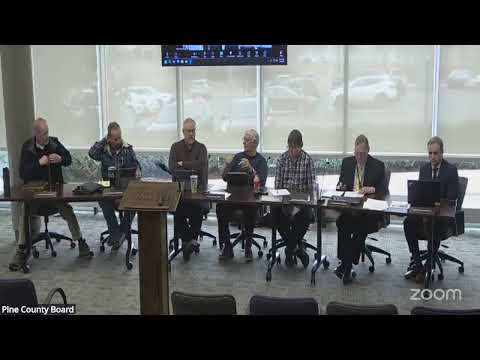
Terry Faucet, Pine County probation director, told the Pine County Board of Commissioners the department placed 36 juveniles in 2024 for an average stay of 18 days and spent $223,000 — about $138,000 under budget.
Terry Faucet, Pine County probation director, told the Pine County Board of Commissioners the department placed 36 juveniles in 2024 for an average stay of 18 days and spent $223,000 on out-of-home placement — about $138,000 under the $361,000 budget for juvenile placement programming.
Faucet said the county uses a risk-assessment instrument and coordination with probation and the county attorney to decide whether a young person needs custody after first appearance. “Public safety, best interest of the child, least restrictive,” Faucet said as the guiding principles for placement decisions.
The nut graf: short-term, community-based responses and interagency programs have reduced average placement lengths and overall costs, officials said, but a few long-term cases still account for most bed days and expense.
Faucet told commissioners there were 60 placements for 36 juveniles in 2024; most placements were short (an overall average of 18 days, the lowest in years). He said three high-cost cases — described at the meeting as involving trauma histories, mental-health needs and family instability — accounted for roughly 60–65% of placement costs and about two-thirds of total bed days. Those three children alone generated the majority of the county’s long-term placement days.
Commissioners and staff discussed strategies intended to avoid detention where appropriate, including restorative practices, the Juvenile Detention Alternatives Initiative (JDAI) partnership and a youth truancy intervention (YETI) program. Faucet said JDAI partners had indicated they might award roughly $100,000 for programming and that a local restorative-practices grant application tied to a state appropriation of $8 million is pending notification in “the next two weeks.”
The county uses the East Central Regional Juvenile Center under a joint powers agreement. Faucet said member counties pay a daily rate (he reported a current member rate of about $365 per day and a higher nonmember rate) and that Pine County’s membership prevents higher nonmember charges. He told the board Pine County used roughly 340 bed days last year and was under contract utilization by about 26 days.
Faucet emphasized electronic monitoring as a lower-cost alternative: the county used about 480 electronic-monitoring days last year at a total cost the presenter put at $6,834 for those placements, and he said cumulative savings since 2003 exceeded $2 million compared with placing those youth in out-of-home beds. He also described local partnerships (Village Ranch, Boys Town, Changing Gates equine programs) as critical to offering alternatives to placement.
Commissioners asked about follow-up outcomes for youth after placement. Faucet said long-term tracking data were largely anecdotal and that outcomes for some high-cost youths often remain poor. Commissioner Pierce asked how critical it is to have at least one member bed in-county; Faucet said the contract and local bed availability make placement and transport markedly easier and that losing membership or beds would cause “a world of hurt.”
Ending: Faucet said the county’s work to expand community programming and diversion — including YETI, restorative practices and electronic monitoring — aims to keep more youth safe at home and reduce expensive long-term placements. Commissioners asked staff to keep pursuing grants and partnerships and to report back as award decisions arrive.