Get Full Government Meeting Transcripts, Videos, & Alerts Forever!
Get email alerts on the Landfill Expansion topic
No spam. Unsubscribe anytime.
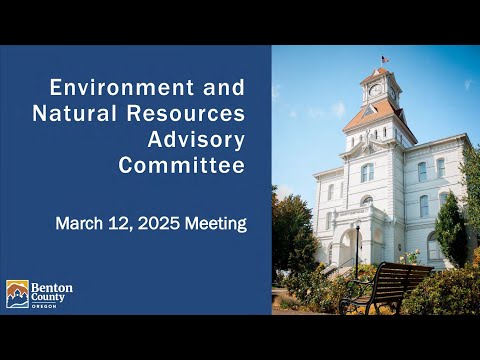
Benton County NRAC begins focused review of Coffin Butte landfill expansion; sets topics and timetable
Summary
Members of the Benton County Natural Resources Advisory Committee (NRAC) opened a multiweek review of Republic Services’ Coffin Butte landfill conditional use permit (CUP) application on a virtual meeting, outlining topics to analyze and a short timetable aimed at producing a recommendation for the county planning commission.
Members of the Benton County Natural Resources Advisory Committee (NRAC) opened a multiweek review of Republic Services’ Coffin Butte landfill conditional use permit (CUP) application on a virtual meeting, outlining topics to analyze and a short timetable aimed at producing a recommendation for the county planning commission.
NRAC members said the application seeks to add about 59 acres to Coffin Butte and would extend the landfill’s capacity by an estimated six years; committee members and staff emphasized the committee’s role is to review only the proposed expansion, not the existing landfill operations.
The committee’s review matters because NRAC’s recommendation will be part of the record the planning commission uses to judge whether the expansion complies with Benton County Development Code criteria and to determine any conditions of approval. Committee members flagged potential impacts on air, soil and water, regional waste flows, transportation and local economics as priority topics.
“The Coffin Butte Conditional Use Permit has been deemed complete, and NRAC has been tasked with taking up that review,” NRAC Chair Jason Schindler said at the start of the discussion, adding: “We are gonna talk about that for most of this meeting.”
County staff and NRAC members laid out a pragmatic process and limits. James Wright, associate planner with Benton County Community Development, pointed trustees to the county code sections that guide CUP review and to provisions that allow NRAC to recommend conditions of approval. He summarized the legal test NRAC may use in ordinary terms: “Does the proposed use seriously interfere with the uses on adjacent property, with the character of the area, or the purpose of the zone?”
Bailey, a county staff presenter, described the expansion area and application materials: “The area of the conditional use permit is 59 acres,” and staff said the application and supplemental materials total roughly 1,100 pages. Staff advised NRAC members they likely have a short window — roughly four weeks to a couple of months, depending on county scheduling — to compile questions and a written recommendation for the planning commission.
Members sketched the topics they intend to examine: air emissions and methane monitoring, leachate and water-quality pathways, soil and broader environmental impacts, regional waste-management implications and transportation costs, economic impacts for ratepayers, and a review of regulatory compliance. Members also proposed a separate monitoring or tracking section to recommend ongoing data collection where relevant.
Committee members discussed statewide and agency contexts that may affect the review. Charlie, an NRAC member and associate director at the Benton Soil and Water Conservation District, urged attention to federal and state investigations and air-permitting processes; several members referenced pending or proposed state measures to improve methane accounting. Staff and members noted that other regulatory agencies — including the Oregon Department of Environmental Quality (DEQ), the U.S. Environmental Protection Agency (EPA), Oregon Department of Transportation (ODOT), Oregon Water Resources Department and Oregon Department of Fish and Wildlife — will also review the application and submit comments to the planning commission.
NRAC agreed on a practical approach to produce a recommendation in the available time: staff will publish the application materials and related resources in a shared Teams folder; members will identify areas to review based on interest and expertise; individuals or small groups will draft short sections; staff will compile drafts for committee editing; and NRAC will meet again (or call a special meeting if needed) to vote on a final recommendation and any conditions. Jason Schindler said the committee can approve a motion to recommend approval, denial or approval with conditions when members formally vote in a properly noticed public meeting.
Members were repeatedly reminded that NRAC’s recommendation is advisory: the planning commission makes the land-use decision, appealed decisions go to the Benton County Board of Commissioners, and those outcomes can be appealed to the Land Use Board of Appeals (LUBA).
Next steps: staff will share the application executive summary, the larger document set, and the county code sections NRAC should consider; members will request access to the Teams folder and begin reviewing assigned topics; NRAC expects to compile a draft recommendation for planning commission review within the schedule advised by county staff.
The committee did not take a formal vote on the CUP at this meeting; the discussion set the framework, topic buckets and a work plan for the recommendation that will be produced and formally voted on at a later public meeting.
Ending — The committee scheduled follow-up work and said staff will coordinate document access and logistics, while members will split review tasks and return with draft contributions ahead of the next convening.