Lifetime Citizen Portal Access — AI Briefings, Alerts & Unlimited Follows
Beaufort council approves bicentennial events, rejects $10,000 cash request in favor of in‑kind support
Loading...
Summary
After hours of testimony from historical groups and debate about precedent and funding, the City Council approved street closures, noise waivers and city in‑kind support for the Marquis de Lafayette bicentennial events but declined a $10,000 cash contribution requested by the organizing committee.
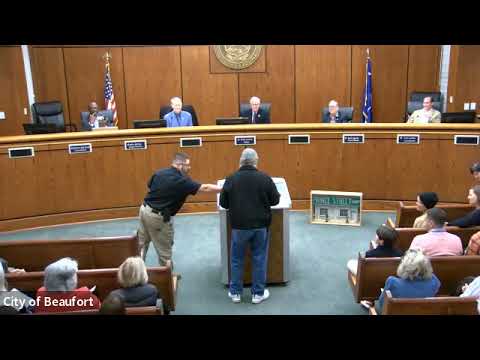
Beaufort City Council on Jan. 14 approved a package of permits, waivers and city in‑kind services for the March 2025 bicentennial celebration marking the Marquis de Lafayette’s 1825 visit, but rejected a separate request from the organizing committee for a $10,000 cash contribution.
The Historic Beaufort Foundation and a Lafayette Bicentennial Committee had asked the council for multiple items including use of Henry C. Chambers Waterfront Park, closure of the day dock for part of the morning, several street closures on March 18, a waiver of the city’s noise ordinance to allow a 13‑gun salute, help with staff support for setup and take‑down, and $10,000 to help cover the event budget. After public testimony from local historical societies and veterans organizations, council members amended the request to approve the closures, noise waiver and in‑kind city services but to deny the $10,000 cash grant.
The Lafayette committee described a broad slate of educational and commemorative activities across the region and in Beaufort, including school‑based processions for South Carolina Day on March 18 and living‑history demonstrations along Scott Street. “This committee has grown to over 50 folks that are engaged and dedicated to this process and are providing resources as well as their talents and their energies to make this happen,” said Lisa Sandrella of the planning committee. Joseph Volpe, South Carolina chair of American Friends of Lafayette, said Beaufort’s organizers had been “a delight to work with” and described coordinated events in Camden, Columbia and Charleston that will precede Beaufort’s program.
Supporters said the event will draw students and visitors and provide educational programming tied to the bicentennial. Representatives of the Sons of the American Revolution and the Daughters of the American Revolution described planned color guard and living‑history demonstrations and outlined an essay and poster contest for schoolchildren. Randy Atkins, representing the local Paul Hamilton chapter of SAR, said the chapter will provide the muskets and a cannon salute timed to Lafayette’s arrival at the day dock.
Several council members expressed concern about setting a financial precedent if the city provided a direct cash payment to the event. “We’re in litigation right now,” Councilman Mitchell said, noting recent legal expenses and objecting to using general funds to cover an outside event’s shortfall. Other council members favored in‑kind co‑sponsorship — police traffic control, public works support for setup and park fee waivers — rather than a one‑time cash grant. Council debate also clarified timing for requested street closures; the final approval adjusted a Scott Street closure to run from 8 a.m. to 3 p.m. to accommodate living‑history activities and school groups.
A motion to grant the committee the requested in‑kind support and to deny the $10,000 cash grant carried; the council approved the requests as amended. The planning committee said it intends to continue pursuing other grant sources, including a county ATAX application that it plans to submit during a later funding round. The committee also invited council members to accept a state proclamation in Columbia on Jan. 30 and to participate in parade events on March 18.
The approved elements include park use, day‑dock closure for arrival, specified street closures, a noise waiver for the 13‑gun salute, reserved parking for reenactors and coordinated public‑safety support provided as city in‑kind services. The committee and city staff agreed to continue coordination on logistics and public‑safety timing in the weeks before the event.