Get Full Government Meeting Transcripts, Videos, & Alerts Forever!
Get email alerts on the Public Safety Transport topic
No spam. Unsubscribe anytime.
Clemson council debates draft golf‑cart ordinance, directs staff to refine language and hold public hearing
Summary
Police chief presented a draft ordinance to regulate golf carts — including residency permits, parking limits and prohibitions on certain off‑road vehicles — and council asked staff to revise language, plan an education period and hold a public hearing before enforcement.
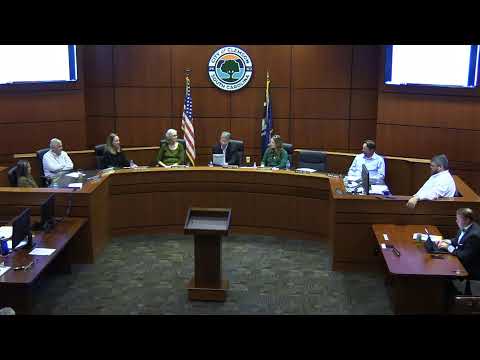
Clemson City Council discussed a draft ordinance on Monday that would regulate the use, parking and city permits for golf carts and similar specialty vehicles.
Chief Campos (police chief) told council the draft aims to address local enforcement gaps created by the state permit program, trailer‑in carts, use on sidewalks and trails, and commercial operations that function as taxi services during events. The proposed city registration would limit permitted use inside city limits to residents and businesses physically located in Clemson and require visible city permits during use.
Why it matters: Council members said uncontrolled cart use downtown and on event days can create parking conflicts, sidewalk and trail safety issues, and enforcement challenges. The draft ordinance seeks to give police clearer authority to identify and, when necessary, tow noncompliant carts while preserving resident access.
Key points from the draft and council discussion
- State standards: Chief Campos summarized state requirements for specialty vehicles: registration/permit, insurance, operation within four miles of the registrant’s home (or another permitted address), roads with speed limits of 35 mph or less, daytime operation only under current state law, and licensed drivers age 16 and older. - City registration and residency: The draft would require a separate Clemson city permit that only city residents and businesses may obtain; proof of residency would be required. Council discussed how that would prevent nonresidents from hauling carts in for game days unless a city resident registers the cart. - Parking limits: The draft would require carts to park in legal parking spaces and include language to prevent carts from blocking adjacent spaces; councilors asked staff to clarify public vs. private parking and to allow efficient packing where safe and practicable. - Vehicle classes and size: Council members and staff discussed how to address larger multi‑row carts and off‑road side‑by‑sides (UTVs); the chief recommended prohibiting certain off‑road vehicles on local roads to provide clearer enforcement guidance. - Commercial use: The draft would require rental companies and business renters to display permits and tie usage to a resident or business permit holder, limiting third‑party commercial shuttle operations that are effectively taxis. - Enforcement and outreach: Council asked staff to run an education period before fines or towing are used; the chief and staff also recommended a public hearing and a public awareness window prior to enforcement.
Council direction and next steps
Council asked staff to refine language on three issues in particular: nighttime driving language in light of state law, clearer wording for parking (to avoid ambiguous references to “driveways”), and how to treat multiple small carts within a single parking space without creating blocking hazards. Several councilors supported a public hearing prior to adopting the ordinance; Chief Campos said staff will schedule that hearing and implement an educational period before strict enforcement.
Quotations from the meeting
Chief Campos, police chief: “So the issue becomes width and length, and whether the golf cart, more than one golf cart can fit in the spot without impeding on the adjacent spaces.”
Council member (discussion lead): “I just want you to pass something you can enforce.”
Ending
Council directed staff to revise the draft, circulate the revisions for council feedback, schedule a public hearing before the next council meeting, and pursue a public education period before full enforcement. No ordinance vote occurred on March 17.