Get Full Government Meeting Transcripts, Videos, & Alerts Forever!
Get email alerts on the Planning And Zoning topic
No spam. Unsubscribe anytime.
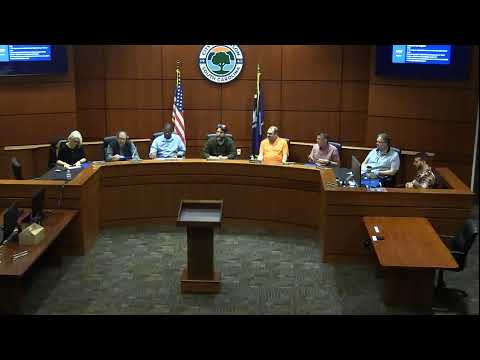
Clemson BAR discusses seeking authority to approve Planned Developments; agrees to revise letter to City Council
Summary
Board members and staff debated expanding the Board of Architectural Review’s role in the Planned Development (PD) process, including seeking authority to approve PD design elements post-zoning approval and asking City Council to add standards enabling BAR review; board asked staff to redraft a request letter to council.
Board members and staff spent the second portion of the meeting discussing whether the Clemson Board of Architectural Review should have a formal approval role in Planned Development (PD) zoning reviews and how the BAR’s authority should be reflected in the zoning code.
Jacob Peabody, planning staff, opened the discussion by describing options for BAR involvement and noting existing legal limits: “Basically, just relating to the request letter for the PR to have review of PD. I just wanted to make sure that we are clear that you guys can request to have recommendation power, but you do not have the authority to have— that’s not what I’ve been told that there’s nothing in the South Carolina law… that prevents the BAR from reviewing a PD.” During the exchange several participants disagreed about the scope of existing authority and whether state law prevents approval functions; one participant noted an example where a PD review took “6 months.”
Board members expressed a preference for stronger review authority than advisory comments: several speakers said they would like the BAR to have approval authority for architectural elements in PDs, at least for projects inside architectural overlay districts. A member summarized the board’s objective as seeking both: early advisory input during the PD drafting process and a formal approval role for final building façades and materials after City Council approves the PD zoning. One member proposed modeling the process after Greenville’s practice, and others said the PD ordinance would have to include specific review standards for the BAR to apply.
The board did not adopt formal legislation but agreed to revise and resend a letter to City Council requesting expanded authority and clearer PD standards. The board agreed that: (1) the City Council’s PD ordinance must include measurable standards the BAR can apply (for example, references to AR district standards and limits such as maximum façade lengths); (2) the BAR should be included early in the PD process to provide advisory input to applicants and the planning commission; and (3) the board will ask City Council to allow the BAR to approve final architectural elements post-PD approval or, at minimum, to require the applicant to obtain BAR approval as part of PD implementation.
Board members asked that one of the BAR members attend the City Council presentation to advocate for the request in person. Staff was directed to “take another stab at the letter and pass it around again” and to coordinate a board representative for the council meeting. The item concluded with consensus to pursue the code changes and to prepare proposed amendment language and supporting rationale for council and planning commission review.