Get Full Government Meeting Transcripts, Videos, & Alerts Forever!
Get email alerts on the Public Comment Policy topic
No spam. Unsubscribe anytime.
Clemson council subcommittee debates tightening public-comment rules, donation of time
Summary
A council subcommittee reviewed proposed edits to the city’s public-comment rules including a 30-minute cap, limits on donating speaking time, prohibition on speaking for others, sign-up procedures and whether the presiding officer may briefly acknowledge speakers.
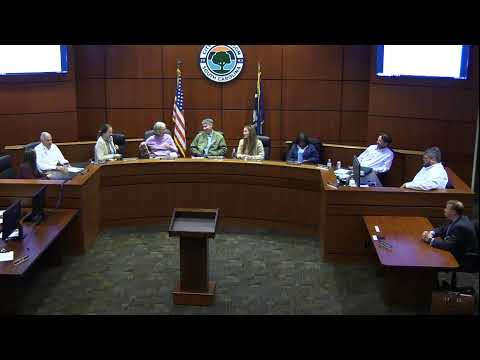
Clemson City Council members on a public-comment subcommittee met to consider revisions to the city’s public-comment procedures, focusing on time limits, transfer of speaking time and signage for signing up.
The subcommittee discussed keeping the existing 30-minute total allotment for public comment and the standard three-minute allotment per speaker, but clarified several enforcement and logistical details. Members said they want to prevent a small number of speakers from occupying the entire comment period by donating unused time to others or by multiple attendees repeating the same point.
Members discussed rules that would (1) bar speakers from donating, transferring or yielding any portion of their allotted speaking time to another person; (2) bar speaking on behalf of others; and (3) require that comments submitted via the MyCivic app be read only if the submitter is not present in the meeting. The subcommittee also discussed asking speakers to sign in in advance — for example, during the 30 minutes that doors open before the meeting — and giving priority at the next meeting to people who signed up but could not speak because the 30-minute allotment was exhausted.
Council members said the presiding officer should retain discretion to address or briefly acknowledge a speaker at the end of that speaker’s comments, but emphasized avoiding back-and-forth debates during the public-comment period. Members repeatedly underscored that the goal is to preserve council members’ ability to listen while giving staff a mechanism to provide thorough, researched answers after the meeting and to post responses for public access.
The subcommittee also discussed operational items to reduce repetition: asking sign‑ups to note if they are speaking on a previously addressed topic and encouraging follow-up rather than repeat testimony. Members suggested publishing the rules as a printed flyer or on the back of the meeting agenda so attendees understand sign-up procedures and expectations for civility.
No formal ordinance was adopted at the subcommittee meeting; members agreed to consolidate their notes and present a draft for the full council to consider at an upcoming meeting.