Get Full Government Meeting Transcripts, Videos, & Alerts Forever!
Get email alerts on the Financial Audit topic
No spam. Unsubscribe anytime.
City audit returns clean opinion; single-audit note on one late federal report
Summary
External auditors gave the City of Clemson an unmodified (clean) opinion on its FY2024 financial statements and an unmodified single-audit opinion for federal awards, while noting a significant deficiency related to one late federal reporting submission.
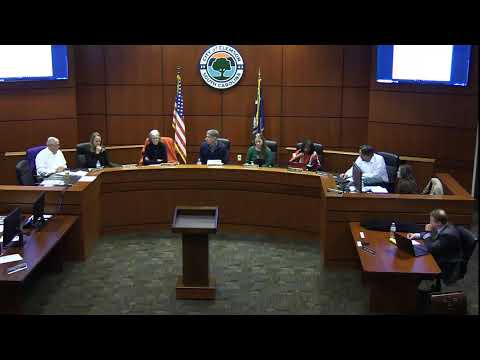
An independent audit of the City of Clemson’s fiscal year ending June 30, 2024, produced an unmodified (clean) opinion on the city’s financial statements, auditors told council on Jan. 13.
Grant Davis, partner at Martin and Jenkins, said the city’s annual comprehensive financial report (ACFR) demonstrated a healthy financial position and that the firm issued a standard unmodified opinion — the outcome auditors consider appropriate for government financial statements. “The big takeaway is… an unmodified opinion,” Davis told the council.
Davis summarized high-level results: the city reported roughly $162 million in assets and about $65 million in liabilities, producing net position near $97 million — an increase of about $18 million from the prior year. He also highlighted a strong general fund balance and liquidity: general fund unassigned fund balance was reported at about $14.5 million and overall general-fund fund balance covered roughly 10 months of expenditures, which he described as “a very healthy place to be.”
Because the city expended more than $750,000 in federal awards, auditors also performed a single-audit compliance review of federal programs and issued an unmodified opinion on compliance. The auditors examined roughly $9.1 million in federal awards (about 96% audited) across programs that included the federal transit cluster and the Coronavirus State and Local Fiscal Recovery Program (ARPA).
The auditors did identify one significant deficiency: a late federal report submission for a program requirement. Davis characterized the finding as a reporting deficiency and said it was the sole matter rising to the level of a significant deficiency in internal control for federal program compliance; otherwise the auditors noted no instances of noncompliance or internal-control deficiencies relative to the financial statements.
Council members asked for clarifications about revenue timing. Auditors and staff explained that the city’s tax revenue is cyclical and concentrated early in the calendar year; other revenues (such as business licenses) also cluster in certain months, reinforcing the need for the fund balance that the audit shows.
Auditors closed by thanking city staff for cooperation and noted the audit materials — the ACFR and the auditor’s discussion and analysis — are available to council and the public.