Get Full Government Meeting Transcripts, Videos, & Alerts Forever!
Get email alerts on the Zoning Nonconformities topic
No spam. Unsubscribe anytime.
City holds public hearing on proposed amendment to vest select nonconforming structures
Summary
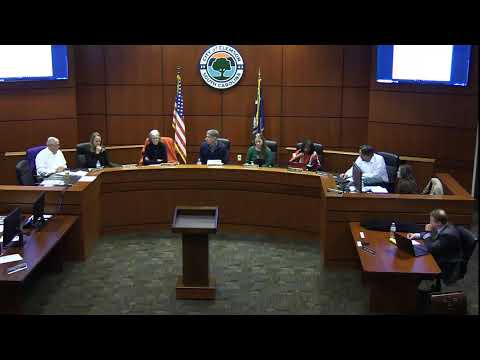
Clemson City Council held a public hearing on Jan. 13 on a proposed zoning text amendment that would allow some legally nonconforming structures damaged by events beyond an owner’s control to be repaired or reconstructed by vesting their prior status; staff said the change would not alter building, fire or health code requirements.
Clemson City Council opened a public hearing on Jan. 13 on a proposed text amendment that would allow certain legally nonconforming structures to retain (or regain) their pre-existing zoning status for repair or reconstruction when they are damaged or destroyed by events beyond the owner’s control.
City staff described the draft as focused on disasters and other “forces beyond the owner’s control,” not on voluntary changes of use or property owners who failed to maintain structures. “This proposed text amendment will expand the right… to repair, reconstruct certain existing zoning nonconformities, otherwise in compliance with city code by vesting the status of illegal nonconformances if damaged, destroyed by forces beyond the owner's control,” a staff member said during the hearing.
The draft, staff said, would preserve application of building, fire and health safety codes; architectural-review processes would remain in place and the Board of Architectural Review could waive requirements that would unreasonably impede repair or restoration. Staff noted the Planning Commission approved the draft with a positive recommendation on Sept. 9, 2024.
Planning Commission chair Herb Conner, who spoke during the hearing, said downzoning over time has left a number of legally built properties nonconforming and that the amendment was intended to reduce situations in which a lawful structure could not be rebuilt after a disaster. “Down zoning has created a lot of these problems,” he said, and added the change came at the council’s request.
Council members and staff answered public questions about limits and examples. Staff emphasized that the amendment would not legalize work done without required permits and would not cover deterioration caused by lack of maintenance. On qualifying events, staff said the ordinance uses the standard of “forces beyond the owner’s control” (described in the discussion as similar to “act of God”), and maintained that maintenance-related damage would not qualify.
City staff also explained why the city pursued a citywide amendment instead of parcel-by-parcel rezoning: as a practical option to address multiple sites where zoning has changed over time and to reduce the need for property owners to seek discretionary relief after disasters. No formal council vote on the amendment occurred at the hearing; staff said the ordinance will proceed through the council’s regular first- and second-reading process if the council so directs.
The public hearing was closed the same evening; council members said the item will return for ordinance readings and that public comments submitted in writing would be accepted. The text of the draft and the Planning Commission recommendation were available through city staff.