Get Full Government Meeting Transcripts, Videos, & Alerts Forever!
Get email alerts on the Police Mental Health Advocate topic
No spam. Unsubscribe anytime.
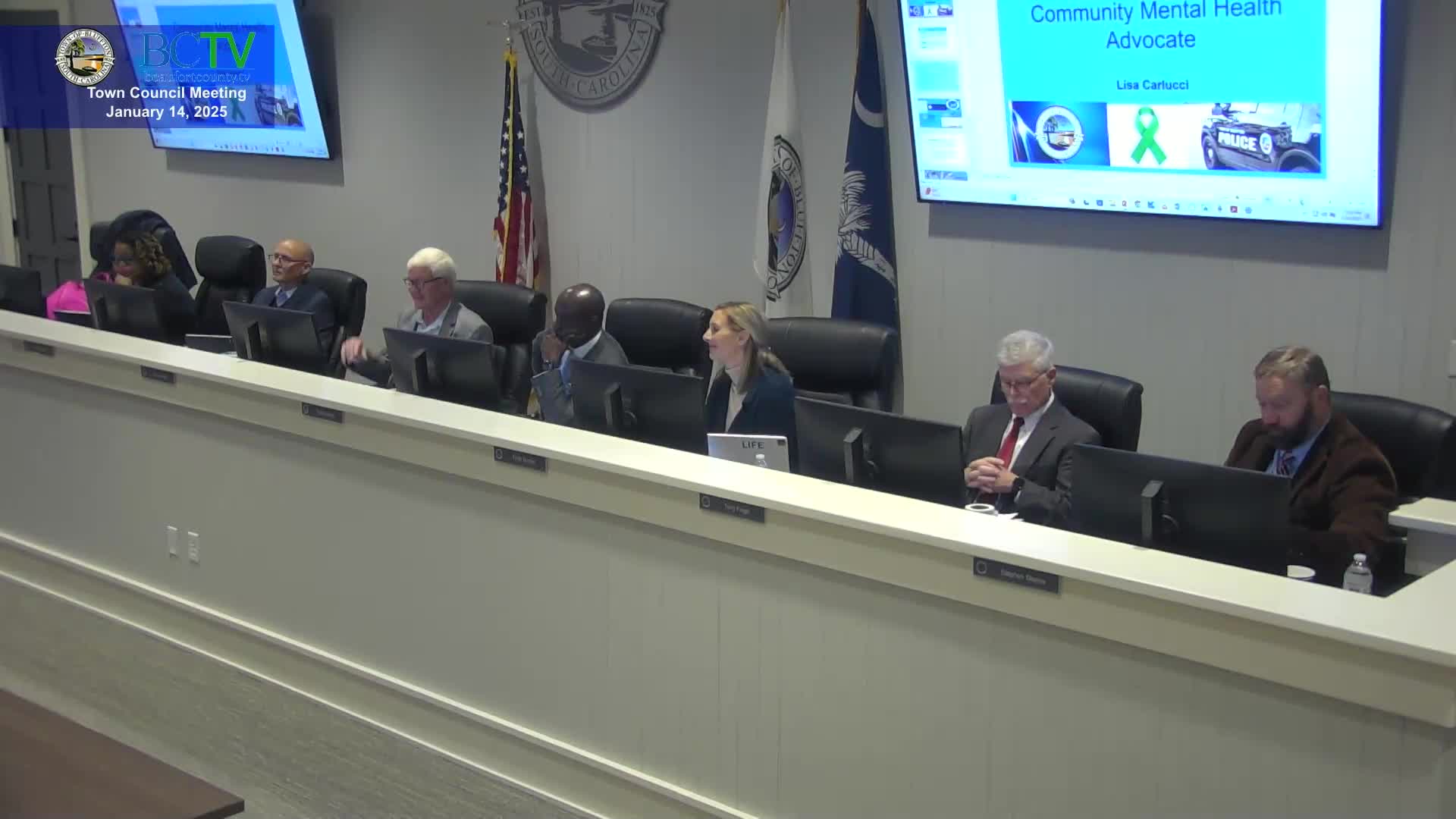
Bluffton police mental‑health advocate reports rising referrals, partnerships with DNR and schools
Summary
The Bluffton Police Department mental‑health advocate reported a modest rise in officer referrals and follow-ups for 2024, described partnerships with South Carolina Department of Mental Health (Coastal Empire) and schools, and outlined plans for an officer wellness app and peer support.
The Bluffton Police Department’s mental‑health advocate presented an annual update that showed a small increase in officer referrals and follow‑up work in 2024 and described expanded partnerships and initiatives.
The advocate said officer referrals rose from 99 (Feb 2023) to 108 (Feb 2024); follow‑ups increased from 227 to 240 and supplemental reports rose modestly (125 to 130). "Overall, approximate numbers of people that were assisted... in 02/2024" rose from about 95 to 125, the advocate said.
The presentation listed partnerships with the South Carolina Department of Mental Health (referred to in the presentation as Coastal Empire), an embedded law‑enforcement clinician, after‑hours crisis support, and local school counselors and social workers. The advocate described community outreach — including Shop with a Cop — and said roughly half or more of the people assisted were school‑age or young adults, though she said she did not have exact case‑level counts.
The advocate outlined internal support for officers, including implementation of the Cortico officer‑wellness app and plans to develop a peer‑support program. "It's really great... it offers 24/7 support and connection for their wellness," she said of Cortico, adding that the app is being implemented with Sergeant Perkins.
Councilmembers praised the program’s community value and asked about licensure and school partnerships. The advocate said she has crisis‑intervention training and a psychology degree but is not a licensed professional counselor; she described working closely with community clinicians for cases requiring clinical license or emergency care.
Council members asked the advocate to return if additional authority or resources were needed. No formal action was taken; the presentation was informational.