Get Full Government Meeting Transcripts, Videos, & Alerts Forever!
Get email alerts on the Military Pay Tax topic
No spam. Unsubscribe anytime.
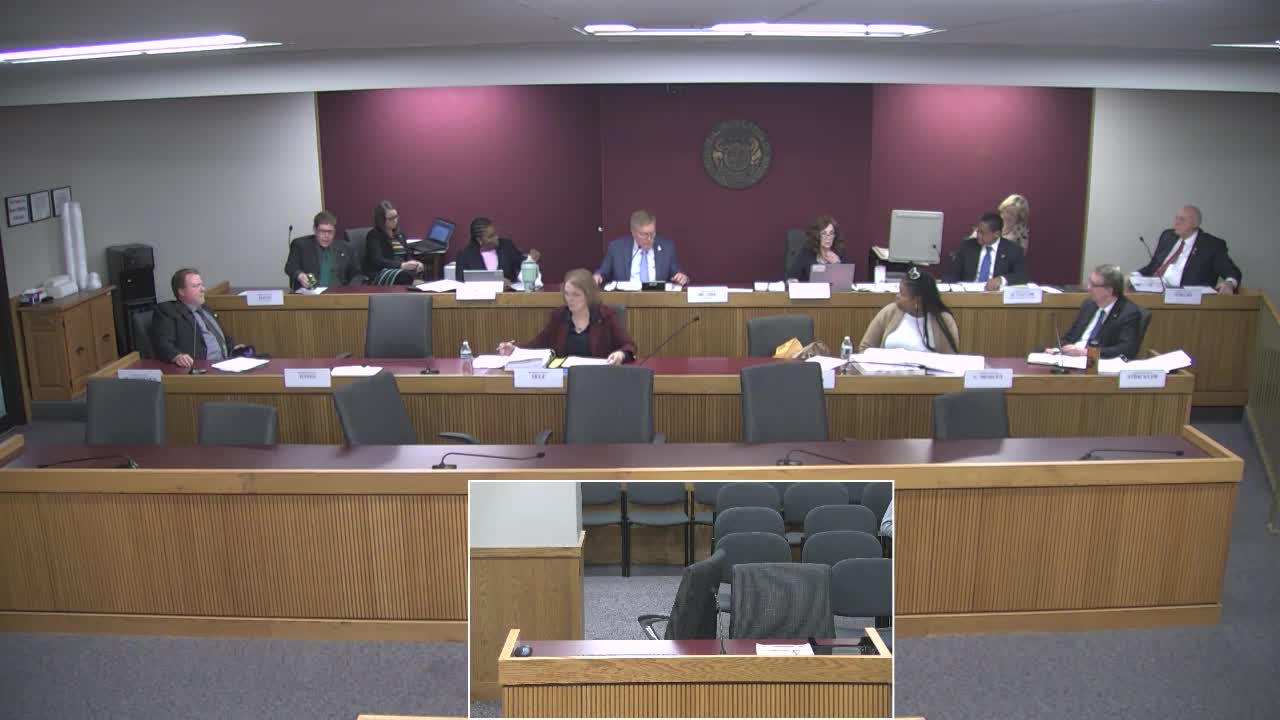
Panel advances bill exempting certain National Guard pay from state income tax
Summary
Committee advanced a bill to exempt certain National Guard compensation — including state emergency duty pay — from state income tax; members clarified the exemption fills a gap left by earlier legislation and asked whether out-of-state duty would be taxed by other states.
A House committee advanced a bill to exempt certain National Guard pay from state income tax, including pay for state emergency duty.
The chair described the proposal as an exemption for National Guard bonuses or sign-on bonuses and related compensation. The committee record clarifies that the provision at issue covers state emergency duty pay — for example, flood or wildfire response — that had been omitted when a prior bill addressed sign-on bonuses.
Representative Strickler explained the bill’s focus: “The part where they actually do the heaviest lifting within the state on flood duty, tornado duty, civil unrest, whatever. That's the part that was left off when we did that bill a couple years ago… All this does is go back and pick that up,” he said.
Representative Taylor asked if a Guard member performing duty in another state would be subject to taxation in that state. The committee record contains the answer given in committee: “I don't believe so. No. No. They're they're not subject to the taxes in that state if they're on assignment,” the chair (or sponsor) said.
The committee first voted the house committee substitute for the companion measure (House Committee Substitute for Senate Bill 163) do pass; the transcript records an 8–0 roll-call result. The committee then considered the Senate committee substitute for Senate Bill 163 by consent; the subsequent consent roll call recorded a 6–2 result in the excerpt provided.
With committee approval, the exemptions would be forwarded for further consideration; the transcript excerpt did not include a fiscal-note discussion or statutory citations beyond references to prior related legislation.