Get Full Government Meeting Transcripts, Videos, & Alerts Forever!
Get email alerts on the Stormwater Parks topic
No spam. Unsubscribe anytime.
Committee hears bill allowing county park sales-tax use for natural stormwater projects
Summary
A hearing on House Bill 1271 (parks stormwater capacity act) covered language to permit existing county and city park sales-tax revenue to fund natural stormwater infrastructure in parks, with supporters stressing no new taxes and witnesses describing rain gardens, tree canopy and buyouts as tools.
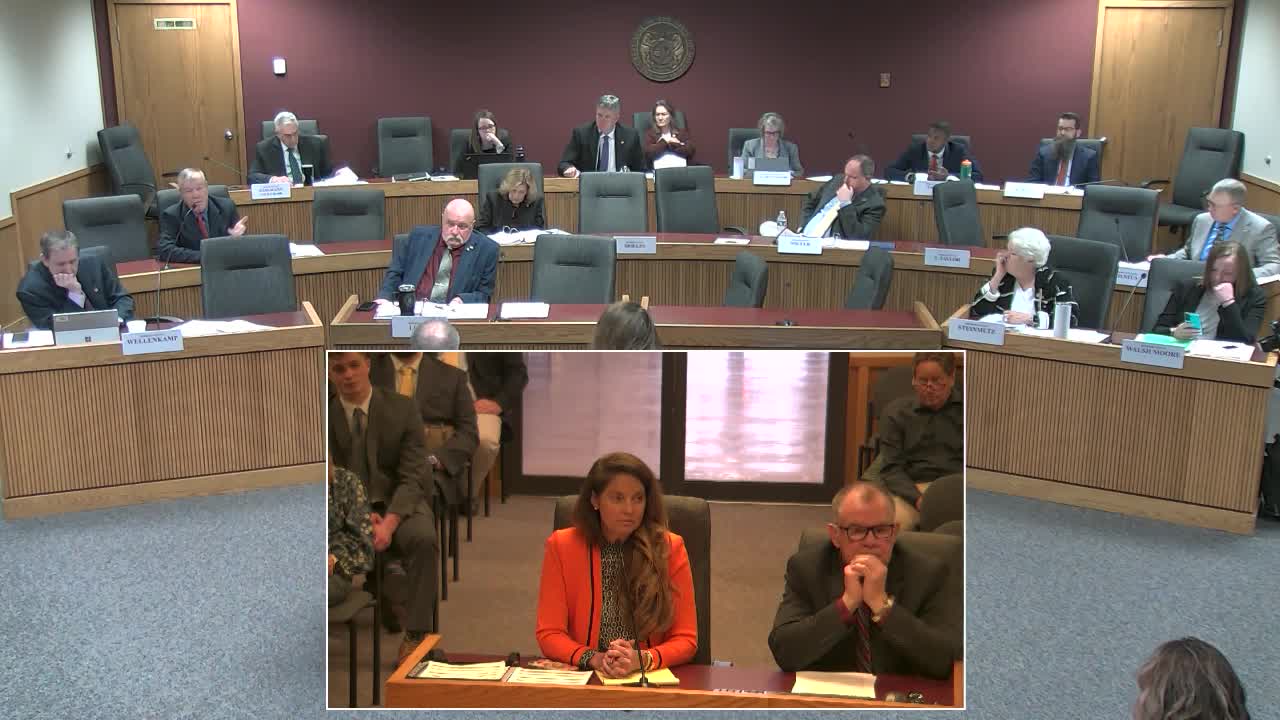
Representative Allencamp presented House Bill 1271 to the House Committee on Conservation and Natural Resources, asking the panel to allow counties and cities to use existing park sales-tax revenue for natural stormwater management inside parks.
Allencamp said parks already absorb large volumes of stormwater and that the bill would explicitly permit sales-tax funds returned to counties for parks to be used for natural infrastructure projects—rain gardens, micro-marshes, expanded canopy and other measures that increase a park’s capacity to store and slow runoff—without turning parks into hard-engineered flood infrastructure.
The sponsor emphasized the bill creates no new tax: it clarifies permissible uses of revenue already collected. He told the committee Missouri receives “more than 25,000 gallons of stormwater per 1,000 square feet annually” (as stated in testimony) and highlighted that Missouri has over 2,000 city and county parks across 637 cities and 144 counties that could be used to improve stormwater resilience.
Members and witnesses described examples and design limits. St. Charles County Councilman and registered civil engineer Tim Baker said stormwater, creek-bank erosion and repeated flooding are dominant issues in local work and supported the proposal’s flexibility. Representative Burton and others asked whether the bill targeted new parks or retrofit of existing parks; the sponsor and witnesses said both uses were contemplated.
Witnesses stressed the restriction to natural infrastructure. Representative Washmore noted a longstanding FEMA buyout-turned-park example and the sponsor clarified that the bill would not permit construction of concrete-lined basins or pumping stations using park funds; rather, the money is limited to natural features and design that preserve recreational function. Lacey Hirshvogel of the Missouri Association of Municipal Utilities testified in support, saying natural stormwater features “take loading off of the pipes and the wastewater treatment facilities” and can co-benefit recreation and utility operations.
Committee members generally praised the bill’s intent to balance flood management and park preservation. No committee vote was recorded at the hearing’s close; the hearing concluded after testimony and questions.