Get Full Government Meeting Transcripts, Videos, & Alerts Forever!
Get email alerts on the Victim Services Funding topic
No spam. Unsubscribe anytime.
Family Justice Center director warns committee VOCA cuts and grant instability threaten victim services statewide
Summary
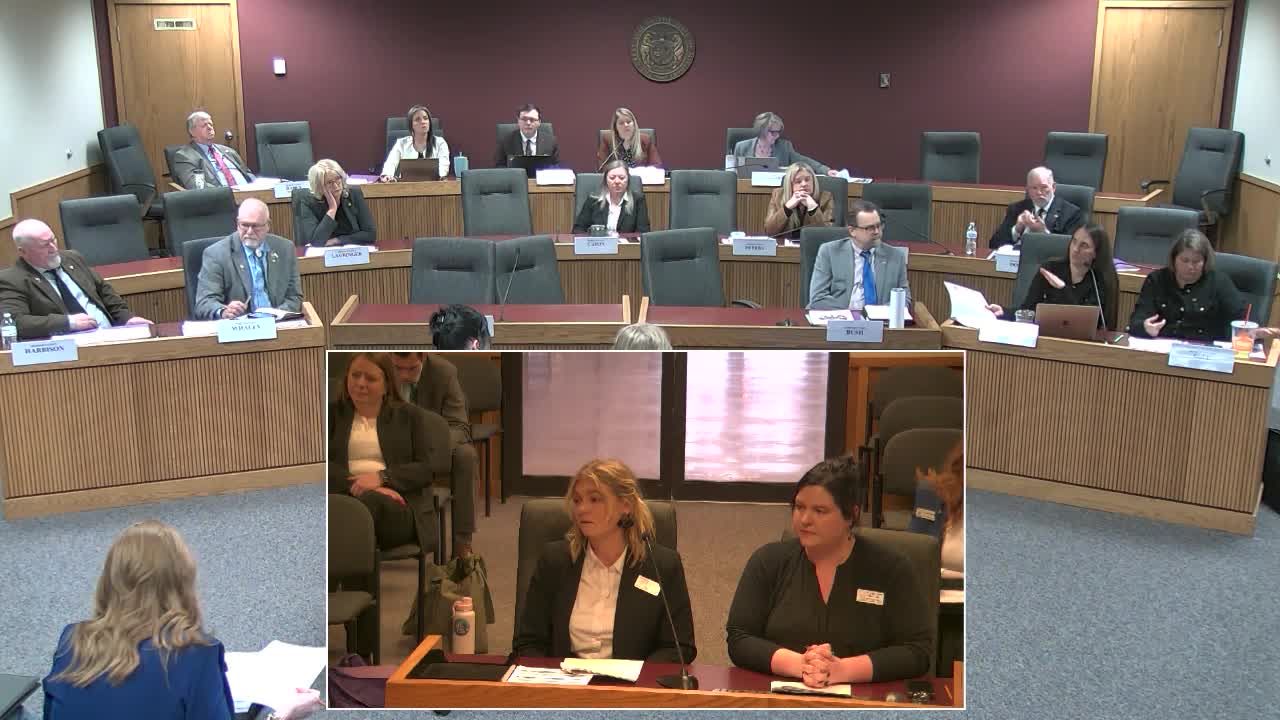
Jamie Willis, director of Family Justice Center operations for Greene County, told the Mental Health Committee that reductions in federal Victims of Crime Act funding and unstable grant streams are forcing providers to reduce services or close.
Jamie Willis, director of Family Justice Center operations for Greene County, told the Mental Health Committee that most local domestic-violence programs rely on a patchwork of federal, state and private grants and that recent reductions in federal Victims of Crime Act (VOCA) funding threaten operations.
Willis said that VOCA funding has historically supported much of the direct service infrastructure for domestic violence, sexual assault and child-abuse programs. She told the committee that "each state saw a 40% decrease in funding," and that the 2024 fiscal-year cut of roughly $630 million nationally forced programs to triage or close.
Why it matters: Willis said local service providers, prosecutors and social-service agencies depend on predictable VOCA and grant funding to maintain staff and capacity. She urged lawmakers to consider state-level backstops when federal funds fall short and to support collaborative service models such as Family Justice Centers.
Willis described the Family Justice Center model used in Greene County: a co-located collaborative where advocates, attorneys, prosecutors, social workers and law enforcement provide coordinated access in a single facility. Greene County’s center, she said, is currently the only Family Justice Center in Missouri.
On immigration-related barriers, Willis described the U nonimmigrant status (U visa) program and said legal services are in short supply: “There’s always a greater need than is available,” she told the committee, noting that reporting requirements for certain immigration remedies can complicate access. Willis said Family Justice Center programs serve people regardless of immigration status but that recent political narratives have deterred some undocumented survivors from seeking help.
Willis and committee members also discussed differential coverage for forensic exams and other medical care: Willis said Missouri covers sexual-assault forensic exams but that other medical care related to strangulation or non-sexual physical injuries often is not covered in the same way, creating barriers for survivors who share insurance with their abusers.
Willis recommended that the legislature consider: restoring or replacing VOCA shortfalls with state funds, supporting expansion of collaborative Family Justice Centers, and addressing legal-service capacity for immigrant survivors. She said the governor had recommended a $25 million appropriation in the current budget cycle in response to provider requests for $30 million in state support.
Ending: Willis asked lawmakers to consider state funding measures and statutory fixes that would stabilize services and increase access to legal and forensic care for survivors across Missouri.