Get Full Government Meeting Transcripts, Videos, & Alerts Forever!
Get email alerts on the Virtual Education Regulation topic
No spam. Unsubscribe anytime.
Senate committee advances bill narrowing statewide virtual-school operations; parents, providers urge caution
Summary
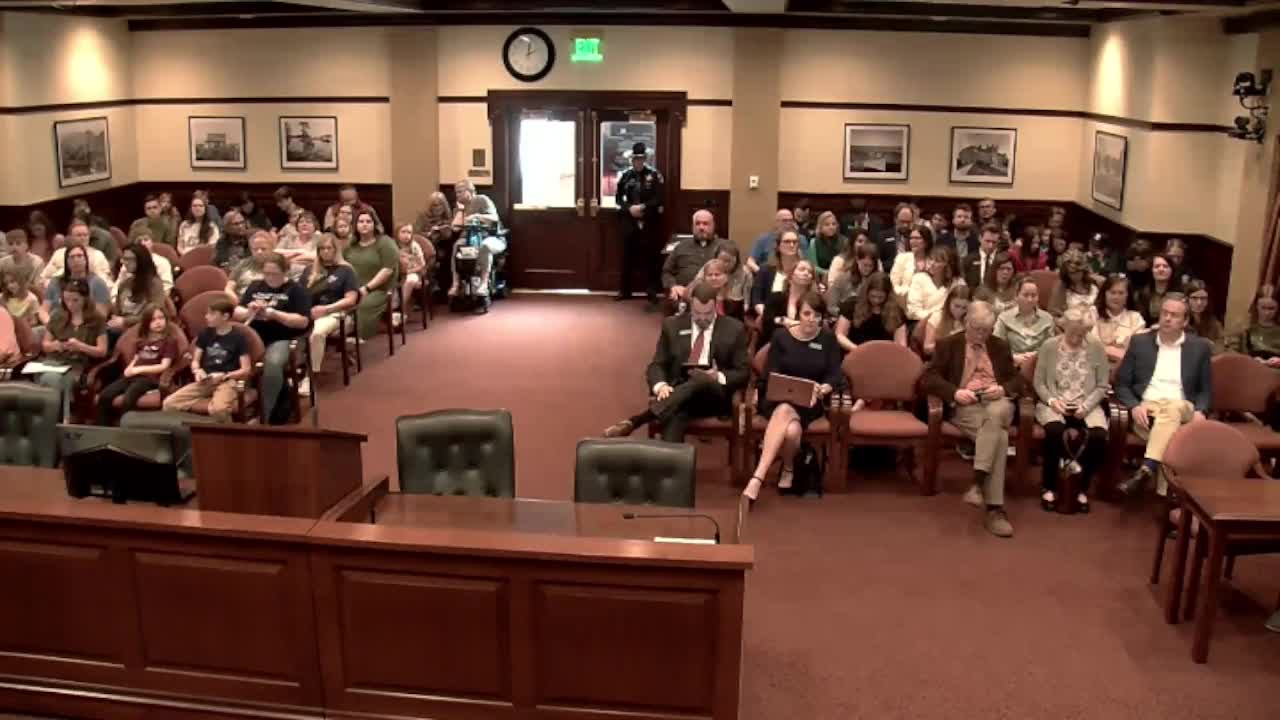
The Idaho Senate Education Committee on Monday voted to send Senate Bill 11 88 to the fourteenth order for possible amendment after lengthy debate and testimony from parents, virtual-school operators and education advocates.
The Idaho Senate Education Committee on Monday voted to send Senate Bill 11 88 to the fourteenth order for possible amendment after lengthy debate and testimony from parents, virtual-school operators and education advocates.
Senator Dave Lent, the bill's sponsor, told the committee the measure seeks to "define the lane" between traditional school districts and statewide virtual providers and to clarify funding and oversight. "The intent is not to take away any of the learning opportunities that the students in our public system in Idaho currently have," Lent said, adding the proposal is driven by a rapid expansion of virtual learning that accelerated during the COVID-19 pandemic.
The bill would, as drafted in committee, stop traditional school districts from enrolling new virtual students who live outside district boundaries beginning July 1, 2025, and would require that a virtual charter be authorized only by the Idaho Charter School Commission beginning July 1, 2026. The draft also would require an authorizer to approve contracts between a virtual school and its educational service providers before execution, set a $400-per-pupil floor for certain charter facilities funding, and place limits on fees charged by the Charter School Commission.
Why it matters: Committee members and witnesses said the bill affects existing statewide virtual programs and tens of thousands of students who now learn online. Doug Taylor of the Coalition of Idaho Charter School Families told the committee there are roughly "30,000 or so kids that learn virtually throughout the state," a mix of district-run virtual programs, charter schools and statewide providers. Parents, school coordinators and charter-school representatives warned that rushed changes could disrupt students' current services and urged the committee to proceed carefully.
Terry Sorensen, executive director of Idaho Home Learning Academy (a statewide virtual charter authorized through Oneida School District), testified that sponsors of the bill had incorporated feedback and created a transition year. "They have created this bill that addresses your concerns from the first time I was here and does three important things in my mind," Sorensen said, noting the bill's transition provisions and what she described as steps toward a "level playing field." She also told senators that uncertainty remains about how authorizers and state agencies will coordinate.
Opponents called the process rushed. Karen McGee, a board member of the Coalition of Idaho Charter School Families and former president of the Idaho State Board of Education, said SB 11 88 "takes a step backwards" by increasing state oversight and narrowing options. Several parents and school coordinators described students with special education needs and families who say they have seen measurable academic gains in virtual programs.
Committee deliberations centered on two primary concerns raised in testimony and questions: whether the Charter School Commission should gain explicit contractual approval authority over virtual-school service contracts, and whether traditional school districts should be restricted from expanding virtual enrollments outside their boundaries. Sponsor Lent said those two provisions were the main areas for potential amendments and noted the bill includes a one-year implementation window intended to ease transitions.
Votes and next steps: The committee first considered a motion to hold the bill in committee, which failed. The committee then voted to send SB 11 88 to the fourteenth order for possible amendment. On the roll call to move the bill to the fourteenth order, senators voted 7-2 in favor (ayes: Cook, Woodward, Nichols, Burton Shaw, Patterson, Semmelroth, Lent; nays: Carlson, Zito). The committee's decision sends the bill back to a later stage in committee for redrafting rather than ending consideration.
What witnesses said: Testimony included statements from virtual-school leaders and parents who said their children had improved academically in the virtual setting. Liz Colton, an ILA (Idaho Home Learning Academy) coordinator and certified teacher, described her son's reading gains and said the program provided tools to identify and remediate learning gaps. Several speakers asked the committee to pause and study the issue over the summer to avoid unintended disruption.
Unresolved details: The bill text as presented did not specify every procedural detail of authorizer review, nor did witnesses demonstrate a guaranteed approval pathway for any specific provider moving from a district authorizer to the Charter School Commission. Sponsors told the committee they and stakeholders would continue drafting amendments, and they highlighted the built-in transition year as part of that work.
Ending: The committee's action means SB 11 88 remains live; sponsors said they will work with stakeholders before the next committee deadline to clarify language on contractual oversight and district boundary rules and to protect students currently enrolled in functioning virtual programs.
Votes at a glance
- Motion to hold SB 11 88 in committee (mover: Senator Zito; second: Senator Carlson) Outcome: failed (roll-call recorded; final internal tally notated in transcript as failing).
- Motion to send SB 11 88 to the fourteenth order for possible amendment (mover: Senator Woodward; second: Senator Nichols) Outcome: passed; roll-call 7-2 (ayes: Cook, Woodward, Nichols, Burton Shaw, Patterson, Semmelroth, Lent; nays: Carlson, Zito).