Get Full Government Meeting Transcripts, Videos, & Alerts Forever!
Get email alerts on the Budget Cuts Extension Conservation topic
No spam. Unsubscribe anytime.
Belknap County officials warn budget cuts to extension and conservation district risk grants, services
Summary
County commissioners heard testimony that recent cuts to Cooperative Extension and the Conservation District could reduce grant revenue, curtail food distribution and farm-equipment rental programs, and scale back water-quality and technical assistance.
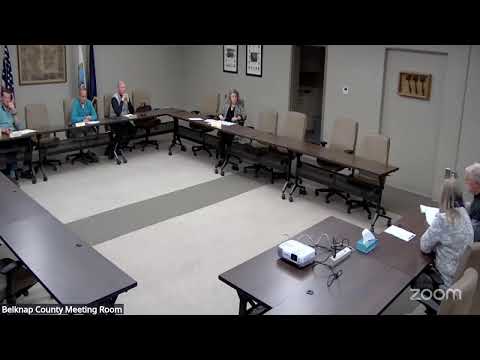
Belknap County commissioners heard extended testimony Wednesday that recent budget cuts to the county’s Cooperative Extension and Conservation District could jeopardize hundreds of thousands of dollars in grant-funded projects and local services.
Both agencies told the board that local cuts reduce their ability to provide technical assistance, lead volunteer programs and secure matching funds required by many grants. Lisa, a Conservation District staff member, said the district brought in “over $200,000” in grant funds last year and listed projects including stream restoration, forest management plans, farm-to-school procurement and rental equipment for farmers. She said staffing reductions would force the district’s only full-time employee to drop to part-time and would reduce timely responses to farmers and residents.
The district’s volunteer supervisor, Rick DeMar, told commissioners that the cuts “risk our ability to perform our current obligations” and that performance requirements tied to awarded grants could be imperiled. He said the district is not a 501(c)(3) nonprofit and therefore has limited access to some philanthropic funding streams.
Amy Lohner, director of Cooperative Extension at the University of New Hampshire, described staff and program changes after an $82,500 cut to extension funding. Lohner said the office will drop from about 5.5 full-time equivalent staff to roughly 2.75, move some specialists off county-dedicated work to statewide duties, reduce an administrative assistant to 75 percent time and curtail in-person training and homeowner-association assistance. “We are going down to 2.75,” Lohner said, and listed programs at risk, including the Lakes monitoring volunteer program and direct technical help to private landowners.
Commissioners and agency representatives tied the local cuts to lost grant leverage. Lisa said some grants the district helped secure last year totaled $271,000 and that the county contribution allowed the district to leverage state and federal funds; she estimated the county’s cuts could imperil roughly $200,000 in existing and prospective grant activity. Lohner said Belknap County historically contributed about $165,000 to the extension budget and that UNH provided approximately $297,000 in other resources, with additional statewide educator time valued at about $140,000; she warned those in-kind and leveraged resources will be reduced if county funding remains lower.
Speakers also described on-the-ground impacts: the Conservation District reported distributing more than 8,000 pounds of surplus food last year to local partner sites and running a farm-equipment rental program that saved local farms an estimated $128,000; Lohner warned that volunteer training for lake and watershed monitoring would be curtailed and that extension would no longer provide routine, in-person assistance to homeowner associations.
Commissioners discussed options for reversal. County staff noted the delegation that finalizes the budget has until the 30th to set its budget and could reconsider its cuts; commissioners said they planned to ask the delegation to revisit funding. No formal vote to restore funds occurred at the meeting.
Commissioners emphasized the local economic link between leveraged grant dollars and Belknap County businesses. One commissioner contrasted the small per-taxpayer savings from the cuts—described in testimony as about $2–$5 per taxpayer per year—with the larger economic activity tied to grants and local projects.
Public commenters and agency staff urged residents to contact delegation members if they want funding restored. Conservation District leaders said they would provide commissioners with a detailed list of awarded and prospective grants and with estimates of direct local economic benefit.
If delegation members do not restore funding, agency representatives said residents should expect reduced local services rather than immediate program termination: “We will continue to welcome people to all of our workshops,” Lohner said, but added the office will not be able to train new volunteers or provide the same level of hands-on technical assistance locally.
The board did not take a formal vote to change the budget at the meeting but directed staff to pursue information on the exact grant amounts at risk and to raise the issue with the delegation before its finalization deadline.