Get Full Government Meeting Transcripts, Videos, & Alerts Forever!
Get email alerts on the Floodplain Management topic
No spam. Unsubscribe anytime.
Staff seeks commission support to remove 5‑year floodplain look‑back; CRS status and staffing considered
Summary
Community Development staff proposed ordinance amendments to remove a five‑year look‑back for floodplain substantial-improvement calculations and outlined Community Rating System (CRS) implications, potential losses of points, and the option to fund two floodplain positions; staff recommended removing the look‑back ahead of an April audit.
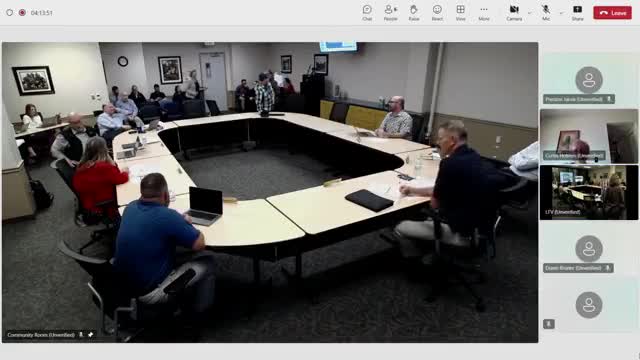
Community Development staff on March 11 presented proposed changes to the city’s floodplain ordinance intended to help property owners recover from recent storms and to preserve the city’s standing in the Community Rating System (CRS), the voluntary FEMA program that reduces flood insurance premiums for residents.
Cheryl Reed, director of Community Development, introduced the briefing and said the city joined the National Flood Insurance Program (NFIP) in 1971 and last revised local floodplain rules in ordinance 2019‑43. Building official Robert Hatton and assistant building official Matt Butler explained staff recommendations: remove the five‑year look‑back period used in Largo to aggregate prior improvements and repairs when calculating whether a property meets the 50% threshold for "substantial improvement" or "substantial damage." Under current practice the city looks back five years of permitted work and adds that value to the cost of storm damage when deciding whether a repair triggers elevated‑foundation standards; FEMA and the Florida Division of Emergency Management (FDEM) told staff they interpret the two concepts (substantial improvement and substantial damage) as combined and do not apply a five‑year look‑back.
Staff said the city’s CRS rating is currently Class 6, which provides a 20% flood-insurance premium reduction for affected policyholders; unincorporated Pinellas County holds a higher CRS rating (class 2) and receives a larger discount. Butler explained how CRS points are earned in categories such as public information, mapping and regulations, flood-damage reduction, and warning and response. City staff noted the five‑year look‑back currently contributes about 40 points under the CRS scoring methodology but that FDEM/FEMA reviewers could interpret enforcement of a five‑year look‑back differently; staff said removing the look‑back is likely to keep the city in its current class while reducing the risk of an adverse interpretation by auditors.
Staff recommended moving ahead with an ordinance to remove the five‑year look‑back and asked the commission for consensus to proceed. They also outlined an additional option: if the commission wished to improve the CRS rating further, staff described the feasibility of funding two dedicated floodplain positions (a floodplain administrator and technician) in FY 2026 to pursue outreach and regional public‑information programs that could add several hundred CRS points. Staff said a consultant and CRS reviewers will conduct an April 29 site visit and urged clarity in local ordinance language before that audit.
Commissioners expressed sympathy for homeowners affected by storms and worked through tradeoffs: some supported removing the five‑year look‑back immediately to avoid enforcement conflicts with FEMA and FDEM; others supported removing the look‑back but hesitated about committing to new staff funding without a fuller cost‑benefit analysis. Reed and staff said they would move forward with drafting ordinance language to remove the five‑year look‑back and return with fiscal options and details on CRS point opportunities.
Ending
Staff will draft an ordinance to remove the five‑year look‑back, prepare materials for the April CRS audit, and return with fiscal options if the commission wants staff positions to pursue higher CRS classification.