Get Full Government Meeting Transcripts, Videos, & Alerts Forever!
Get email alerts on the Vision Zero Traffic Safety topic
No spam. Unsubscribe anytime.
Lakeland to consider Vision Zero action plan and school-zone speed cameras
Summary
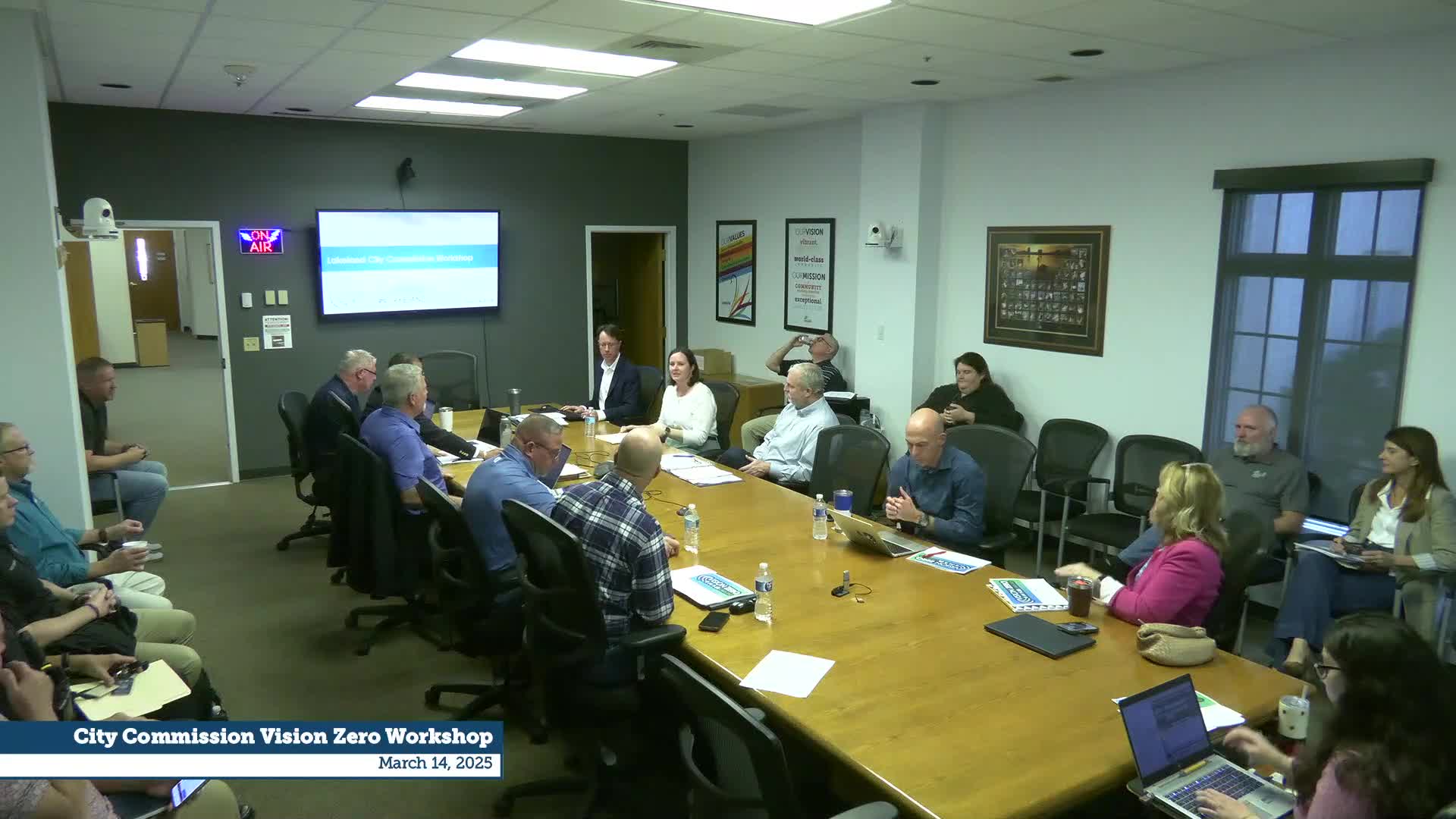
City staff presented a Vision Zero action plan that would direct street-design changes, pursue federal grants and seek separate approval for school-zone speed cameras and added red‑light cameras; a resolution to adopt the plan is scheduled for a Monday commission vote.
Lakeland City staff asked the commission to back a Vision Zero action plan and signaled they will seek separate approval later this year for school‑zone speed cameras and additional red‑light camera locations.
The plan, presented by Traffic Operations Manager Tess Schwartz, uses a “safe system” or Vision Zero approach — aligning engineering, enforcement, planning and emergency response to reduce deaths and serious injuries on city streets. Schwartz and staff cited local and state statistics, grant funding already awarded to corridor studies, and a 2023 Florida law that allows municipalities to deploy speed‑detection cameras in school zones.
Schwartz said Vision Zero treats human error as inevitable and focuses on managing speeds and kinetic energy to reduce crash severity. “Vision 0 started in Sweden in the nineties, and it spread throughout the world including to The United States,” Schwartz said. She told commissioners that Lakeland recorded 127 traffic fatalities over the past five years and that in 2024 the city saw 19 fatalities and 84 severe injuries.
City staff described three near‑term implementation priorities: (1) pursue Safe Streets for All planning and demonstration grants and related implementation funds; (2) advance two corridor studies awarded a state Streets for All grant for Sleepy Hill Road and Tenth Street (the city said an agreement is under development after an award of just under $300,000); and (3) seek separate authorization from the commission this calendar year to install school‑zone speed cameras and additional red‑light cameras at locations identified by staff.
Cheryl Timbal, captain with the Lakeland Police Department who oversees traffic, summarized the 2023 state legislation (House Bill 657) and Florida Statute 316.1896 that authorizes speed‑detection systems in school zones. “It authorizes cities and counties to use speed detection system, which is very similar to the red light camera systems to detect speeding in school zones,” Timbal said. Under the statute, the enforcement threshold is a violation of 10 miles per hour or more above the posted speed, the presenters said.
Timbal and staff outlined program rules the statute requires: the city must adopt an ordinance before installation, determine that a location warrants additional enforcement, post clear warning signage and provide 30 days’ public notice before active enforcement. The presenters also summarized the statutory distribution of a $100 fine: 20% to the state general fund, 60% to local program administration and traffic safety initiatives, 3% to the Florida Department of Law Enforcement for training, 12% to the county school district for student walking conditions, and 5% for school crossing guards, per the statute as explained to the commission.
On technology and evidentiary checks, traffic‑unit staff member Chad Milbauer said the system’s radar and camera measurements are validated daily and described two independent methods to calculate speed: radar and the distance/time between two camera images. “It is checked every day,” Milbauer said, describing how the data would be verified for any court hearing.
Commission discussion focused on scope, equity and timing: several commissioners urged staff to prioritize school zones, asked how many Lakeland schools already have flashing school‑zone signs (staff said not all do and that flashers are required for camera deployment under the statute), and asked whether the city can implement cameras for all eligible schools rather than a piecemeal rollout. Staff said they have handled some school requests case‑by‑case and can include a citywide assessment as part of Vision Zero implementation.
City staff also noted operational constraints and resources: the Lakeland Police Department expects additional review capacity will be needed if the program is large — staff estimated at least a half‑time additional position initially — and the commission’s resolution would be a separate administrative step from the later ordinance and contract approvals required to deploy cameras and vendor services.
City staff asked commissioners to approve a resolution on Monday adopting the Vision Zero action plan; individual cameras and camera locations would return to the commission for separate approvals. “Monday would be the resolution,” staff member Sean said, adding that subsequent ordinances and contracts would come back for formal action and that some technology deadlines make timely action important.
Why it matters: Lakeland staff linked the plan to concrete safety and fiscal concerns, noting statewide and local crash trends and the high cost of serious crashes. The Vision Zero action plan is intended to position the city to receive federal or state implementation funds, coordinate with Polk County and the Polk Transportation Planning Organization (TPO), and direct limited local traffic‑calming resources where data show the most benefit.
Next steps: commissioners are scheduled to consider a resolution to adopt the Vision Zero action plan at the next regular meeting; staff will return with separate ordinance language, program details, vendor contracts and recommended camera locations for commission approval if the commission directs staff to proceed.