Get Full Government Meeting Transcripts, Videos, & Alerts Forever!
Get email alerts on the State Of The State topic
No spam. Unsubscribe anytime.
Whitmer outlines $2B housing plan, roads fix and permitting overhaul in State of the State
Summary
Governor Gretchen Whitmer told a joint convention of the Michigan Legislature that her priorities for 2025 are lowering costs, creating jobs and delivering measurable results, proposing a $2 billion housing investment, permitting and licensing reforms, road funding solutions and measures on education, health and workforce training.
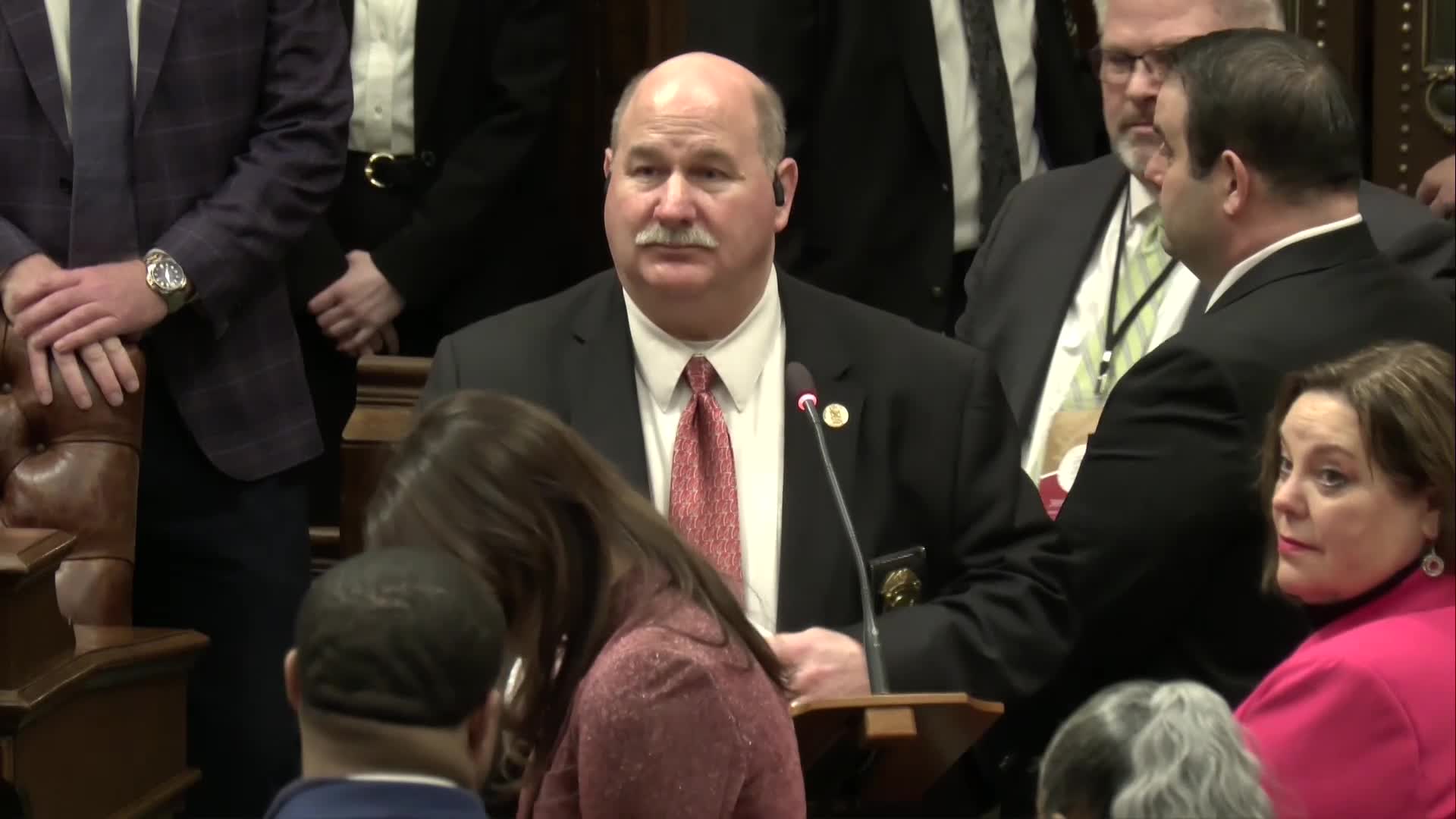
Governor Gretchen Whitmer delivered the 2025 State of the State address to a joint convention of the Michigan Senate and House on Feb. 26, outlining a three-part agenda: lower costs, create jobs and secure measurable results.
Whitmer said the administration will "invest $2,000,000,000 to build, buy, or fix nearly 11,000 homes," and called attention to a statewide housing shortfall she said is about 140,000 homes. "We gotta build, baby, build," Whitmer said, urging a large housing innovation investment she said would create more than 10,000 construction jobs.
The governor framed roads, permitting and licensing reform as central to both cost reduction and job creation. She said Rebuilding Michigan, the existing $3.5 billion bond plan, was always a short-term fix and warned of a funding cliff when that program phases out. "A long-term fix means new, fair sources of revenue," Whitmer said, pressing the Legislature to return to the negotiating table for a bipartisan solution for local and state roads.
On regulation and business development, Whitmer proposed streamlining permitting and licensing to accelerate construction and reduce delays. She said state departments reviewed all permits and found overlapping processes; she pledged to direct agencies to refund permitting fees when deadlines were missed where allowed by law and to seek statutory changes so developers do not have to wait more than 90 days for some approvals.
On wages and worker protections, Whitmer highlighted recent bipartisan changes that raise the minimum wage to $15 for more workers and expand earned sick time, and she asked the Legislature to expand programs that support job training and apprenticeships. She called for an expanded role for career and technical education and asked for the "largest investment in career and technical education ever" in the upcoming budget cycle.
Health and household cost proposals in the address included an expansion of the Michigan Energy Assistance Program (referred to by the acronym MEAP in the speech), action to reduce medical debt, and continuation of the Rx Kids program. Whitmer said Michigan has a budget surplus and a rainy day fund she quantified as $2,700,000,000 and noted the state has paid down $26,000,000,000 of debt since she took office.
On education, she called literacy a crisis—quoting proficiency rates she said exist for fourth-grade reading and eighth-grade math—and urged targeted investments: "Let's face our literacy crisis with the fierce urgency it calls for," Whitmer said. She also proposed limits on student phone use in classrooms and a tax on vaping products to align with how cigarettes are taxed.
Whitmer emphasized higher education and workforce programs she said have expanded access, including Michigan Reconnect, the Michigan Achievement Scholarship and the community college guarantee; she pledged an executive directive to boost enrollment among young men in workforce and training programs.
The governor named several local and statewide projects and symbols of progress—Palisades nuclear plant restart, Jones Secchia Children's Rehabilitation Hospital ground‑breaking in Grand Rapids, and Michigan Central in Detroit—while urging cross‑aisle cooperation and repeated references to bipartisan accomplishments in recent years. She closed by saying, "The state of our state is strong. And it's on all of us to make it stronger and kinder."