Get Full Government Meeting Transcripts, Videos, & Alerts Forever!
Get email alerts on the Living Seawalls topic
No spam. Unsubscribe anytime.
Board recommends city evaluate 3D‑printed “living” seawall designs for resilience and habitat
Summary
The advisory board voted to recommend that the city consider environmentally attuned seawall designs, including 3D‑printed living shorelines, as part of future seawall and resiliency work.
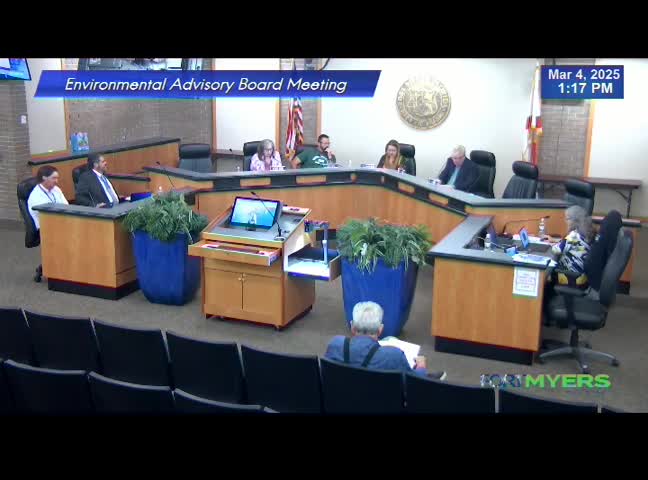
The Fort Myers Environmental Advisory Board voted March 4 to recommend that the city evaluate seawall solutions that improve shoreline resiliency while promoting marine habitat, including newer 3D‑printed “living” seawall products.
Why it matters: members said living‑shoreline surfaces provide more texture and microhabitats that can increase biodiversity and improve water quality compared with plain vertical concrete faces. Several presenters and staff noted there is limited long‑term performance data for the 3D‑printed products but that early reports and pilot projects show ecological promise.
What the board heard: members summarized published experience from other municipalities and coastal engineers. Staff and a board member reported Miami and Longboat Key jurisdictions are piloting textured or 3D‑printed faces to existing seawalls; the products aim to encourage marine life to settle while allowing reinforcement of failing walls. City staff said Longboat Key expects installations about a year after testing begins and offered the board a local site visit when a test installation is available.
Board action: the board adopted a motion recommending that future city seawall and resiliency projects evaluate the most environmentally attuned designs that promote flora and fauna while meeting storm‑resiliency requirements. The motion also asked staff to consider pilot testing alternatives when feasible.
Cautions noted: board members and staff flagged durability questions because the materials and construction methods are newer than traditional seawalls. The board’s recommendation does not specify a vendor or require procurement of any one product; members said their intent is to encourage evaluation and, where appropriate, pilot installations.
Next steps: staff and engineering will be asked to identify potential city pilot sites and bring feasibility information, cost estimates and performance monitoring plans back to the board for review.