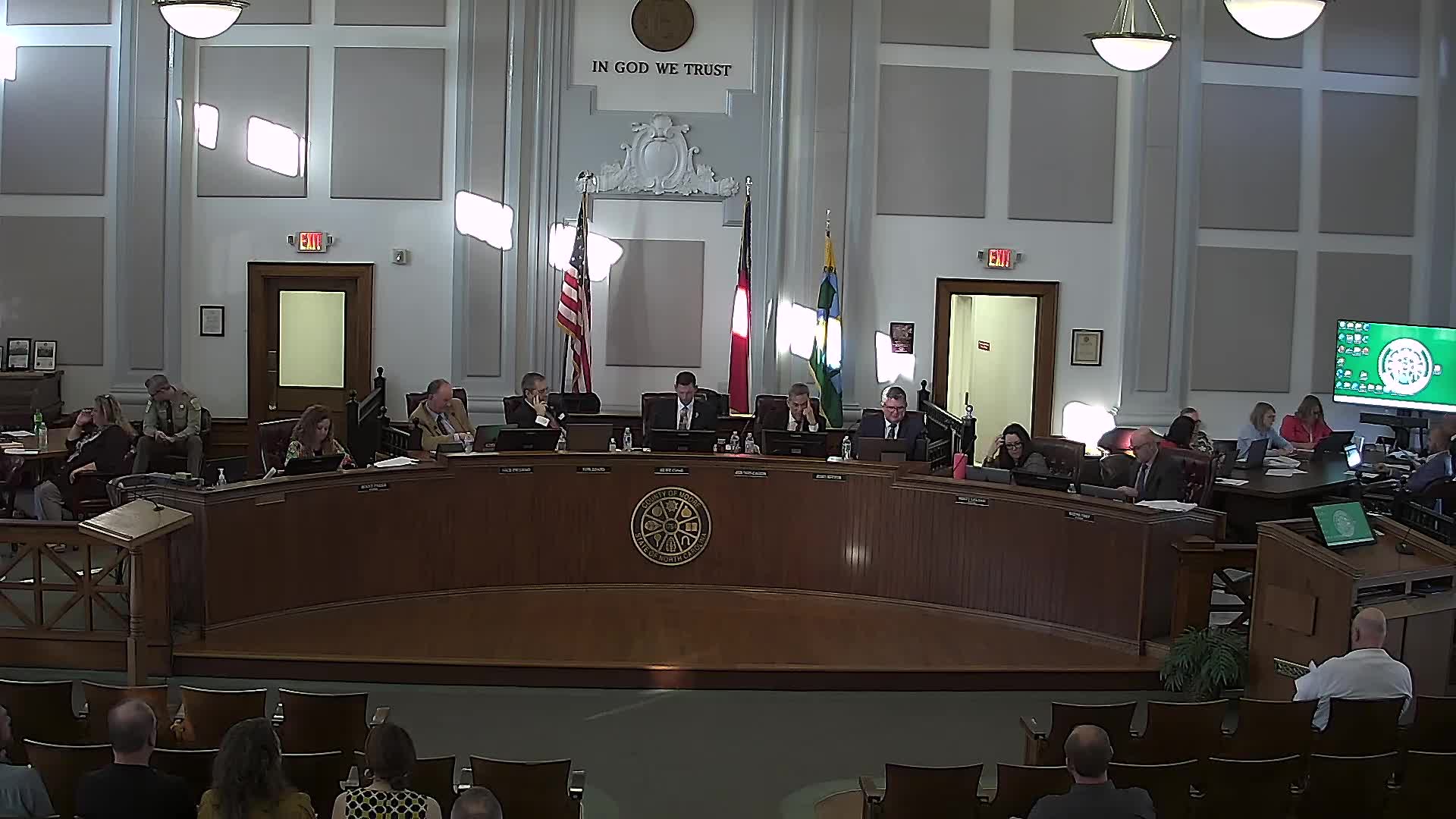
Moore County commissioners approve 3% hotel tax increase to fund tourism product development
Loading...
Summary
Moore County commissioners voted unanimously March 18 to levy an additional 3 percentage points in the county room occupancy tax, increasing the local rate from 3% to 6% effective Jan. 1, 2026.
Moore County commissioners voted unanimously March 18 to levy an additional 3 percentage points in the county room occupancy tax, increasing the local rate from 3% to 6% effective Jan. 1, 2026.
The measure, adopted by resolution citing Session Law 2015-256 and North Carolina General Statute 153A-55, follows a public hearing in which the county's Convention and Visitors Bureau (CVB) outlined a plan to channel the extra revenue into a tourism product development fund intended to finance attractions, capital projects and marketing that officials say will draw more visitors and overnight stays.
Why it matters: The CVB and local tourism stakeholders told commissioners the county's tax base already produces substantial visitor spending and job support, and that an expanded fund would allow the CVB to help finance projects and events beyond routine marketing. Commissioners heard from hoteliers, arts and cultural groups, agritourism operators, and small-business owners who said the county-wide payout would benefit both tourism and residents.
What speakers said - Phil Wirs, president and CEO of the Moore County tourism development authority (the CVB), told the board the agency is required by state law to spend a majority of its revenue on marketing and may use a portion for product development. "We get as many people from around the world to come here, spend all their money, and then go home. And then make plans to come back again and again and again," Wirs said, describing the CVB's goal of turning visits into repeat business.
- Kelly Miller, chair of the CVB board, described last year's one-time $821,000 grant program the CVB piloted from fund balance and said the product development fund would formalize and expand that capacity.
- Ryan Olafs, founder of Misty Morning Ranch (agritourism), said: "This increased investment would stimulate economic activity, support local businesses, and create new job opportunities."
- Chris Dunn, director of the Arts Council of Moore County, asked that a portion of the funds be made available for arts and cultural organizations, citing a study showing more than $6.5 million in annual spending associated with the county's largest nonprofit arts groups.
- David Hensley, a local resident and retired Marine, said he was "conditionally" supportive and urged the board to earmark some of the capital-eligible funds for "dual-use" school facilities (athletic and performing-arts venues) that could host tournaments and events and produce room nights.
Opposition and concerns Some commissioners expressed concern about the effect of a higher tax on people who travel to Moore County for non-tourism reasons (medical stays, funerals, local family events). Commissioners asked the CVB to consider whether targeted relief or coordination with hotels could mitigate burdens for those visitors; the CVB said it would raise the question with its board.
Fiscal detail provided to the board County staff and the CVB provided five years of revenue history showing occupancy tax receipts and growth in short-term rentals (from about 25 to roughly 700 listings over several years). The CVB reported a fund balance of roughly $2.2 million and estimated annual collections (pre-increase) in the $3.6 million range, noting spikes in 2024 tied to the U.S. Open.
Formal action The board adopted a written resolution levying the additional 3% room occupancy tax (Session Law 2015-256; N.C. Gen. Stat. 153A-55), setting an effective date of Jan. 1, 2026, to allow time for administrative changes and for the CVB to finalize memoranda of understanding (for example, regarding airport commercial service subsidies). The resolution passed by voice vote.
What happens next The CVB will return to its board to finalize a memorandum of understanding requested by the commissioners that would, if adopted, direct the CVB's use of the additional funds and confirm any commitments (the CVB also planned to consider a pledge that the new funds would not be used to subsidize commercial air service). The county will implement the rate change administratively so the new 6% rate takes effect Jan. 1, 2026.
Community reactions and outreach During the hearing dozens of local operators and nonprofit leaders spoke in favor of the increase, saying it would support festivals, agritourism, the arts and new visitor amenities countywide. Several speakers asked the board to consider grant programs or explicit set-asides so current cultural organizations and schools could access capital or programming dollars tied to tourism development.
The board closed the public hearing before taking the final vote.