Get Full Government Meeting Transcripts, Videos, & Alerts Forever!
Get email alerts on the Houselessness Response topic
No spam. Unsubscribe anytime.
Missoula council member outlines plan as Johnson Street emergency shelter funding winds down
Summary
Council member Gwen and city staff described efforts to transition residents of the Johnson Street emergency shelter into more stable housing as federal pandemic-era funding ends; the city and service providers plan a time-limited push to house people, expand case management, and pursue fundraising.
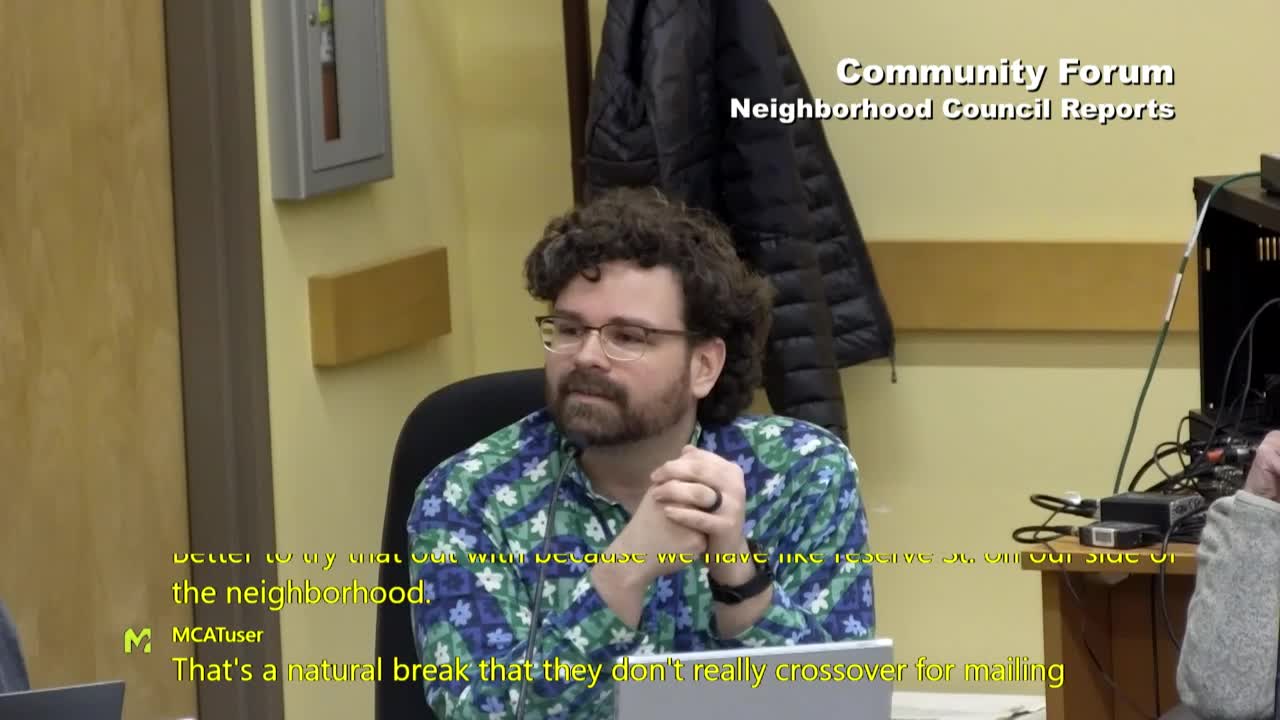
City Council member Gwen told the Missoula Community Forum on March 27 that the Johnson Street emergency shelter's federal funding has run down and the city must transition from a long-running congregate shelter model to a housing-focused response.
"We just don't have the money anymore," Gwen said, explaining the Johnson Street shelter was established during the COVID-19 pandemic with federal emergency dollars that were never intended to fund a long-term congregate shelter. She characterized the current plan as a five-month push to pair fewer shelter beds with intensive case management and housing placements.
Gwen said the city is piloting and expanding programs that help residents overcome immediate barriers to housing, such as first/last month's rent and utility arrears, and that Missoula Interfaith Collaborative and other local providers are coordinating volunteers and services. The city aims to raise about $400,000 through fundraising and private-sector contributions rather than relying solely on the municipal budget.
Gwen described a recent veterans housing sprint that used a modest city-funded facilitation grant and placed a majority of participants: "We got 12 out of 15 people housed," she said, noting the sprint informed broader work to support Johnson Street residents. The city plans similar, scaled efforts focused on individualized case management rather than only providing overnight shelter.
Gwen told the forum the approach includes active landlord outreach and post-placement oversight to reduce evictions and maintain housing stability. "There's gonna be a lot of oversight," she said, describing plans for regular check-ins and more active case management so landlords and tenants can address problems before someone loses housing.
The city also discussed the RV camping permit program (an outcome of Missoula's urban camping rules) as a part of the broader shelter ecosystem; Gwen reported the permit program has about 67 active permits and has produced fewer complaints than expected, and noted that alternative approaches have a role in a diversified response.
Gwen and forum participants acknowledged the issue is complex. Forum members raised concerns about capacity, the potential for services to attract additional unhoused people, and the need for federal housing supports such as Section 8 vouchers. Gwen said state and federal funding outlooks are uncertain and that ongoing program success will depend on external grants and landlord participation.
Other forum participants described neighborhood-level contributions and partnerships. Carrie Scribe (Southgate Triangle) and Sean Hayes (Rose Park) praised the case-management emphasis and urged community support for landlord engagement and volunteer programs. Gwen said county and nonprofit partners are coordinating daily and weekly meetings at Johnson Street to move placements forward.
Gwen asked neighbors to help by connecting willing landlords and by supporting fundraising efforts. She said that while the Johnson Street shelter has provided emergency capacity through cold months, the city now intends to decrease congregate-beds while increasing housing placements and oversight to stabilize people more permanently.
City staff and service providers plan a series of monthly intake/housing cohorts through the next five months, expanded volunteer coordination, and efforts to identify federal and private funds to sustain placements. Gwen said a larger policy document addressing houselessness strategy will be released in the coming months and that community forums and neighborhood leadership teams will be involved in outreach and implementation discussions.