Get Full Government Meeting Transcripts, Videos, & Alerts Forever!
Get email alerts on the Transportation topic
No spam. Unsubscribe anytime.
City council adds draft letter urging full funding for North–South Corridor; members and residents press legislators to finish project
Summary
Councilmember Cathcart introduced a draft city letter asking the Washington State Legislature to fully fund and timely deliver the North–South (North Spokane) Corridor; councilmembers and several residents spoke in favor. No formal roll-call vote on the letter is recorded in the transcript.
Councilmember Cathcart introduced a draft Spokane City Council letter asking the Washington State Legislature for “full funding, on time delivery” of the North–South Corridor, also referred to in testimony and council discussion as the North Spokane Corridor. Cathcart said the corridor “is very very important to the region, to the city, and to the district that I represent” and urged the council to reaffirm commitments made in the 2015 Connecting Washington plan and recent legislative action.
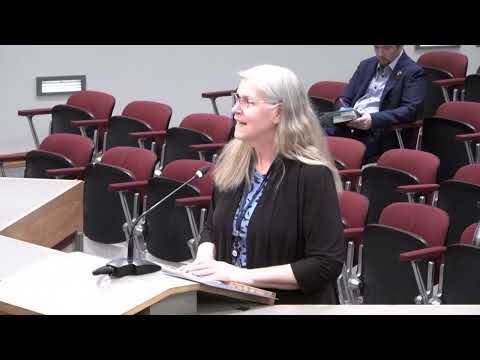
The item was added as a special consideration on the legislative agenda and drew public comment from neighborhood residents and advocates who urged timely completion and additional investment in adjacent neighborhoods. Tyler Timmouche (Minnehaha neighborhood) told the council, “This 1 should be a no brainer,” and asked for more beautification of the corridor. Will Hewlings, a downtown resident, urged the council to “finish what we started.” Justin Holler said he supported timely completion but said he was “conflicted as far as the tie to the February project on Ruby/division” and did not want the corridor funding coupled with other projects.
Council members from across the dais expressed support for the message in the letter. Councilmember Bridal and others recalled prior council work and outreach to state lawmakers; council members noted the corridor’s long history (several speakers referenced proposals dating to the mid-20th century) and the project’s connection to other regional investments, including Division Street work and planned bus-rapid-transit modeling. Councilmember Cathcart and others emphasized that delaying funding risks higher material costs and the project stopping short of I-90. Councilmember Bingle warned that delay could leave the corridor incomplete and “a massive physical reminder of the injustice” to neighborhoods previously bisected by freeway construction.
The transcript records extensive discussion and public testimony in favor of the letter. The record does not include an explicit roll-call vote adopting the letter; at one point the meeting record notes, “Everybody's prepared to vote,” but no further recorded voice vote or tally appears in the transcript excerpt. The council asked staff and the public to monitor state-level bills related to corridor lands and release of unused parcels.
Why it matters: Councilmembers and residents framed the corridor as tied to neighborhood reinvestment, affordable housing opportunities on idle state-owned parcels, traffic flow and safety, and the viability of related transit projects. Speakers repeatedly emphasized a delivery timeline tied to the original Connecting Washington plan and warned that further delay would raise costs and prolong neighborhood blight.
Public comment and council direction
- Multiple residents testified in favor of immediate, full funding and asked the council to press the legislature to keep the project on the 2029 timeline referenced in the Connecting Washington plan. Tyler Timmouche asked for “more trees, more grass” and less illegal dumping beneath incomplete sections. Will Hewlings said the corridor would “relieve congestion, improve traffic flow, [and] create economic growth.” - Justin Holler urged the corridor funding to be considered separately from the Ruby/Division project, saying he was “conflicted as far as the tie” between the two efforts. - Councilmembers repeatedly urged outreach to state legislators and noted prior advocacy; one councilmember urged support for a separate bill (referenced in public comment as Representative Fye’s bill, described as establishing a process for WSDOT land release).
Officials, agencies and documents cited
- Connecting Washington plan (2015) and subsequent reaffirmations by the Legislature (referenced in council remarks). The transcript also references ongoing WSDOT responsibilities and state lawmakers who would decide funding.
Limitations
The transcript excerpt does not show a formal adoption vote for the draft letter; the article does not assume a formal vote occurred and reports only recorded discussion and public commentary.