Get Full Government Meeting Transcripts, Videos, & Alerts Forever!
Get email alerts on the Redevelopment Plan topic
No spam. Unsubscribe anytime.
Eastside Redevelopment Board recommends updated East Side plan, removes low-barrier shelter from draft
Summary
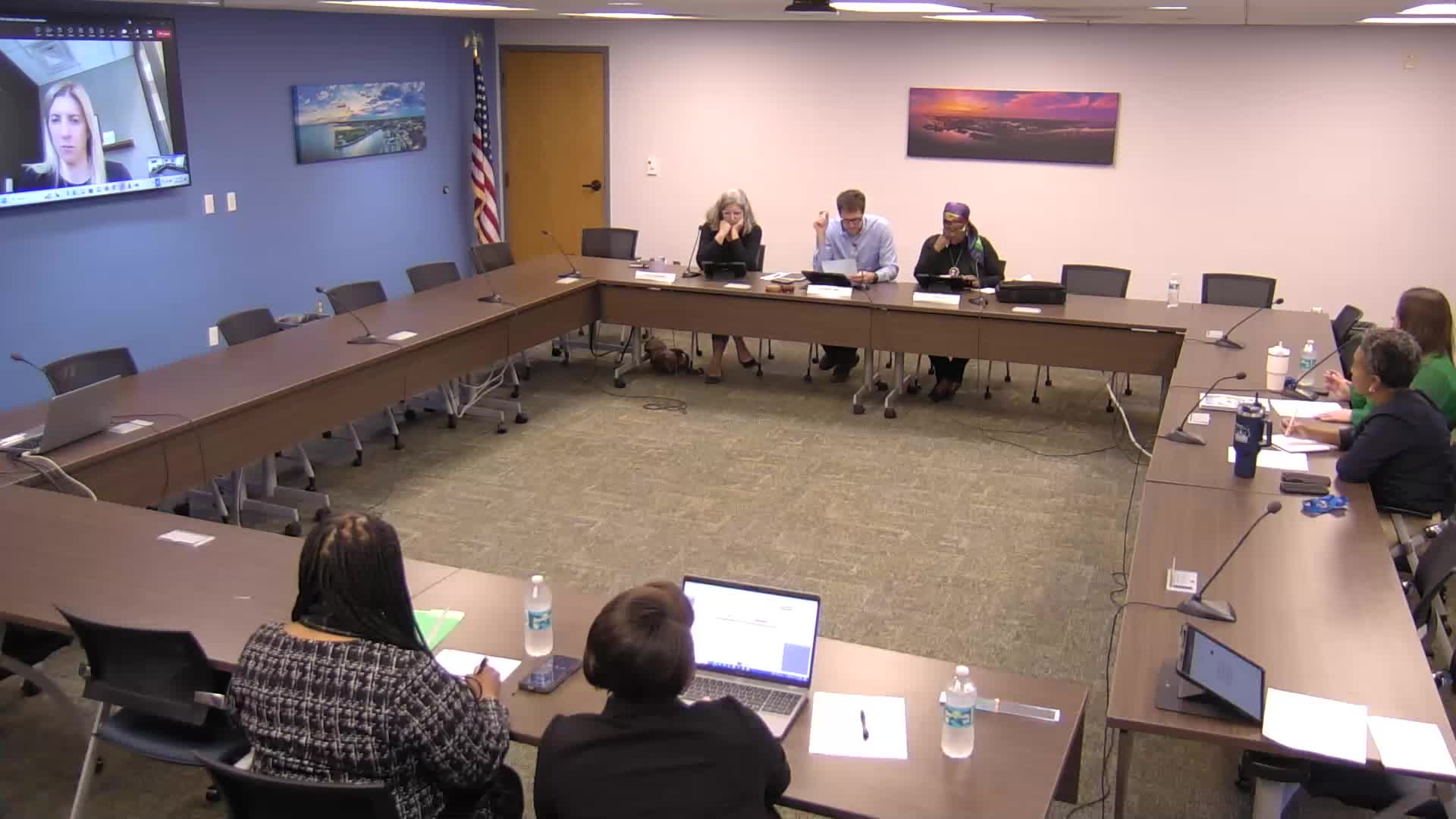
At a special meeting the Eastside Redevelopment Board recommended that the Community Redevelopment Agency (CRA) approve an updated East Side redevelopment plan after hearing an overview from consultants and public comments; the board voted to remove a proposed "low-barrier" homeless shelter from the draft plan.
The Eastside Redevelopment Board voted at a special meeting to recommend that the Community Redevelopment Agency board approve an updated East Side redevelopment plan, and adopted an amendment to remove a proposed low-barrier homeless shelter from the plan.
Consultant Megan O'Hara of Urban Design Associates summarized a roughly 12-month process that produced the draft plan. "This is a process that kicked off at the beginning. It was actually April first of last year, so we're nearing the exactly, 12 month mark," O'Hara said. The consultant said the plan is organized into analysis, recommendations and special demonstration projects, and that public engagement informed priorities for housing, streets, parks and small-business support.
The plan calls for topics ranging from land use and zoning to transportation, housing, neighborhood development, and open space. Special demonstration projects discussed included a small-business market around the Crystal Ice House building, infill housing near the Spencer Bibbs Center, streetscape and two-way conversions on Haines/MLK/Davis, and a Gonzales Street bikeway or shareway. The draft document also notes a large, city-funded investment for Hollis T. Williams Park; the consultant described that as a multi-phase project and emphasized the need to reflect neighborhood priorities in the park design.
The board heard public comment before voting. Tony McCray, who said he represents Eastside Neighbors Association, asked for more time for the neighborhood to review the draft and raised concerns that some elements — including the low-barrier shelter concept — are controversial among residents. "I think the surprise from our leadership from East Side Neighbors Association is we definitely need to have more time to to review what we heard today and what was presented," McCray said.
Board and staff responses clarified how the plan functions. A staff member explained that the redevelopment plan is a guiding framework: projects must still be brought forward individually for funding and approvals. Victoria, a CRA staff member, explained the primary funding vehicle: "TIF is tax incremental financing? So that that's the funding mechanism that the CRA that's the principal source of funding that the CRA uses to fund projects." Staff also noted the draft and supporting materials are available online and that printed copies can be requested under public-records procedures (printing costs are borne by the requester).
During board discussion a motion was made and seconded to amend the draft by removing the low-barrier homeless shelter concept. The board approved that amendment and then approved the board's recommendation that the CRA board adopt the updated East Side redevelopment plan (as amended). The transcript does not record roll-call tallies by name, but three board members were present for the vote and one member was absent; the motion and the amendment were carried by the board members in attendance.
The board's action is a recommendation to the CRA board; final adoption and any TIF-funded implementation would require subsequent staff proposals, separate project approvals and, where required, City Council review. Board members and staff repeatedly described the document as a framework that enables future projects to be considered for CRA funding, not an immediate authorization to build every item listed in the draft plan.
What's next: the recommendation will go to the Community Redevelopment Agency board for further consideration and any required steps toward implementation. Stakeholders should note that specific projects will return as separate items with individual funding and approval decisions.