Get Full Government Meeting Transcripts, Videos, & Alerts Forever!
Get email alerts on the County Budget topic
No spam. Unsubscribe anytime.
Douglas County opens four days of FY2025–26 budget hearings; managers outline internal controls and revenue outlook
Summary
County Manager Jennifer Davidson and Chief Operating Officer Kathy Lewis gave an overview of the FY2025–26 tentative budget, internal controls, revenue drivers and timeline for final adoption during the Board of County Commissioners' budget hearing.
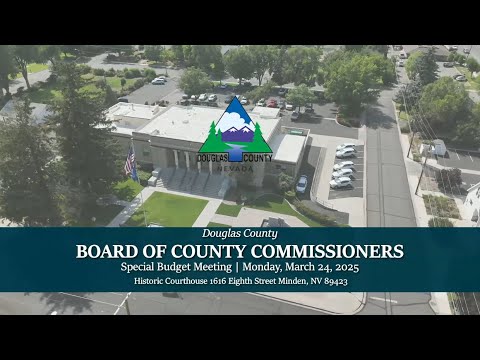
Douglas County commissioners on March 1 opened four days of public budget hearings for the 2025–26 tentative budget, receiving an overview of controls, revenue projections and the calendar for adoption.
County Manager Jennifer Davidson told the board the budget hearings are a primary internal-control moment: "The biggest internal control we have in place is our budget process," she said, describing the hearings as commissioners' opportunity to review department line items and question proposed spending. Davidson summarized existing safeguards including department purchasing thresholds, the Internal Review Committee, and an independent fraud, waste and abuse hotline run by a third-party administrator.
Chief Operating Officer Kathy Lewis walked the commission through the tentative-budget timetable the county must follow under state rules, including the April 15 tentative budget submission and an adopted budget by June 2. Lewis emphasized that the packet presented to the board is tentative and that the county will return April 30 for additional updates and a required state hearing May 27.
The presentation reinforced the county’s fund structure and major revenue drivers. Lewis said the general fund accounts for operating services — public safety, courts, elected officials — while special revenue, enterprise, internal service, capital, debt and redevelopment funds are used for narrower purposes. She explained the cost-allocation plan that assigns shared general-fund services (HR, finance, IT, audit) to other funds and noted the tentative budget includes a 15% provisional increase in cost and risk allocations to reflect higher service costs since the plan was last updated.
Lewis and Davidson also discussed the county’s central revenue sources. Lewis outlined Nevada’s cap on annual property-tax increases (3% for residential, up to 8% commercial, subject to a formula) and said recent state guidance reduced the commercial cap used in the tentative estimate from 8% to 6.1%, which will lower final property-tax projections. The state consolidated tax (a collection that includes sales taxes, cigarette and liquor components, and vehicle-related distributions) is projected in the tentative budget to grow modestly; Lewis said the state’s final distribution numbers would arrive imminently and be included in the final budget.
Lewis closed by noting the tentative budget currently projects an ending general-fund balance representing about 15.1% of expenditures (the county policy target is up to two months or 16.8%). She and Davidson said outstanding items for the final budget include settled labor negotiations, final state revenue figures, and a finalized cost allocation plan.