Get Full Government Meeting Transcripts, Videos, & Alerts Forever!
Get email alerts on the Records Management topic
No spam. Unsubscribe anytime.
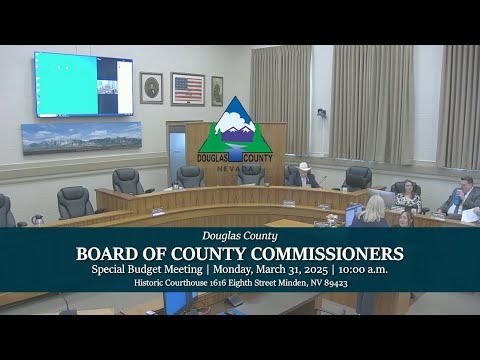
Douglas County recorder outlines digitization, fraud alerts and storage risks in budget briefing
Summary
Recorder Shani Guerin told commissioners the office is expanding electronic services, launching an internal property-alert tool and evaluating microfilm and storage risks as part of the FY2026 budget presentations.
Shani Guerin, Douglas County recorder, gave commissioners an overview of the recorder’s office functions and records-management work while seeking direction in the FY2026 budget process. She highlighted increases in electronic recording, a new in‑house property-alert service, an AI-enabled address/parcel search tool and ongoing work to convert historic records to searchable formats.
The recorder said recording volume fell during the interest‑rate spike, with calendar‑year 2024 filings at just under 13,000 and about 75% submitted electronically. "The recorder's office is to record, permanently preserve, and provide convenient access to public records," Guerin said, describing the mix of deeds, liens, maps, mining documents and marriage certificates handled by her staff. She noted many recording fees are statutorily apportioned to restricted funds and the general fund.
Guerin described a new, internal property‑alert service built into the county’s land records management vendor that has exceeded 500 registered accounts; each account can monitor up to 10 properties. She told the board the service aims to give owners timely notice of recorded documents affecting property and to help guard against property‑title fraud. She also described a generative‑AI search layer that accepts plain‑language queries (for example, “who owns this property?”), returns citations to recorded images, and is configured to omit nonpublic redacted fields.
On records storage and preservation, Guerin said county records management is at about 93% capacity and that the courts are the single largest consumer of space. She explained the county follows the State of Nevada Library and Archives retention schedule for local government and that disposal of physical records is a documented multistep process that requires department approval. She also described a two‑room clean‑agent fire‑suppression project approved last year for the records vaults and said the county is assessing whether outsourced climate‑controlled storage would be cost‑effective for microfilm and other permanent media. "Our records are an asset until they become a liability," she said, urging measured destruction of physical records that have met retention.
Commissioners questioned microfilm use and backup strategy; Guerin said microfilm remains a preservation medium and explained it is distinct from digital backup systems, but acknowledged digital backup confidence has increased and the office is reassessing the need to keep some microfilm. She noted past large scanning projects—some paid with ARPA funds—have reduced physical storage demand and freed up space. Guerin said the office plans to ingest machine‑generated index fields from a vendor to speed conversion of historic records so that searchable name‑index coverage will expand from the early 1970s back toward 1960 by year’s end.
The presentation included operational details—tech fund revenues drawn from a portion of recording fees, a 4.75 FTE staffing level for records and a recent permanent elimination of one previously frozen position—plus projects and costs included in the office’s FY2026 planning. The recorder said alerts, digitization and careful retention enforcement are intended to protect residents’ property records and reduce long‑term storage costs.