Get Full Government Meeting Transcripts, Videos, & Alerts Forever!
Get email alerts on the Environment topic
No spam. Unsubscribe anytime.
Sustainability advisory committee seeks expanded composting, limits on artificial turf and micro‑transit improvements
Summary
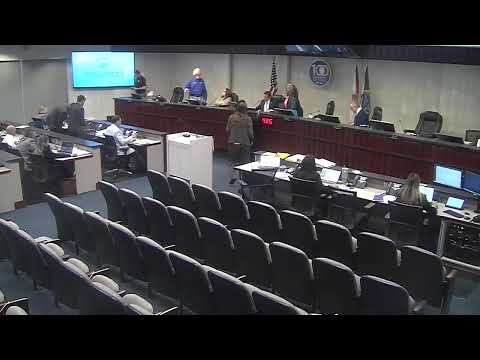
The Hollywood Sustainability Advisory Committee on March 19 presented a 2025 agenda focused on expanding community composting, increasing beach‑cleanup outreach, launching turtle‑lighting education and studying limits on artificial turf.
The Hollywood Sustainability Advisory Committee presented its annual report to the City Commission on March 19 and outlined priorities for 2025 including expanded community composting, monthly beach sweeps using buckets instead of plastic bags, volunteer sea‑turtle lighting outreach, a countywide sustainability coalition and a proposal to restrict or limit future use of artificial turf on city property.
Julia Polianis, committee chair, described last year’s accomplishments: a well‑attended Earth Day event at Margaritaville run with 4Ocean; educational programming with Nova Southeastern University and a sea‑turtle hatchling release; and a newly launched community composting pilot. Polianis said the committee is seeking volunteers to run turtle‑lighting outreach and recommended the city pursue a Florida‑Friendly Landscaping certification for staff to guide tree and landscaping decisions.
The committee raised health and environmental concerns about artificial turf — citing injuries and microplastic runoff — and asked staff to evaluate limiting its future use on city fields. Polianis told the commission that the committee is preparing a formal recommendation to “limit or eliminate the future use of artificial turf” and identified risks such as elevated heat index, microplastics entering waterways, carcinogens from heated plastics and higher non‑contact injury rates reported in some athletic studies.
Committee members also asked the city to expand the community composting program and to improve resident sign‑up processes after officials and residents reported glitches during the pilot. They recommended digitizing attendee contact information to keep volunteers engaged and suggested a monthly beach sweep be run with buckets (which are easier for youth volunteers than plastic bags).
Commissioners and the mayor responded with a mix of support and requests for additional analysis. Mayor Josh Levy noted benefits of artificial turf — lower watering needs and reduced maintenance — and urged a balanced, evidence‑based review. Vice Mayor Quintana and Commissioner Lehi asked the committee to provide cost‑benefit analyses and supplier recommendations for alternatives to single‑use plastics so local businesses can reasonably comply with the city’s plastic‑reduction policies.
City staff and commissioners also discussed practical follow‑ups: relaunching the composting pilot with better sign‑up, hosting outreach events where vendors can display alternative takeout packaging, and studying upgraded micro‑transit service to improve east‑west connections.
What was decided: The commission did not adopt a new turf policy at the meeting. Commissioners asked staff and the advisory committee to return with cost estimates, vendor lists, and clearer proposals — including options for businesses and a relaunch plan for the compost pilot.
Why it matters: The advisory committee’s proposals touch on public health, parks and recreation, stormwater and municipal costs. Limiting turf or changing park surfacing, expanding composting and boosting micro‑transit will carry programmatic and budget implications that the commission asked staff to quantify.
Next steps: Committee and staff will continue work and return with vendor outreach, a relaunch plan for the compost pilot, a potential list of sustainable suppliers for food‑service alternatives and a cost/benefit analysis for turf and other materials.