Get Full Government Meeting Transcripts, Videos, & Alerts Forever!
Get email alerts on the Curriculum Reproductive Health topic
No spam. Unsubscribe anytime.
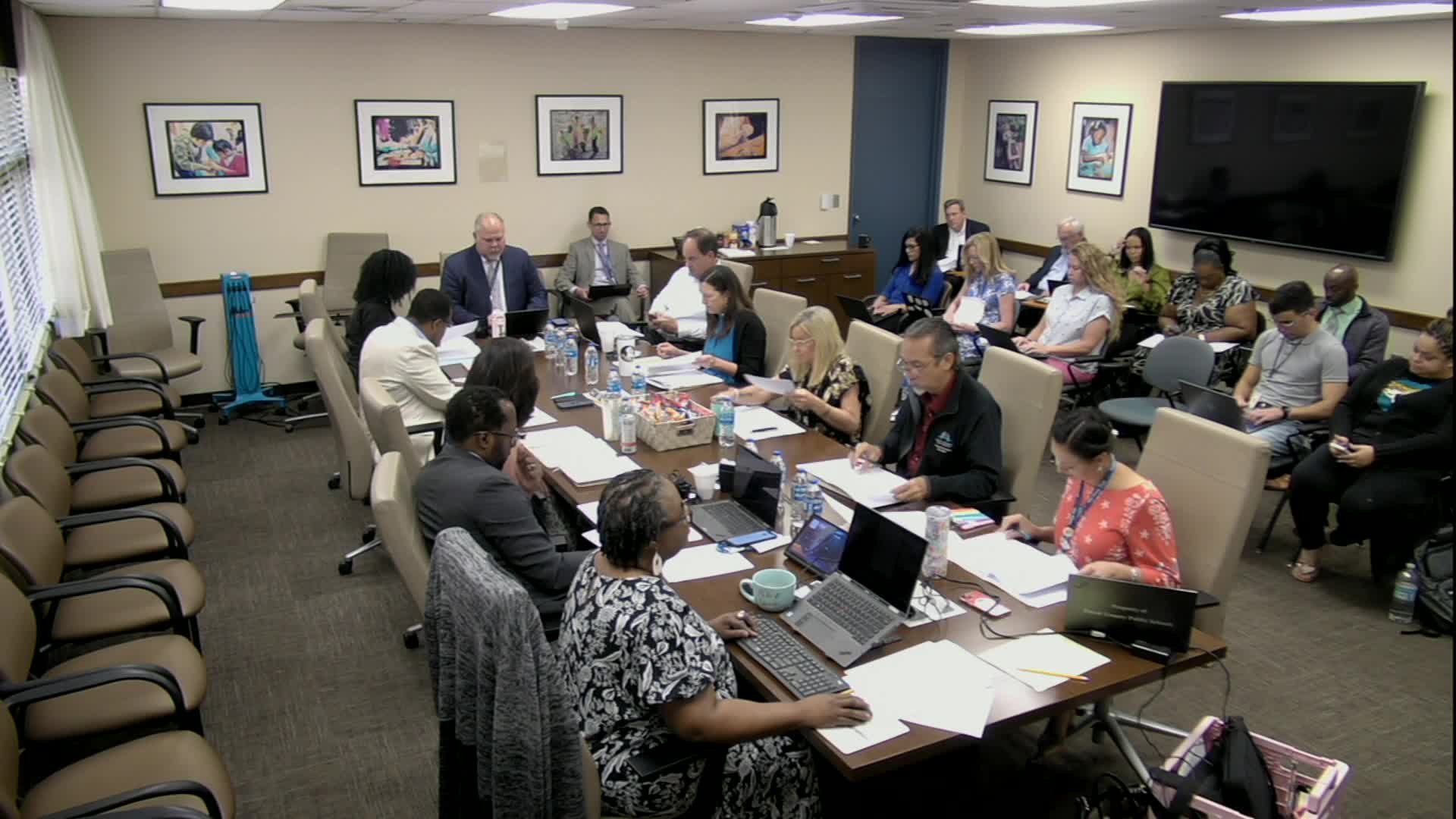
Duval board debates limits, notification and gender separation in revised health curriculum policy
Summary
Board members and staff reviewed revisions to Policy 4.1 on curriculum, focusing on reproductive-health instruction (abstinence-based language), optional gender-separated middle-school sessions, notification methods for parents, state control of curriculum approval, and teacher certification and reporting requirements.
Duval County School Board members spent extensive time reviewing redlined edits to Policy 4.1 (curriculum), centering on reproductive-health instruction in grades 6–12, how families are notified, teacher certification for stand‑alone health courses, and state versus local authority over curriculum content.
Paula Lindstrom, a district staff presenter, said one planned change would allow procedures to separate certain sixth- through eighth-grade reproductive-health lessons by gender: “we may implement procedures to allow 6, 7, and 8 grade health classes for particular those particular lessons around reproductive health to be separated by gender.” Lindstrom also described added language on family notification and timelines before lessons: the policy draft includes “clarification about notification when health and reproductive lessons would be taught, how that information will be disseminated to families and followed up in a timeline prior to the lesson lessons being presented.”
Board members pressed for more specificity in notification methods. One board member urged stronger wording that schools use multiple channels (email, text/push notification and phone calls) and provide exact links to the curriculum so parents can locate materials easily: “If I receive that email and I can just click and there is the curriculum, that is I'd like to see that in the policy.” Staff said translated materials are already available in about a dozen languages on the district website and can be sent in hard copy or electronically.
Several board members asked whether the policy language (“may include but is not limited to”) could be narrowed to require only materials mandated by the Florida Department of Education (FLDOE). Lindstrom noted that the phrasing mirrors state statute language: “state statute 100346 specifically says instruction may include but is not limited to. So that's why it's there.”
Dr. Albritton, a district official who oversees health instruction, told the board that the district historically offered “abstinence plus” instruction locally but the authority for required content has shifted to the state. She said the state will still approve or deny any curriculum the district chooses and described the scale of in-class instruction on barrier methods: “There are those lessons are not available. It is very brief instruction on barrier methods and the most effective barrier method being a latex condom. That is the extent of that instruction, and it is mostly in that high school prevention lesson. There's only 1 sentence in our middle school lessons in the eighth grade.”
Board members raised state House Bill 1255 (sections cited in the meeting as 366–378) and flagged potential classroom challenges around embryonic-development language. One board member said she discussed the bill with a state chancellor and asked the state to anticipate foreseeable student questions that could generate discussion districts are not permitted to have.
The board also discussed teacher certification and how districts document required instruction. Staff said stand‑alone health courses are required to be taught by certified health‑education teachers; if content is embedded in other courses (science, PE), the reporting, implementation plan and end‑of‑year report submitted to the FLDOE must document who taught the lessons and what materials were used. Staff described an annual implementation plan early in the year and a final year‑end report that lists the course codes, teachers and instructional materials used.
Several board members asked about opt‑out options, virtual alternatives and how specialized diploma tracks (IB, ACE) affect instruction and credits. Staff said opt‑out processes exist for HOPE and other requirements in certain cases; the district offers virtual options through Duval County Virtual programs and summer courses to let students make up or complete credits.
No formal vote on Policy 4.1 was recorded in the transcript. Staff said they would continue to refine language and return drafts; board members signaled support for increased transparency on notification and for provisions enabling gender separation of certain middle‑school reproductive‑health lessons where the superintendent implements that procedure.