Get Full Government Meeting Transcripts, Videos, & Alerts Forever!
Get email alerts on the Transportation Speeding Isa topic
No spam. Unsubscribe anytime.
Senate committee hears bill to require intelligent speed‑assistance devices for certain speedy drivers
Summary
A Washington bill would require courts, probation and certain restricted licenses to mandate intelligent speed‑assistance (ISA) devices for people convicted of reckless driving or excessive speeding; proponents argued it will save lives, while questions were raised about cost, device oversight and enforcement.
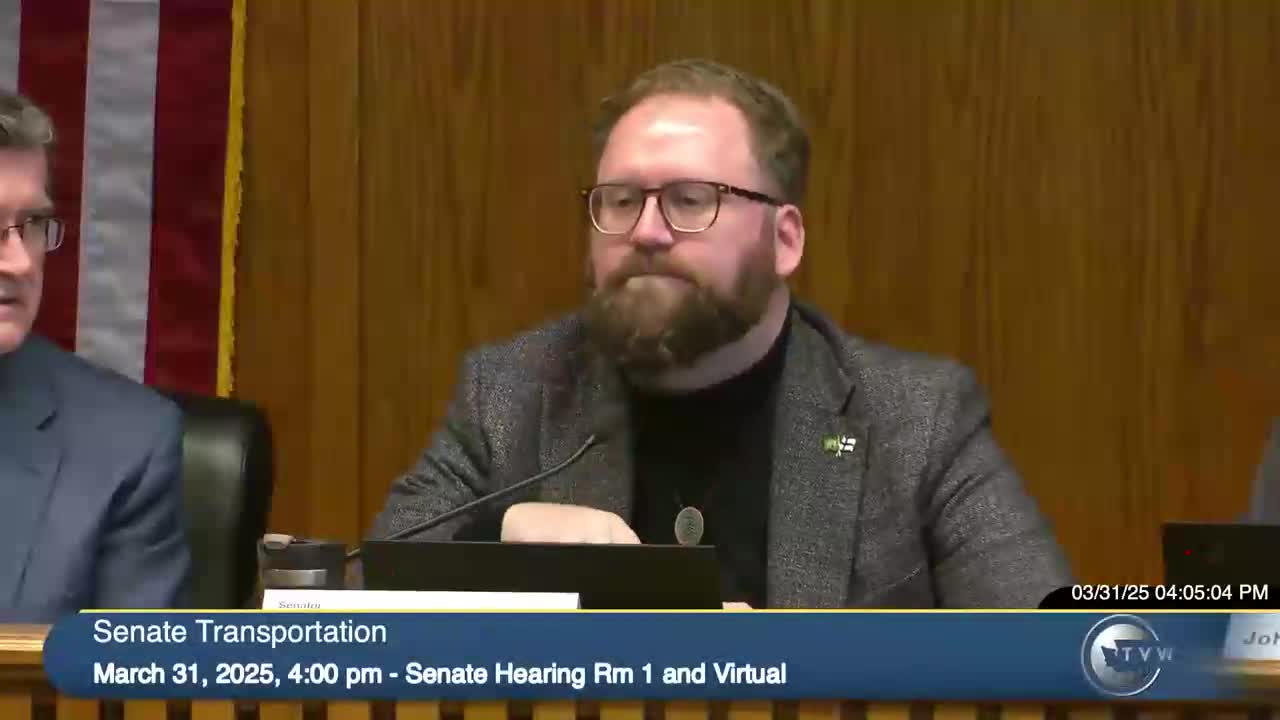
A Senate Transportation Committee public hearing on March 31, 2025, examined Engrossed Substitute House Bill 1596, which would require use of intelligent speed‑assistance (ISA) devices in vehicles as a condition of some restricted licenses, certain probation orders and court‑ordered conditions following convictions for reckless driving or excessive speeding.
The bill would prohibit operating a vehicle without a functioning ISA device when that device is required for an occupational or temporary restricted driver's license issued by the Department of Licensing (DOL), when required during a court‑ordered probationary period, or when required by a court as a condition of pretrial release or post‑conviction probation. Brandon Popovac, staff to the committee, said the bill defines “excessive speeding” as 20 mph or more over posted limits on roads with limits above 40 mph, and lower thresholds where posted limits are 40 mph or below. The bill would require an override function allowing an operator to exceed the preset limit up to three times per month and obliges the device user, unless waived for indigency, to pay installation, removal and leasing costs plus a $21 monthly fee. Device companies may retain $0.25 of that fee for administration and must remit the remainder to DOL for an indigency offset account, Popovac said.
The bill drew extensive emotional testimony from families who have lost relatives to high‑speed crashes. Representative Marie Levitt, the bill’s prime sponsor, framed the measure as a way to “provide this tool for our courts to ensure individuals can get to where they need to go” while limiting extreme speeding. “This is a solution that invites a proactive step that aims to protect the public from preventable, predictable tragic injuries,” Levitt said.
Supporters included Amy Friedheim, chair of the felony traffic unit at the King County Prosecutor’s Office, who compared ISA devices to ignition interlock programs and said courts need a tool to allow impaired or suspended drivers to access necessary travel while reducing risk. Ken Denton, a retired Washington State Patrol investigator who oversaw the ignition interlock oversight program, and Mark McKechnie of the Washington Traffic Safety Commission cited rising speed‑related fatalities and data showing higher incidence of extreme speeding.
Law enforcement and labor witnesses — including Billy Wallace of the Washington and Northern Idaho District Council of Laborers and multiple police chiefs — said ticketing and suspensions alone have not stopped repeat high‑speed drivers and argued ISA devices would add an enforceable layer of protection for workers and the public in work zones and neighborhoods.
Committee members probed cost, equity and enforcement issues. Senator Christian asked whether the state would absorb device costs for people who claim indigency; Popovac said yes, the bill establishes funding to offset costs for indigent persons. Senator King asked for clarification that device companies keep $0.25 of the $21 monthly fee for administration. Senators also asked whether driving a different vehicle without the device would avoid penalties; staff said operating any vehicle while under the requirement without a functioning device would be a traffic infraction, with further penalties possible depending on the condition imposed.
The bill includes criminal penalties if a person disables an ISA device or instructs another to disable it. It provides liability immunity for motor vehicle manufacturers, distributors or dealers for loss or injury caused by device design, manufacture, installation or use, with an exception for knowingly harmful repairs or updates. Popovac cited an initial DOL implementation cost estimate of $1,000,000 for the 2025–27 biennium and a one‑time $70,000–$76,000 training cost for the State Patrol.
Testimony from victims’ families and traffic safety advocates urged passage. Opposing or skeptical viewpoints in the hearing were limited for this bill; many speakers focused on saving lives and pointed to other states’ steps to adopt similar technologies. No formal committee vote was taken during the hearing.
If advanced, the bill would create a new licensing and monitoring regime involving DOL, device vendors and the courts; the text submitted to the committee ties device eligibility and monitoring to existing occupational and temporary restricted license frameworks.